New York City made Diwali a public school holiday in 2023, acknowledging the festival’s importance to a significant section of its population. Deepavali was inscribed on UNESCO’s Representative List of the Intangible Cultural Heritage of Humanity in December 2025. These reflect how a festival rooted in India’s civilisational traditions has found an increasingly visible place in the global cultural calendar.
Diwali is no longer just a festival celebrated in India. With the Indian diaspora spread across continents, its spirit is increasingly visible and felt across nations. From homes and temples to public squares, city centres and community gatherings, the lights, colours, music and festivities bring a little piece of India to every corner of the world.
Across time zones and oceans, families and communities come together to celebrate the triumph of light over darkness, hope over despair and good over evil. Wherever Indians have made their homes, Diwali travels with them, carrying traditions, memories and a sense of belonging. What is particularly remarkable is how these traditions have taken root in unfamiliar surroundings, often bringing together not just Indians but people from other communities as well.
Golu in Nashville: A Little South India Abroad
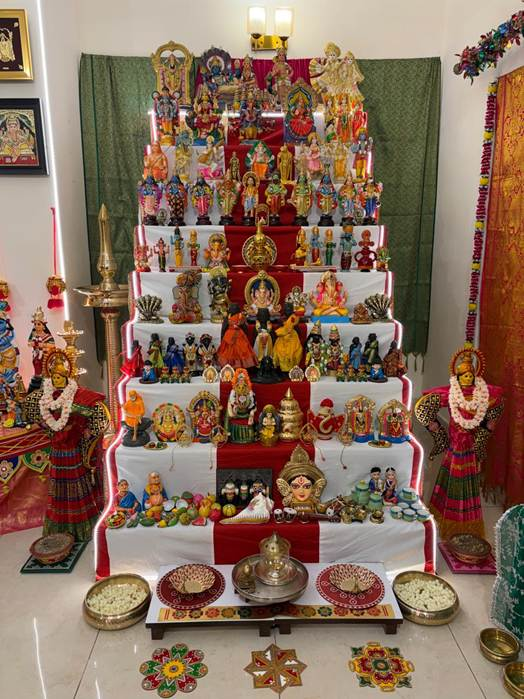
A few years ago, during one of my visits to the United States, I spent a few days with my cousin in Nashville during the Navratri period. I was pleasantly surprised to discover how faithfully the South Indian tradition of Bommai Golu (also known as Bommala Koluvu or Gombe Habba) was being observed, almost exactly as it would have been back home.
For the uninitiated, Golu is a distinctive Navratri tradition, particularly associated with Tamil Nadu, Karnataka, Andhra Pradesh and Telangana. Homes are transformed into colourful storytelling galleries, with tiered wooden steps displaying dolls depicting deities, scenes from the epics, historical figures and miniature village life. Many of these dolls are family heirlooms, brought out year after year, with new additions reflecting changing themes and creative interpretations.
The displays, however, are only part of the tradition. Equally important is Golu-hopping – the delightful social ritual of visiting the homes of friends, neighbours and relatives over the nine evenings. I found it heartening to see how the Indian community in Nashville had preserved this custom. Throughout the nine nights, families dressed in traditional silk sarees and veshtis, visiting one another’s homes, admiring the displays, exchanging greetings and sharing the warmth of the occasion. There was little to distinguish the enthusiasm from what one would experience in a neighbourhood in South India.
When Nostalgia Becomes a Living Tradition
That experience stayed with me. During subsequent visits abroad, particularly to the United States, I began to appreciate how millions of Indians living far from their ancestral homeland keep their cultural traditions alive. Festivals are much more than dates on a lunar calendar. They are living threads connecting generations to their roots, providing continuity, identity and a sense of belonging. Nowhere is this more evident than during the autumn festive season of Navratri and Diwali.
I experienced something of this spirit again during Diwali in the United States.
A Little India in New Jersey
Yesterday, I attended a Diwali mela here in New Jersey. The atmosphere was unmistakably Indian, so much like being back home.
On a crisp autumn evening, the mela felt like stepping into a bustling Indian town square, transplanted onto American soil. Around the familiar Indian-American hubs of Edison and Iselin, the festive spirit was unmistakable. Trees and stalls glowed under canopies of fairy lights and marigold garlands, while families arrived dressed in colourful silk sarees, lehengas and embroidered kurtas.
The stalls recreated the familiar bustle of an Indian bazaar, offering everything from glittering Kundan jewellery and brass puja lamps to hand-painted clay diyas and festive clothing. The air was filled with the unmistakable aromas of Indian street food—sizzling pav bhaji, crisp samosa chaat, freshly fried jalebis and steaming cups of masala chai. For a moment, it was easy to forget that one was thousands of miles away from India.
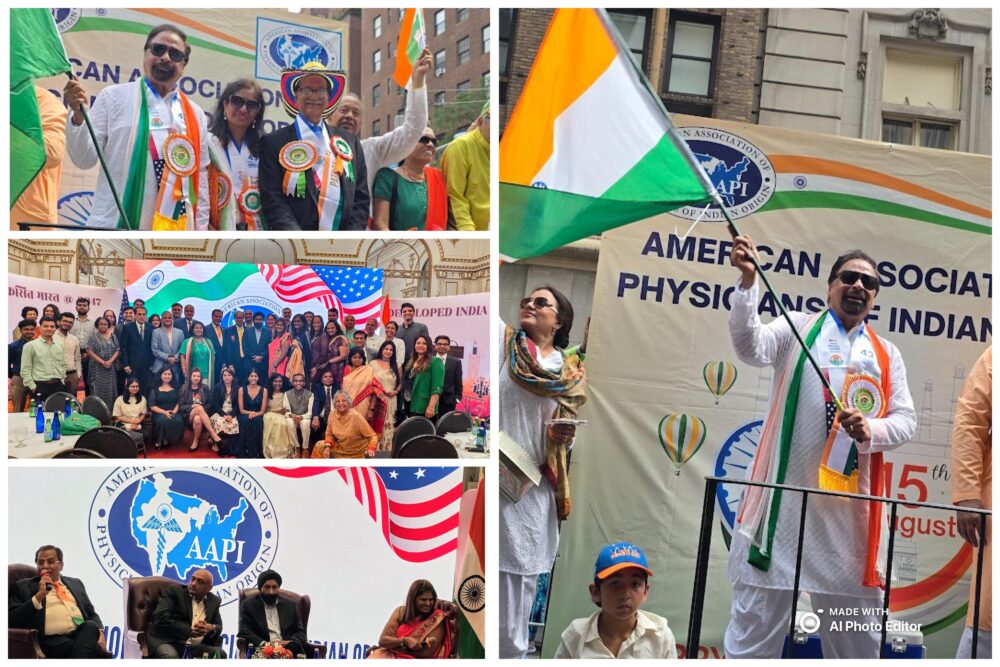
More than a marketplace, the mela was a celebration of community and continuity. On stage, children and local dance groups performed Bharatanatyam, Kathak and energetic Bhangra, drawing applause from proud parents and grandparents. Elsewhere, people caught up with friends, browsed the stalls, visited mehendi counters and exchanged boxes of kaju katli and laddoos. The celebrations brought together generations: elders reliving familiar memories, while younger people, many born and raised abroad, discovered and embraced traditions that connected them to their heritage.
The significance of such gatherings goes well beyond nostalgia. They offer children growing up in another country an opportunity to experience Indian culture not merely through stories told at home, but by participating in it. They see it, hear it, taste it and celebrate it. In this way, traditions are passed on naturally, keeping the connection with their roots alive across generations.
Indian Neighbourhoods to Global Celebrations
The festivities also extend well beyond private homes and community halls. Across the world, Indian neighbourhoods have become centres of celebration. From Edison’s Oak Tree Road in New Jersey and Leicester’s Golden Mile in the United Kingdom to Singapore’s Little India, streets come alive with lights, decorations, shopping and cultural performances.
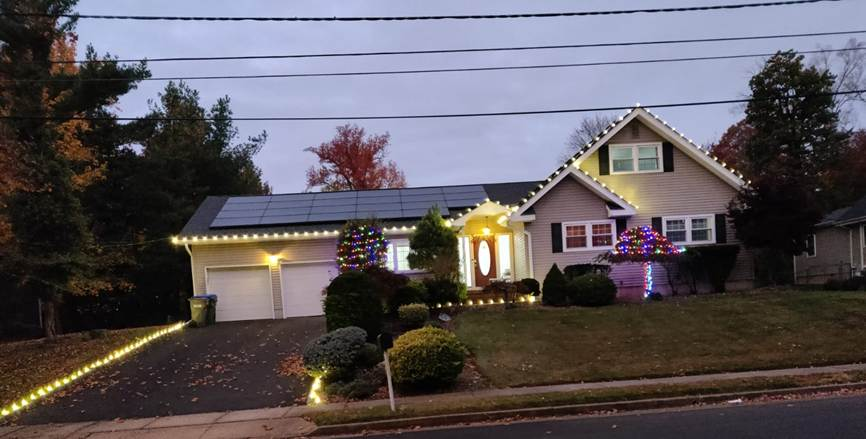
In countries such as Fiji, Mauritius, Trinidad and Tobago, Singapore and Malaysia, where generations of Indians carried their traditions across the seas through migration, indentured labour and trade, Diwali has become part of the wider national cultural landscape. In some of these countries, it is a public holiday, celebrated through open houses, community festivities and participation across cultural boundaries. The festival has acquired a life of its own, extending well beyond the Indian community.
Community Hall to the White House
The growing recognition of Diwali in the United States is another illustration of this evolution. In 2003, during President George W. Bush’s administration, Diwali was celebrated for the first time at the White House complex. The event was held in the Indian Treaty Room of the Eisenhower Executive Office Building, with senior presidential adviser Karl Rove lighting the ceremonial lamp and conveying the President’s greetings. President Bush did not personally attend, but the observance established an important precedent.
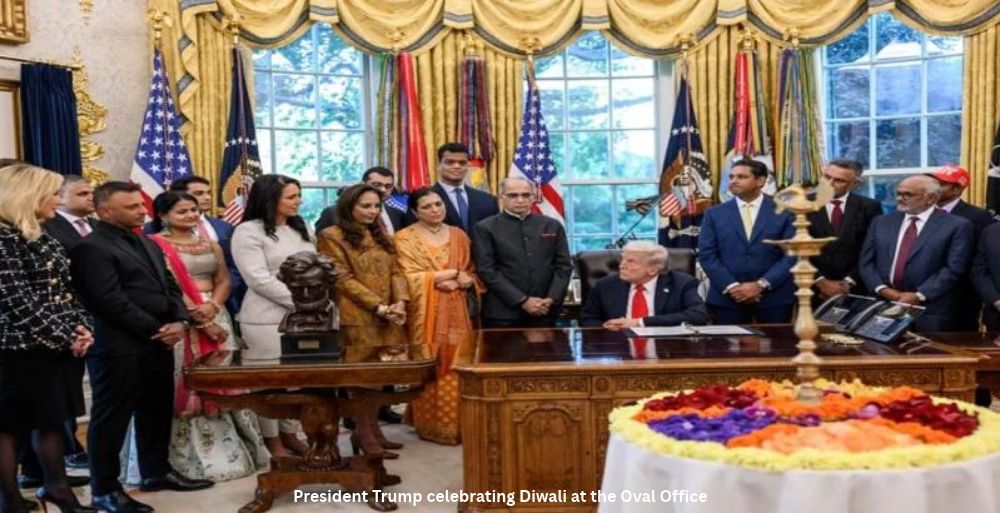
In 2009, President Barack Obama became the first American President to personally participate in the White House Diwali ceremony, lighting a diya in the East Room. In 2016, he became the first President to light one in the Oval Office. Subsequent administrations – including of President Donald Trump – have continued the observance, welcoming Indian-American leaders, diplomats and members of the community.
Recognition has extended into public life as well. New York City made Diwali a public school holiday in 2023, acknowledging the festival’s importance to a significant section of its population. In another milestone, Deepavali was inscribed on UNESCO’s Representative List of the Intangible Cultural Heritage of Humanity in December 2025. These developments reflect how a festival rooted in India’s civilisational traditions has found an increasingly visible place in the global cultural calendar.
Light That Knows no Borders
Ultimately, whether it is a child reciting a sloka before a lovingly arranged Golu in a suburban living room, families gathering for Lakshmi Puja, or a ceremonial diya being lit in the Oval Office, the underlying sentiment remains the same.
Distance does not diminish tradition. In fact, living away from one’s ancestral homeland often makes the effort to preserve it even more meaningful. Carried across oceans, nurtured in homes and passed on to succeeding generations, these festivals do more than keep memories alive. They turn unfamiliar surroundings into familiar homes and bring communities together through a shared cultural experience.
The light of Diwali, it seems, knows no borders.
(The author is an Indian Army veteran and a contemporary affairs commentator. The views are personal. He can be reached at [email protected] )
Originally published in South Asia Monitor: www.southasiamonitor.org