During a session at the World Economic Forum in Brussels, Saudi Arabia announced it has provided $145 billion in global aid, underscoring its significant role in international humanitarian and development assistance.
During the recent World Economic Forum held in Brussels, Belgium, Saudi Arabia announced a striking total of $145 billion in international aid, emphasizing its substantial commitment to humanitarian and developmental assistance across the globe. This announcement not only highlights the kingdom’s economic prowess as the largest economy in the Arab world but also reflects its strategic positioning as a key actor in addressing global humanitarian needs.
Overview of Saudi Arabia’s Aid Contributions
Dr. Abdullah Al Rabeeah, an adviser to the Saudi Royal Court and the supervisor general of the King Salman Humanitarian Aid and Relief Centre (KSrelief), detailed the kingdom’s philanthropic endeavors during the forum. He reported that KSrelief has executed over 4,000 humanitarian projects valued at more than $8.5 billion across 113 countries. This figure is part of a broader $145 billion total that encompasses contributions made through various Saudi institutions, showcasing a comprehensive approach to international aid.
Saudi Arabia’s projected economic output is estimated to reach approximately $1.34 trillion by 2026, placing it among the world’s top 20 economies. The kingdom’s international assistance includes a diverse range of initiatives, such as humanitarian relief, infrastructure development, education, and financial support, primarily targeting regions in the Middle East, Asia, and Africa, particularly those afflicted by conflict and economic instability.
Top Beneficiaries of Saudi Aid
According to data sourced from the Saudi Aid Platform, Egypt emerges as the largest recipient of Saudi assistance, having received a remarkable $32.5 billion in aid. Yemen follows closely, with $29.05 billion allocated, a significant portion of which is linked to the humanitarian crisis resulting from Saudi Arabia’s military intervention against the Houthi movement that began in 2015. This ongoing conflict has contributed to severe humanitarian challenges within the region.
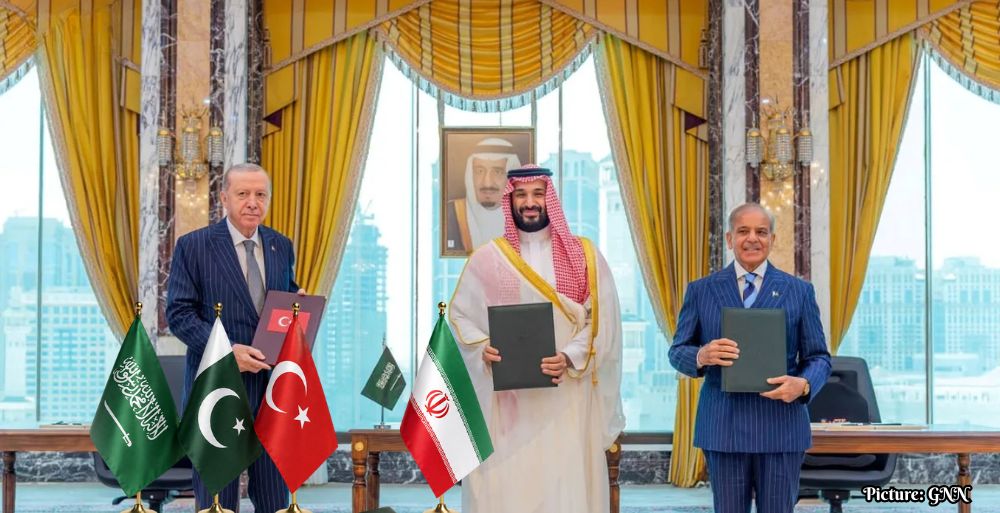
Pakistan, which entered into a strategic mutual defense agreement with Saudi Arabia in September 2025, ranks third among the beneficiaries, receiving $13.37 billion. In Asia, India has also established itself as a key partner, receiving $208.59 million across 39 projects. This includes $118.46 million for energy initiatives, $48.52 million for transportation infrastructure, and $40.29 million for educational programs, reflecting Saudi Arabia’s multifaceted approach to aid that caters to diverse developmental needs.
Saudi Arabia’s Support for African Nations
In the context of its aid contributions, African nations have collectively received nearly $49 billion from Saudi Arabia, with Egypt again leading as the continent’s primary beneficiary. Beyond Egypt, Saudi Arabia has financed numerous humanitarian programs in several African countries grappling with armed conflict, displacement, and economic challenges. For instance, Somalia has received $258.18 million across 168 projects, while Sudan, currently facing the suspension of a $1.5 billion arms deal with Pakistan due to Saudi objections, has benefited from $197.93 million through 294 projects.
Other notable recipients include Chad, which received $35.91 million; Nigeria, with $31.12 million; and the military-led governments of Niger and Burkina Faso, which have received $24.79 million and $20.44 million, respectively. These figures illustrate Saudi Arabia’s extensive engagement in providing aid to countries that often experience dire humanitarian conditions.
Call for Enhanced Collaboration
During his address at the World Economic Forum, Dr. Al Rabeeah underscored the necessity for improved collaboration among governments, international financial institutions, and private investors to enhance development financing in nations facing humanitarian and economic challenges. He emphasized that humanitarian grants alone are inadequate to meet long-term development needs, advocating for a more integrated approach that combines public financing, private investment, and locally-led programs to support sustainable economic recovery.
This call for collaboration reflects a growing consensus among global leaders regarding the need to evolve humanitarian responses into more robust economic strategies, especially amid ongoing crises exacerbated by geopolitical tensions and global economic fluctuations.
Implications for Future Development Initiatives
Saudi Arabia’s announcement of its $145 billion aid contribution positions the kingdom as a pivotal player in global humanitarian efforts. The breadth of its assistance across various regions indicates a strategic approach to foreign aid, aiming not only to stabilize and support nations facing significant challenges but also to enhance its own international standing.
The implications of this aid strategy are manifold. By supporting countries experiencing crises, Saudi Arabia not only fosters goodwill but also potentially cultivates geopolitical alliances that could benefit its strategic interests. Furthermore, the kingdom’s emphasis on combining humanitarian assistance with development financing could pave the way for innovative funding solutions in the international aid landscape.
As the international community grapples with urgent humanitarian needs, the role of Saudi Arabia is likely to become increasingly influential in shaping future developmental policies and initiatives. The kingdom’s commitment to addressing global challenges will be closely monitored as it navigates its complex relationships with beneficiary nations and international partners.
Conclusion
In summary, the substantial aid contributions made by Saudi Arabia reflect a broader commitment to international humanitarian efforts. As global challenges mount, the kingdom’s role in providing assistance to countries in need will likely evolve, requiring ongoing assessment of the impacts and effectiveness of its initiatives. By fostering collaborative relationships with other nations and international organizations, Saudi Arabia aims to enhance its contributions to global stability and development.