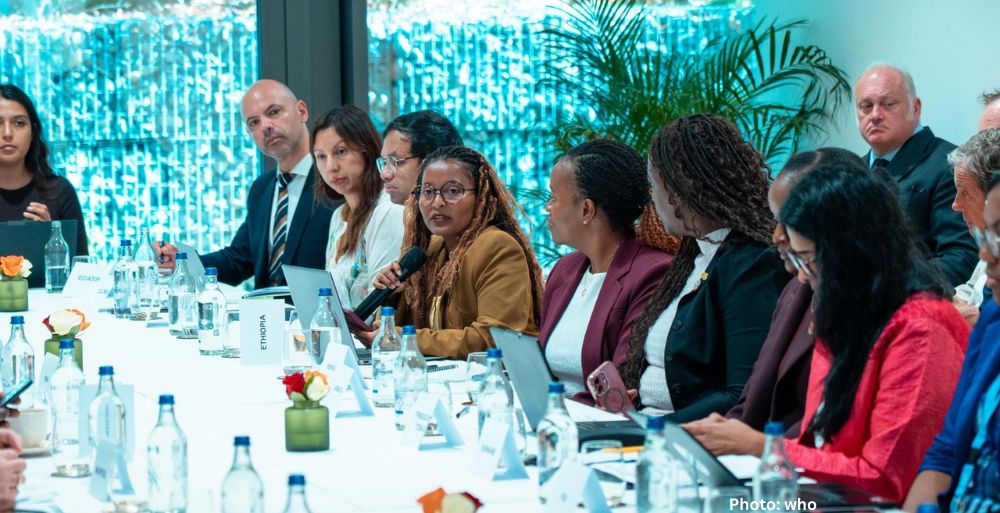
Representatives from World Health Organization member states, international partners, and the traditional medicine community converged at the Permanent Mission of India in Geneva on September 23, 2026, to celebrate Ayurveda Day and advance global dialogue through the 8th meeting of the Group of Friends of Traditional Medicine. Chaired by Indian Ambassador Arindam Bagchi, the high-level diplomatic gathering welcomed Egypt, Kazakhstan, Nepal, and Suriname as new members, expanding the coalition to 36 nations. Delegates focused on implementing the WHO Global Strategy on Traditional Medicine 2025–2034, protecting Indigenous intellectual property, expanding regulatory frameworks, and preparing for the upcoming 3rd WHO Global Summit on Traditional Medicine to be hosted by Thailand in November 2027.
GENEVA — Amid a growing global shift toward integrative healthcare and preventive medicine, international diplomats and health experts gathered at the Permanent Mission of India in Geneva for the celebration of Ayurveda Day 2026. The diplomatic assembly coincided with the 8th meeting of the Group of Friends of Traditional Medicine, an intergovernmental coalition dedicated to embedding traditional, complementary, and Indigenous medical systems into mainstream public health frameworks.
The high-level discussions highlighted the expanding institutional backing for traditional medical practices worldwide. As health systems face chronic resource strains and rising rates of non-communicable diseases, member states are increasingly looking to historical medical systems—such as Ayurveda, traditional Chinese medicine, and Indigenous healing practices—as vital pillars for achieving universal health coverage and sustainable development goals.
Expanding Diplomatic Coalition and Strategic Priorities
The business session of the Group of Friends of Traditional Medicine was led by Indian Ambassador Arindam Bagchi, who underscored the importance of multilateral cooperation in standardizing and validating traditional therapeutics. A central highlight of the opening session was the formal induction of four new member states—Egypt, Kazakhstan, Nepal, and Suriname—bringing the total coalition strength to 36 countries.
Delegates engaged in rigorous working sessions centered on the practical implementation of the comprehensive Global Strategy on Traditional Medicine 2025–2034, which was formally adopted by the World Health Assembly in 2025. Discussions emphasized several critical policy areas:
- Legal and Regulatory Frameworks: Member states shared best practices for establishing statutory definitions, licensing protocols, and quality control standards to ensure the safety and efficacy of traditional medicinal products.
- Export Barriers: Representatives analyzed trade bottlenecks facing traditional pharmaceutical and herbal exports, discussing pathways to harmonize international regulatory standards.
- Intellectual Property Protection: Delegates stressed the urgent need to safeguard the sacred knowledge and genetic resources of Indigenous and local communities against bio-piracy and commercial exploitation.
- Cross-Ministerial Collaboration: Several nations presented case studies illustrating how national centers of excellence and medical tourism initiatives are successfully integrated through coordinated efforts across health, tourism, and science ministries.
Furthermore, the coalition expressed strong institutional support for the World Health Organization’s continued emphasis on traditional medicine, ensuring strategic continuity ahead of the leadership transition following the election of a new WHO Director-General in 2027.
Thailand Prepares to Host the 3rd Global Summit
A major milestone of the Geneva gathering was the official transition of leadership for the global summit series. Thai Ambassador Usana Berananda addressed the delegates to outline her nation’s strategic vision for hosting the 3rd WHO Global Summit on Traditional Medicine in November 2027, accepting the ceremonial baton from the Government of India, which hosted the landmark 2nd Summit in 2025.
“We will host the next Summit in a spirit of continuity,” Ambassador Berananda stated, addressing the packed diplomatic chamber with an emphasis on actionable implementation. “Traditional Medicine carries the wisdom of the past, and the promise of the future. For Thailand, this is not just a vision but an experience we have lived.”
Ambassador Berananda encapsulated her government’s guiding philosophy for the upcoming summit in three core pillars: wisdom, well-being, and wealth. She stressed that the 2027 summit will serve as a critical operational bridge moving the global community “from recognition and commitment to implementation.”
The “Living Well” Initiative and Global Standards
In alignment with global demands for innovation and cross-sectoral collaboration, Dr. Shyama Kuruvilla, Director a.i. of the WHO Global Traditional Medicine Centre, introduced an emerging strategic framework entitled “Living Well.”
The initiative envisions a comprehensive multisectoral action framework designed to assist national governments in promoting public health through coordinated policies spanning health, environment, agriculture, education, science, technology, trade, finance, tourism, and Indigenous affairs. To translate this conceptual model into practical outcomes, the WHO proposed the creation of a multistakeholder cooperation platform.
Among the platform’s primary objectives is the potential establishment of a global trust mark. This certification mechanism aims to promote responsible sourcing, environmental sustainability, and rigorous safety standards for well-being products and services through independent third-party verification.
Exploring Ayurveda’s Contribution to Global Health
The day’s events concluded with a high-level panel discussion titled “Ayurveda and its contribution to the global traditional medicine agenda.” Moderated by Dr. Pradeep Dua of the WHO Global Traditional Medicine Centre, the panel featured senior public health officials from India, Mauritius, Nepal, and Suriname.
The panelists shared empirical insights into how their respective governments are advancing Ayurveda through evidence-based clinical research, standardized education, and formal integration into national healthcare delivery systems. The discussion underscored how traditional knowledge systems can bolster healthcare resilience, improve primary care access, and support holistic health outcomes across diverse socioeconomic populations.
As the international health community looks toward the upcoming milestones in 2027, the Geneva meeting reaffirmed that traditional medicine is transitioning from a marginalized alternative into a scientifically evaluated, regulated, and essential component of modern global public health architecture.