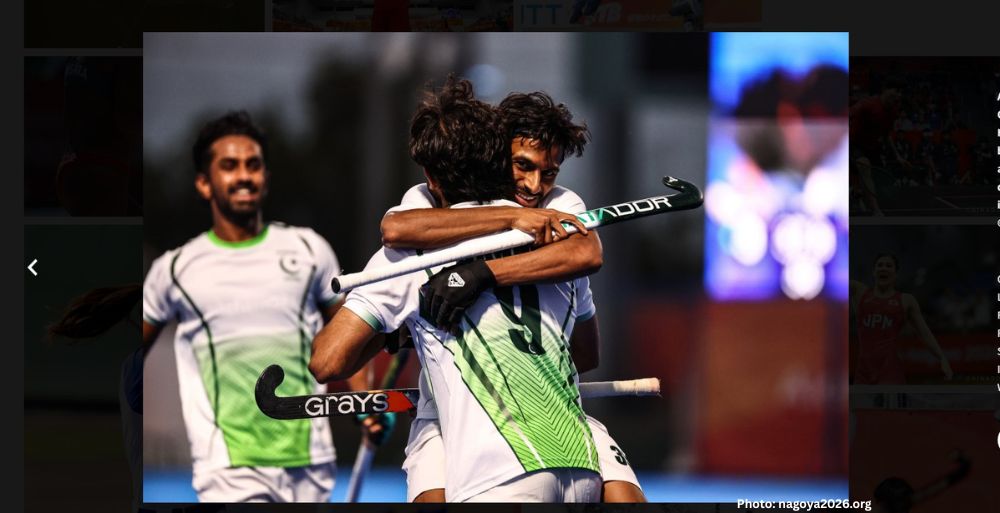
In a dramatic and emotionally charged semi-final at the Gifu Prefectural Green Stadium in Kakamigahara, Japan, the Indian men’s hockey team narrowly defeated traditional rivals Pakistan 4-3 to advance to the Asian Games summit clash. Led by two early penalty-corner conversions from captain Harmanpreet Singh and a quick strike from Sukhjeet Singh, India raced to a commanding 3-0 advantage before Pakistan staged a furious second-half comeback. Unyielding pressure saw Pakistan level the score at 3-3 by the 49th minute before forward Abhishek delivered a clinical 60th-minute game-winner. The fixture also marked veteran Indian forward Mandeep Singh’s 300th senior international appearance.
KAKAMIGAHARA, Japan — The perennial drama of Asian hockey reached a fever pitch on Thursday afternoon as the Indian men’s national hockey team edged out arch-rivals Pakistan 4-3 in a high-stakes semi-final encounter at the Gifu Prefectural Green Stadium. The victory preserves India’s defense of its continental crown and guarantees the team a spot in the gold-medal match against China, where a direct berth for the Los Angeles 2028 Olympic Games will be on the line.
The contest showcased the volatile nature of high-level Asian hockey, characterized by tactical aggression, intense physical play, and dramatic shifts in momentum. India initially established absolute control over the pace of play, surging to a 3-0 lead within the first 23 minutes. However, a spirited rally from a youthful Pakistani lineup brought the match to a 3-3 deadlock late in the fourth quarter, forcing the defending champions to dig deep into their tactical reserves to avoid a penalty shootout and pull off a final-minute victory.
Early Dominance and the Initial Surge
From the opening whistle, India signaled its intent to press high and exploit spaces in Pakistan’s defensive circle. The tactical framework crafted by India’s coaching staff yielded immediate results, earning the team a succession of early penalty corners. In the fifth minute, Indian captain and drag-flick specialist Harmanpreet Singh stepped up to fire a powerful flick past the Pakistani goalkeeper, opening the scoring and setting a commanding tone.
Harmanpreet doubled the advantage in the 13th minute, converting another set-piece opportunity with precision into the lower corner of the net. As the second quarter commenced, India continued to dictate the tempo, utilizing fluid short passes and precise baseline penetrations. In the 23rd minute, forward Sukhjeet Singh found space inside the striking circle and deflected home a well-worked field goal to push the scoreline to 3-0, placing India in complete command.
Pakistan’s Second-Half Resurgence and Tactical Shift
Despite trailing by three goals entering the second half, Pakistan shifted its tactical posture, utilizing high-pressing lines and rapid counter-attacks that exposed sudden lapses in the Indian midfield. India’s tempo noticeably slackened during the third quarter, allowing Pakistan to gain territory and force turnovers in dangerous areas.
Pakistan’s efforts paid off in the 41st minute when Abu Mahmood capitalized on a defensive defensive miscue to narrow the gap to 3-1. Sensing a shift in momentum, Pakistan pressed forward with heightened urgency. Just before the close of the third quarter in the 45th minute, Hannan Shahid executed a swift field maneuver to beat the Indian defense, bringing the score to 3-2.
By the fourth quarter, the atmosphere at Gifu Prefectural Green Stadium was electric. In the 49th minute, Pakistan completed its remarkable comeback when Waheed Rana capitalized on a defensive scramble inside the circle, slotting the ball into the net to equalize at 3-3.
With a penalty shootout looming and time rapidly running out, India regrouped for a final offensive push. In the 60th minute, forward Abhishek collected the ball inside the circle amidst heavy traffic and dispatched a decisive shot into the back of the net, sealing India’s 4-3 victory with less than 60 seconds remaining on the clock.
Mandeep Singh Reflects on Milestone Match and Mindset
The semi-final carried distinct personal significance for Indian striker Mandeep Singh, who officially logged his 300th senior international cap during the match. Speaking exclusively in a post-match interview, Mandeep reflected on the milestone and acknowledged the extreme psychological and physical demands of the contest.
“Earning 300 caps for the country is a huge achievement,” Mandeep stated, offering a grounded assessment of his career milestone. “I would like to thank my coaching staff, teammates, family, friends, and hockey lovers. If you look at this match, it was probably the most difficult India-Pakistan match I have played in my career.”
Addressing the team’s dramatic shift in momentum during the third and fourth quarters, Mandeep was candid about the lapses that allowed Pakistan to draw even.
“We had a similar experience in Germany against Great Britain when Amit received a card and we had to play with nine players,” Mandeep observed, reflecting calmly on past high-pressure situations. “But in this match, we were playing really good hockey. What happened was that in the third and fourth quarters, we became a bit lazy. That’s why we conceded those goals. For the upcoming final, the focus will be on how we play all 60 minutes and stay prepared throughout.”
When asked whether India’s superior international experience provided the critical edge against a comparatively young Pakistani squad, Mandeep dismissed the idea that age or international caps dictate the outcome of high-rivalry encounters.
“No. Whether a team is young or experienced doesn’t matter much,” Mandeep explained, remaining steady and analytical. “They also have senior players who have been playing alongside us for nearly 10 years. It was a good fight and a good match because everyone enjoys an India-Pakistan contest. It’s exciting to watch. Our goal is to ensure that the small mistakes we made today aren’t repeated in the upcoming matches.”
Looking ahead to the summit clash against China, Mandeep highlighted the tactical imperative for absolute focus across the full duration of the match.
“Definitely, we need to stay switched on from the first whistle to the final whistle,” Mandeep added in conclusion. “That’s the main thing. For all four quarters, we need to maintain complete focus.”
Gold-Medal Match Context and Olympic Stakes
Thursday’s victory positions India for a gold-medal showdown against host nation China, who advanced through the opposing side of the bracket. Beyond continental prestige and Asian Games gold, the final carries monumental structural importance for both teams, as the winning country will secure a direct qualification spot for the men’s hockey tournament at the 2028 Summer Olympics in Los Angeles.
For Indian head coach Craig Fulton and his squad, the primary objective leading into Saturday’s final will be rectifying the defensive concentration lapses that nearly allowed Pakistan to upend their campaign. As India prepares to take the pitch for the championship game, the team’s ability to maintain high operational intensity across all four quarters will determine whether they secure back-to-back Asian Games gold medals and an early ticket to Los Angeles.