
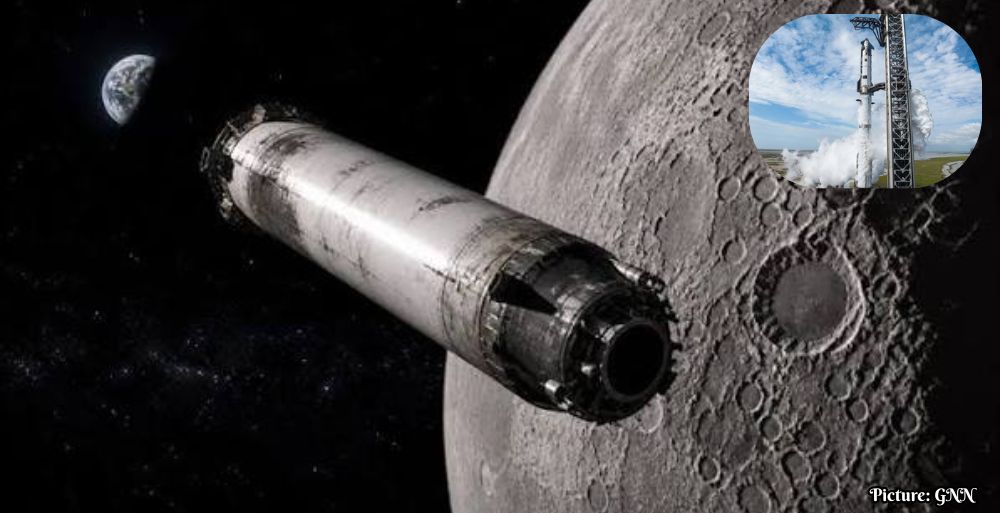
SpaceX successfully launched its Starship spacecraft into orbit for the first time, achieving a critical milestone for the NASA Artemis program and paving the way for future missions to the Moon and Mars.
On Monday, SpaceX marked a significant milestone in its space exploration endeavors by sending its Starship spacecraft into orbit for the first time. This historic launch represents a crucial step in the partnership between SpaceX and NASA, particularly in support of the Artemis program, which aims to return humans to the Moon and eventually facilitate crewed missions to Mars. According to reports from The Associated Press, the mission’s primary objective was for Starship to complete six laps around Earth, demonstrating its operational capabilities.
Prior to the launch, SpaceX communicated that all systems needed to operate flawlessly for the craft to successfully enter orbit. Should any issues arise, the spacecraft was prepared to be redirected for a controlled splashdown in the Indian Ocean. This careful planning underscores the high stakes involved in this mission, as SpaceX seeks to validate Starship’s readiness for future NASA missions, as well as for launching its Starlink V3 satellite network.
Starship’s Design and Operational Capacity
SpaceX has positioned Starship as a “fully reusable transportation system” designed not only to transport crew but also cargo to various destinations including Earth orbit, the Moon, and Mars. The company asserts that Starship is the most powerful launch vehicle ever developed, capable of carrying over 100 metric tons to orbit in a fully reusable configuration. This revolutionary design allows for reduced costs and increased frequency of launches, which are vital components for long-term space exploration.
In a post on the social media platform X, SpaceX announced that Starship had successfully completed its orbital flight and achieved the milestone of delivering Starlink V3 satellites into space for the first time. Elon Musk, the founder of SpaceX, celebrated this achievement in a separate post, stating, “First orbital flight of Starship successful!” This successful flight marks a significant moment for SpaceX, indicating that the company has successfully navigated previous challenges associated with the development of the Starship program.
Regulatory Oversight and Previous Challenges
The successful launch of Starship comes on the heels of a challenging period for SpaceX, particularly following a mishap during a previous test flight in May. The Federal Aviation Administration (FAA) mandated that SpaceX conduct a thorough investigation into a booster failure that led to the craft losing control and crashing into the Gulf of Mexico. The FAA’s assessment concluded that the launch had “resulted in a mishap” due to the malfunctioning super heavy booster, which fell into the Gulf after stage separation. Fortunately, the agency reported that there were no injuries or property damage resulting from this incident.
As SpaceX continues to advance its Starship program, the FAA is expected to maintain oversight to ensure compliance with safety regulations and operational integrity. The agency’s involvement highlights the ongoing regulatory framework governing commercial space launches, especially as private companies like SpaceX assume increasingly pivotal roles in space exploration and satellite deployment.
Significance for the Artemis Program and Future Space Missions
The successful orbital flight of Starship holds significant implications for future space missions, particularly for NASA’s Artemis program. NASA aims to establish a sustainable human presence on the Moon and utilize it as a stepping stone for future manned missions to Mars. The reusability and large payload capacities of Starship are critical features that align with NASA’s long-term goals of expanding human exploration beyond Earth.
Moreover, the successful deployment of Starlink V3 satellites underscores SpaceX’s commitment to expanding its broadband satellite internet service, which aims to provide high-speed internet access to underserved areas across the globe. This dual functionality of Starship enhances its value not only as a vehicle for crewed space missions but also as a critical tool for advancing global communications infrastructure.
As SpaceX prepares for further launches and continues to refine the Starship program, the outcomes of this mission will likely inform future operational strategies and technological advancements. The aerospace community, alongside regulatory agencies, will be closely monitoring subsequent flights to evaluate performance, safety, and the overall trajectory of commercial space exploration.
Looking Ahead
Looking ahead, the successful completion of this orbital flight could pave the way for not only further missions under the Artemis program but also for SpaceX’s broader ambitions in commercial spaceflight. The company has indicated plans to use Starship for a variety of missions, including lunar landings, Mars exploration, and the deployment of additional satellite constellations.
As SpaceX continues to innovate and expand its capabilities, the implications for international space policy, commercial partnerships, and advancements in space technology will be significant. The interplay between regulatory oversight, technological innovation, and the competitive landscape of commercial spaceflight will shape the future of space exploration in the years to come.