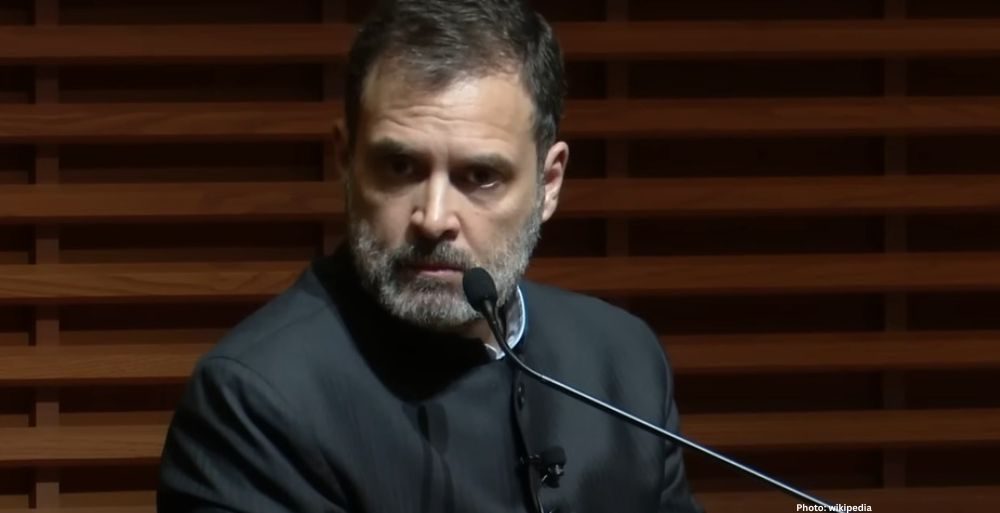
In a recent press conference, Leader of Opposition Rahul Gandhi urged Chief Election Commissioner Gyanesh Kumar to resign, alleging systemic failures within the Election Commission and calling for accountability regarding the integrity of India’s electoral processes.
New Delhi, Sep 24 – Rahul Gandhi, the Leader of Opposition (LoP) in the Lok Sabha, intensified his critique of the Chief Election Commissioner (CEC) Gyanesh Kumar during a press conference on Thursday. Gandhi called for Kumar’s resignation and suggested that he should become an ‘approver’ in what he termed the ‘stealing’ of votes, a statement that underscores growing tensions surrounding electoral integrity in India. This demand follows a media report that revealed internal disagreements within the Election Commission of India (ECI) regarding the Special Intensive Revision (SIR) of electoral rolls, a claim that ECI officials have since refuted.
Gandhi’s comments come at a time when the political landscape in India is marked by increasing scrutiny of the electoral process. The LoP expressed grave concerns over the apparent absence of anti-incumbency sentiment toward the ruling Bharatiya Janata Party (BJP), questioning how such a phenomenon could exist. Drawing parallels with historical instances, he cited the case of former Prime Minister Indira Gandhi, who faced significant anti-incumbency shortly after her electoral victories, particularly following the 1971 Bangladesh Liberation War. Gandhi remarked, “Despite prevailing anti-incumbency for years, it suddenly disappears from Maharashtra, Haryana, Uttar Pradesh,” emphasizing the need for a comprehensive investigation into these anomalies.
Claims of Electoral Manipulation
During the press conference, Gandhi reiterated previous allegations that the 2014 Lok Sabha elections, along with several state assembly elections, were tainted by irregularities and manipulation. He elaborated on the potential consequences of such alleged electoral malpractice, stating, “If the votes are stolen, any law being made by the Parliamentarians, who won on stolen votes, is illegal.” This assertion raises critical questions regarding the legitimacy of legislative actions taken by those elected under questionable circumstances.
In addition, Gandhi referred to a controversial law enacted on December 21, 2023, which purportedly grants the Election Commissioner immunity from investigations. He characterized this development as alarming in the context of maintaining electoral integrity and accountability. Furthermore, he highlighted previous allegations of vote rigging, including initiatives such as the ‘Voter Adhikar Yatra,’ which aimed to protect voters’ rights and ensure the integrity of the electoral process.
Allegations of Governmental Protection
Gandhi further alleged that the lack of action on concerns raised by two dissenting Election Commissioners indicated that Gyanesh Kumar was being shielded by influential figures within the government, including Prime Minister Narendra Modi and Home Minister Amit Shah. He stated, “This has never happened before in the history of independent India. Today elections are fundamentally broken and the laws that have been passed by the Parliament are open to question because the vote has been destroyed.” This assertion reflects a profound mistrust in the current electoral framework and raises concerns about the potential consequences for democratic governance.
In light of these claims, Gandhi demanded Kumar’s immediate resignation, directly addressing him: “What you have done amounts to treason. It is an attack on the Constitution and the legal structure of the country…you were supposed to ensure that the vote is protected.” His comments underscore a broader concern within opposition circles regarding the erosion of democratic institutions and the rule of law in India.
Support for Dissenting Voices
In his statements, Gandhi also commended the two Election Commissioners who reportedly voiced dissent, framing their actions as a brave step toward transparency within the electoral system. He suggested that Gyanesh Kumar should consider turning ‘approver’ as a means of facilitating accountability, characterizing this as an act of nationalism. Gandhi emphasized, “The Prime Minister (Narendra Modi) and Home Minister Amit Shah are undoubtedly going to be investigated for what they have done…This is an act against the Indian State and its people.” This statement not only highlights the potential repercussions for those in power but also reflects Gandhi’s commitment to fostering accountability within India’s democratic framework.
Implications for India’s Democratic Landscape
The implications of these allegations and the ongoing discourse surrounding electoral integrity are significant for India’s political future. The integrity of the electoral process is foundational to democratic governance, and the concerns raised by prominent opposition figures like Gandhi could influence public perception and future electoral reforms. As India approaches subsequent elections, the dialogue about electoral integrity and accountability is expected to remain a contentious topic, with potential ramifications for both the ruling party and opposition movements.
In conclusion, Rahul Gandhi’s recent statements serve as a stark reminder of the challenges facing India’s democratic institutions. As allegations of electoral fraud and manipulation continue to surface, the need for transparency and accountability within the Election Commission and the broader political landscape has never been more critical. The actions and responses of key political figures in the coming months will undoubtedly shape the contours of India’s democracy and the public’s trust in its electoral processes.