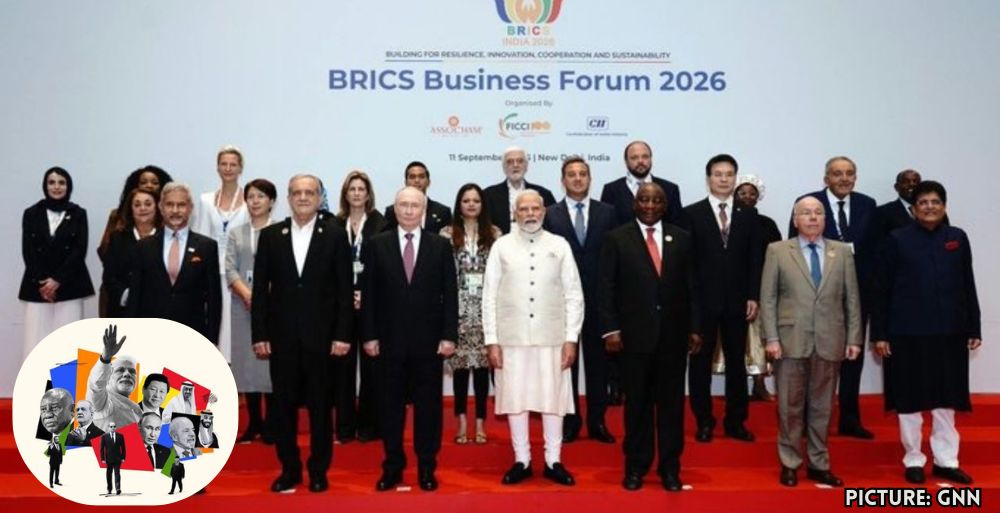
The 18th BRICS Summit, held in New Delhi from September 12 to 13, 2026, focused on enhancing the representation of the Global South in global governance, fostering economic cooperation, and addressing geopolitical challenges.
The 18th BRICS Summit took place in New Delhi on September 12 and 13, 2026, positioning the Global South at the forefront of discussions aimed at reshaping the international order. Under the theme “Building for Resilience, Innovation, Cooperation and Sustainability,” the summit highlighted the need for greater representation of developing nations in global institutions and a unified response to geopolitical and economic instability.
Originally formed by five countries—Brazil, Russia, India, China, and South Africa—BRICS has expanded to include a total of 11 member nations. This enlargement reflects a significant portion of the world’s population and economic capabilities, underscoring the growing influence of developing nations in international affairs.
A Call for Reform in Global Governance
One of the pivotal outcomes of the summit was a renewed demand for reforming international institutions, particularly the United Nations. India, as the host nation, emphasized that developing countries must play a more significant role in global decision-making processes. The New Delhi Declaration articulated BRICS’s commitment to a more representative, equitable, and accountable multilateral system.
This call for reform resonates strongly with nations across Asia, Africa, Latin America, and the Middle East, which argue that post-World War II institutions inadequately represent contemporary demographic, economic, and political realities. Leaders from these regions are increasingly vocal about their need for inclusion in global governance structures that reflect current power dynamics.
India-China Relations: A Key Focus
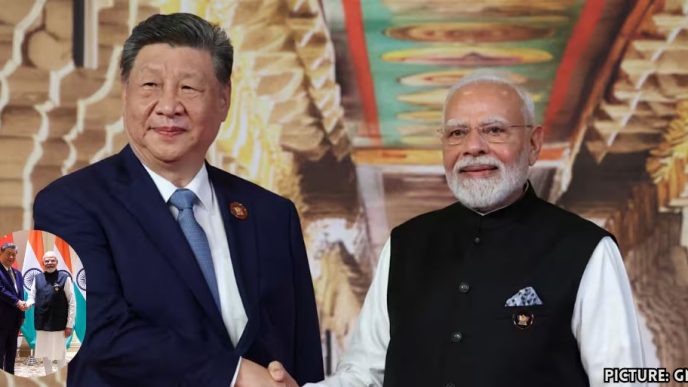
A notable bilateral event during the summit was the meeting between Indian Prime Minister Narendra Modi and Chinese President Xi Jinping, marking Xi’s first visit to India in seven years. Their discussions focused on enhancing economic and transport links, addressing trade-related issues, and ensuring peace along the contested Himalayan border. In 2025, bilateral trade between the two nations reached a record $155.6 billion, although India continues to grapple with a substantial trade deficit with China.
The implications of the Modi-Xi meeting extend beyond their bilateral relationship. Analysts suggest that if India and China can manage their ongoing strategic competition while fostering economic collaboration, BRICS could emerge as a more effective platform for the Global South. Conversely, if tensions resurface, internal divisions could hinder BRICS’s capacity for collective action.
Addressing Financial System Dependencies
The summit also tackled the challenges associated with reliance on existing international financial systems. The New Delhi Declaration welcomed initiatives by the BRICS Payment Task Force aimed at improving cross-border payment mechanisms. While the summit did not establish a common BRICS currency, it indicated a strategic approach toward gradually enhancing local currency transactions and fostering alternative financial systems.
This approach signifies a move away from an immediate substitute for the U.S. dollar, instead focusing on strengthening local currency settlements and payment interoperability. However, experts note that the transition from political rhetoric to functional financial systems faces obstacles, including varying financial regulations, exchange-rate risks, and differing economic structures among the BRICS member states.
Regional Conflicts and BRICS Unity
The ongoing conflict in West Asia presented a significant diplomatic challenge for BRICS during the summit. The New Delhi gathering culminated in a collective appeal for restraint, civilian protection, and respect for sovereignty, reflecting concerns over regional instability. Notably, Iran and the United Arab Emirates participated in discussions, despite their differing positions within the regional crisis.
The ability of BRICS to bring together countries with competing strategic interests highlights its potential for fostering dialogue, though unity among members does not equate to complete agreement. The diverse geopolitical relationships of BRICS nations—ranging from ties with the United States and Europe to relations with China and Russia—underscore the complexity of navigating collective interests.
Advancing Technology and Artificial Intelligence Cooperation
Technological advancements, particularly in artificial intelligence (AI), emerged as key areas for collaboration during the summit. The New Delhi Declaration advocates for broader access to AI, emphasizing the development of trustworthy and inclusive technologies tailored to the needs of developing countries. India promoted initiatives related to digital public infrastructure and health training, signaling a commitment to enhancing digital competencies across the Global South.
For many developing nations, the dialogue surrounding AI transcends mere technological progress; it encompasses access to essential resources such as computing power, data, and digital infrastructure. Furthermore, it raises important questions about their ability to participate in shaping global technology standards.
BRICS as a Non-Anti-Western Platform
An essential takeaway from the summit is that BRICS should not be perceived solely as an anti-Western bloc. Prime Minister Modi reiterated that BRICS is not aimed at opposing any specific country and emphasized India’s continued engagement with major powers, including the United States and Europe. This approach positions BRICS as a platform where emerging economies can assert their interests while maintaining strategic independence.
The Future Credibility of BRICS
The New Delhi summit signifies a substantial evolution in the BRICS grouping, reflecting its growing influence since its inception. However, this expansion brings with it a new set of complexities, as member nations grapple with differing political systems, competing priorities, and divergent foreign policy goals.
The credibility of BRICS going forward will be determined not by the number of member states but by its ability to deliver practical outcomes. Key areas for achieving tangible results include:
- Enhanced cross-border payment systems.
- Increased trade and investment among developing economies.
- Greater local-currency settlements.
- Stronger financing for infrastructure projects.
- Collaboration on AI and emerging technologies.
- Coordinated positions on global development.
- Meaningful reforms of international institutions.
The New Delhi summit marks a critical juncture in the trajectory of BRICS, illustrating its transformation from a collection of five emerging economies to a broader coalition advocating for the Global South’s influence over global governance. The pressing challenge now lies in translating political momentum into actionable policies and institutions that yield real benefits for developing countries.
As the international landscape evolves, the paramount question for the Global South is no longer whether change is imminent, but rather whether developing nations will have a substantive role in shaping the future of global governance.