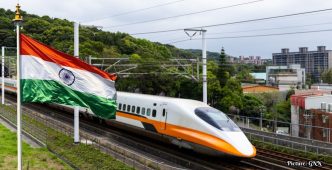
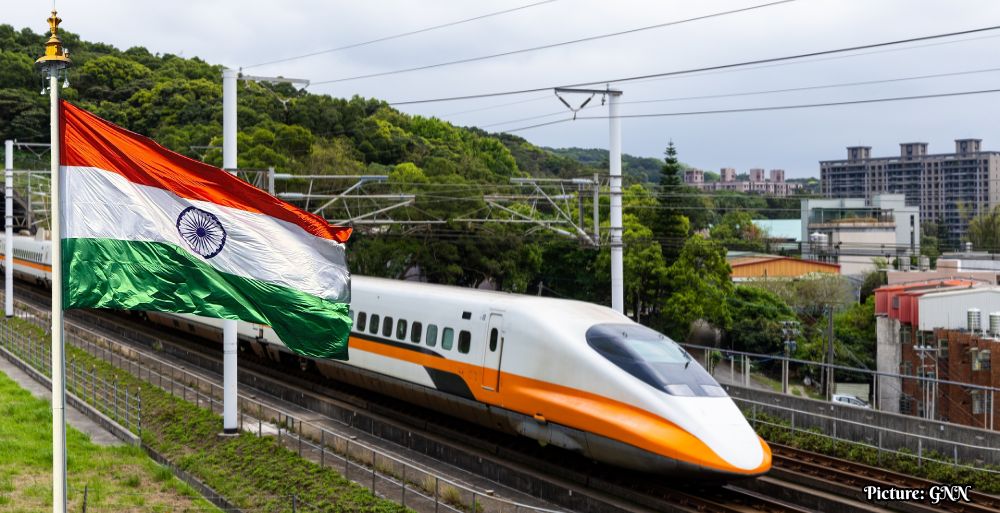
Union Railway Minister Ashwini Vaishnaw announced that India’s first Bullet Train project is advancing rapidly, with the first test coach ready and significant milestones expected ahead, including the commissioning of the Surat-Bilimora section by next year.
Ahmedabad — Union Railway Minister Ashwini Vaishnaw provided an optimistic update on Monday regarding India’s inaugural Bullet Train project, asserting that it is progressing at an impressive pace. The Mumbai-Ahmedabad High-Speed Rail (MAHSR) Corridor, which is set to revolutionize rail travel in the country, is on track for significant milestones in the coming months, including the anticipated commissioning of the first section between Surat and Bilimora in 2024.
Vaishnaw noted that the first test coach has already been manufactured, a critical step in the project’s development. Additionally, he mentioned that civil construction work on the Vapi-Surat segment is expected to reach completion by December 2023. These developments highlight a robust trajectory in both infrastructure advancements and train manufacturing, marking a pivotal phase in Bharat’s first foray into high-speed rail.
Historical Context of the MAHSR Project
The MAHSR Corridor is a cornerstone of Prime Minister Narendra Modi’s broader initiative to modernize India’s transportation infrastructure. Launched with the laying of the foundation stone in September 2017, this ambitious project aims to not only enhance connectivity between major urban centers but also to significantly reduce travel times. The project intends to transform the rail experience by prioritizing passenger comfort, safety, and reliability, thereby aligning with the government’s vision for sustainable economic growth.
Spanning approximately 508 kilometers, the MAHSR Corridor will traverse the states of Maharashtra and Gujarat, as well as the Union Territory of Dadra & Nagar Haveli. The corridor will feature a total of 12 stations, including key locations such as Mumbai (BKC), Thane, Virar, Boisar, Vapi, Bilimora, Surat, Bharuch, Vadodara, Anand, Ahmedabad, and Sabarmati. Each station is being designed to reflect the unique cultural and architectural heritage of its respective city, incorporating modern amenities and ensuring multimodal connectivity to enhance passenger experience.
Economic and Social Benefits
The introduction of the high-speed rail service is expected to yield significant economic benefits. By facilitating quicker movement of people and goods, the corridor is poised to boost trade and tourism in the regions it serves. With the first high-speed rail services projected to commence in August 2027, the project promises to create thousands of jobs during both the construction phase and after the operational launch, thereby stimulating local economies along the route.
Moreover, the MAHSR Corridor is also expected to contribute positively to environmental sustainability. Rail travel is generally recognized as a more energy-efficient mode of transportation compared to road and air travel, producing fewer greenhouse gas emissions. This shift towards high-speed rail aligns with global trends advocating for sustainable transport solutions, positioning India as a proactive participant in addressing climate change challenges.
Challenges and Concerns
Despite the promising progress, the MAHSR project is not without its challenges. Successful completion hinges on a variety of factors, including timely funding, efficient land acquisition processes, and strict adherence to safety standards throughout the construction phase. Historical precedents in large-scale infrastructure projects in India have highlighted the potential for delays due to bureaucratic hurdles or unforeseen complications.
Furthermore, there are ongoing concerns regarding the financial viability of the project. Stakeholders are scrutinizing the implications of ticket pricing and operational costs once the service is launched. The challenge lies in ensuring that ticket prices remain affordable for passengers while also sustaining the project’s economic feasibility. Balancing these concerns will be crucial as the project progresses towards its operational phase.
Future Prospects
The rapid advancements reported by Minister Vaishnaw reflect a commitment to realizing the vision of a modernized rail system in India. As the project moves forward, it holds the potential to not only enhance travel efficiency but also to foster significant economic growth and promote environmental sustainability in the long run. With critical milestones on the horizon, the focus will increasingly shift to the government’s ability to navigate the remaining challenges effectively, ensuring the successful realization of this landmark initiative.
As India embarks on this transformative journey, the implications of the MAHSR Corridor extend beyond just transportation. It represents a strategic investment in the nation’s infrastructure that could redefine connectivity, stimulate economic growth, and pave the way for future high-speed rail projects across the country.