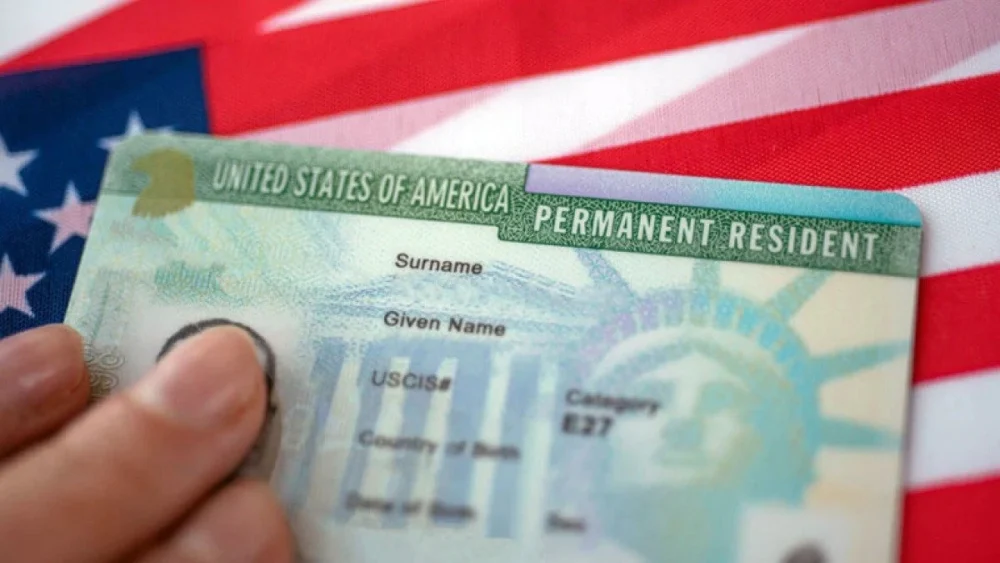

Indian nationals seeking employment-based permanent residency in the United States face fresh uncertainty following an official warning from the U.S. Department of State that the Employment-Based First Preference (EB-1) visa category could completely shut down for Indian applicants in the coming weeks. The impending stoppage is caused by heavy demand reaching statutory allocation limits before the conclusion of fiscal year 2026 on September 30.
ASHINGTON — The U.S. Department of State issued a formal notice in its September 2026 Visa Bulletin warning that high utilization and mounting demand for employment-based first-preference (EB-1) immigrant visas among applicants chargeable to India may exhaust the nation’s annual allotment within weeks.
If the country’s pro-rated limit is reached prior to the end of the federal fiscal year on September 30, immigration authorities will be forced to render the category “unavailable” for the remainder of the fiscal period. The announcement introduces immediate disruption for highly skilled Indian professionals, multinational executives, and top-tier researchers who have traditionally relied on the EB-1 track as a relatively faster alternative to heavily clogged lower-tier employment queues.
“High demand and number use by aliens chargeable to India in the EB-1 visa category may necessitate making the category unavailable in the coming weeks if India’s pro-rated limit in the EB-1 category is reached before the fiscal year ends,” the State Department wrote in its official bulletin. Federal immigration officials added that “this situation will be continually monitored, and any necessary adjustments will be made accordingly.”
Growing Bottlenecks Across All Priority Tracks
The State Department’s warning carries severe ramifications because secondary and tertiary employment-based pathways for Indian nationals are already under historic levels of strain. The EB-1 classification—reserved for individuals with extraordinary ability, outstanding professors, international researchers, and corporate executives—has historically represented one of the few functional immigration avenues for Indian white-collar professionals.
Under the September 2026 Visa Bulletin, the final action date for EB-1 India stands at October 15, 2022. This cutoff requires an Indian applicant to hold an approved priority date earlier than October 15, 2022, to receive final adjudication or an immigrant visa issuance.
+-----------------------------------------------------------------------------------+
|               SEPTEMBER 2026 VISA BULLETIN SUMMARY: INDIA CATEGORIES               |
+----------------------+-------------------+--------------------+-------------------+
| Category             | Description       | Final Action Date  | Dates for Filing  |
+----------------------+-------------------+--------------------+-------------------+
| EB-1                 | Priority Workers  | Oct 15, 2022*      | Dec 1, 2023       |
| EB-2                 | Advanced Degrees  | Unavailable (U)    | Jan 15, 2015      |
| EB-3                 | Skilled Workers   | Jan 01, 2014       | Jan 15, 2015      |
| EB-5 (Unreserved)    | Investors         | Unavailable (U)    | Current / Varied  |
+----------------------+-------------------+--------------------+-------------------+
*Subject to potential full exhaustion before September 30, 2026.
Meanwhile, the Employment-Based Second Preference (EB-2) category—which encompasses professionals holding advanced degrees or individuals of exceptional ability—is formally listed as “U” (unavailable) for India in the September bulletin. The State Department defines “unavailable” as a status indicating that no visa numbers are authorized for issuance during the designated timeframe. The EB-2 category for India reached full exhaustion in August and remains frozen through September.
The delays are equally pronounced within the Employment-Based Third Preference (EB-3) queue, which covers skilled workers and professionals. For September 2026, the EB-3 final action date for Indian nationals sits at January 1, 2014. This reflects a multi-decade backlog stretching back more than 12 years.
By comparison, the EB-3 final action cutoff for applicants from non-backlogged countries stands at September 1, 2024, while mainland China sits at January 1, 2022, and the Philippines holds at August 1, 2023. Furthermore, India’s unreserved EB-5 investor category is similarly marked unavailable for final action in September, though targeted EB-5 set-aside classifications for rural, high-unemployment, and infrastructure developments remain current across all nations.
Statutory Caps and Structural Delays
The acute pressure on Indian immigrants is rooted in statutory constraints established decades ago by the U.S. Congress. Under the Immigration and Nationality Act, federal law enforces a aggregate annual worldwide limit on employment-based preference immigrant visas, set at 186,317 for fiscal year 2026.
Crucially, Section 202(a) of the Act establishes a strict per-country ceiling. No single foreign state can receive more than 7 percent of the total preference visas issued in a fiscal year. For populous countries like India—which contributes a disproportionately large percentage of tech workers, medical professionals, and specialized academics to the U.S. labor force—the 7 percent limitation creates massive structural backlogs.
                          1,264,495 Total Backlog
  +----------------------------------------------------------------------+
  |                     Indian Applicants: 996,599                       | Others |
  |                                (78.8%)                               | (21.2%)|
  +----------------------------------------------------------------------+
According to comprehensive immigration tracking data compiled by policy institutions, nearly 1 million Indian professionals are actively waiting in U.S. employment-based green card queues. Independent analyses indicate that Indian applicants comprise roughly 79 percent of the total global backlog across the top three employment preference categories.
Recent assessments by the National Foundation for American Policy (NFAP) highlight that an Indian professional entering the EB-2 queue today faces a theoretical calculated wait time extending across decades, barring legislative interventions or significant statutory restructuring. Even after temporary surges in visa issuances between fiscal years 2020 and 2024—when roughly 980,460 employment green cards were issued globally due to unused family-sponsored visas rolling over—the underlying queue for Indian nationals expanded by double-digit percentages.
Administrative Realities for Adjusting Status
The State Department’s dates-for-filing chart provides slightly later cutoffs than the final-action table. For Indian nationals in September, filing dates are listed as December 1, 2023, for EB-1; January 15, 2015, for EB-2; and January 15, 2015, for EB-3.
However, U.S. Citizenship and Immigration Services (USCIS) dictates which chart applicants inside the United States may utilize when applying for adjustment of status (Form I-485) in any given month. For September 2026, USCIS confirmed that employment-based applicants must rely strictly on the Final Action Dates chart, effectively restricting new adjustment filings for individuals whose priority dates do not meet the stricter final action cutoffs.
Additional friction occurs prior to filing petitions with immigration authorities. Employer-sponsored green card applicants must first clear the Department of Labor’s Program Electronic Review Management (PERM) labor certification process. Federal processing metrics indicate that PERM reviews routinely take two to three years before a petition even enters the formal USCIS queue, extending the timeline for temporary visa holders such as H-1B specialty workers.
Congressional representatives and business groups have repeatedly advocated for altering or eliminating per-country caps and expanding annual allocations, arguing that structural caps harm economic competitiveness. Opposite viewpoints contend that overall immigration limits protect domestic labor markets. In the absence of legislative revisions by Congress, Indian applicants remain bound by fixed statutory limits, facing complete category pauses as fiscal year 2026 draws to a close.