
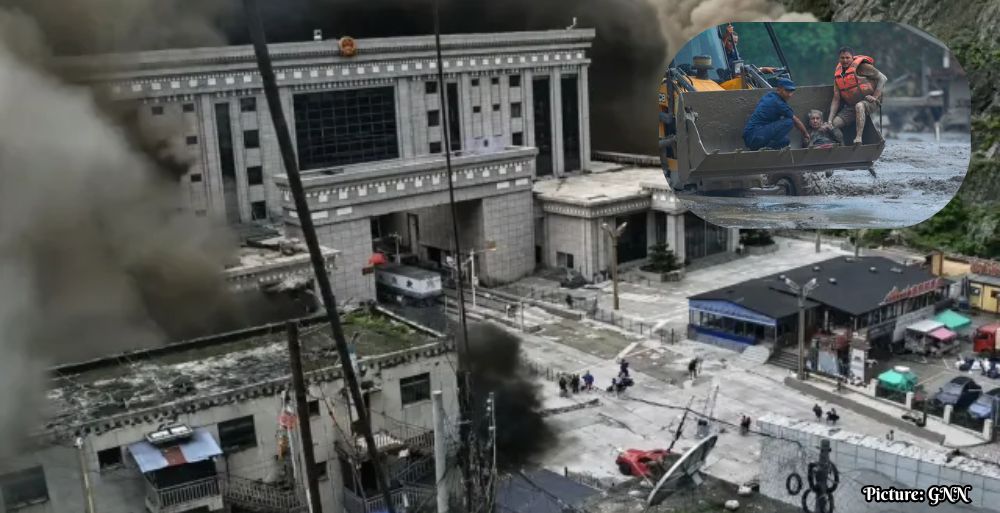
A U.S. Catholic bishop has urged the international community to enhance humanitarian support in the wake of catastrophic flooding in Nepal, which has resulted in significant loss of life and extensive destruction.
A catastrophic natural disaster struck Nepal on August 26, 2023, when a glacial collapse in Langtang National Park triggered severe flooding along the Nepal-China border. This devastating event has claimed the lives of over 580 individuals, with more than 1,900 reported missing, according to the U.S. Geological Survey (USGS). The agency reported that a 5.2 magnitude event caused debris flows that traveled over 60 miles, severely impacting communities situated along the Trishuli and Bhote Koshi Rivers.
As search and rescue operations continue, humanitarian organizations are actively assessing the situation amidst fears of secondary flooding due to ongoing rainfall. The United Nations’ World Meteorological Organization has issued warnings about the potential for further disasters in the region, complicating relief efforts and increasing urgency for international assistance.
Response from the U.S. Catholic Community
Bishop Elias Zaidan of the St. Louis-based Maronite Eparchy of Our Lady of Lebanon of Los Angeles, who serves as chair of the U.S. Conference of Catholic Bishops’ Committee on International Justice and Peace, expressed his condolences and solidarity with those affected in a statement released on August 27. Zaidan emphasized the urgent need for the international community to mobilize greater humanitarian assistance for the vulnerable populations impacted by the flooding. “As we learn more about the devastating flash floods in Nepal, I offer the prayers and solidarity of the Catholic community in the United States for our brothers and sisters impacted by this disaster,” he stated.
In his call to action, Zaidan highlighted the importance of both immediate relief efforts and long-term strategies to help affected communities recover. He noted that Catholic Relief Services (CRS), the humanitarian arm of the U.S. Conference of Catholic Bishops, is closely monitoring the emergency situation and coordinating with local partners, including Caritas Nepal, to assess urgent needs and determine the best course of action.
Local Coordination and On-the-Ground Challenges
Raju Pradhan, an emergency aid coordinator for Caritas, described the scale of the destruction as “almost beyond comprehension.” He reported that disaster alerts issued by the Nepalese government were ineffective in preventing loss of life, particularly near the flood’s origin, where warnings were received too late. “But further downstream, without these warnings, many more people would likely have lost their lives,” he remarked. Furthermore, there is an ongoing concern that many residents did not fully grasp the urgency of the warnings that were issued, which contributed to the severity of the disaster’s impact.
In response to the disaster, various organizations are providing essential supplies such as food, water, blankets, sleeping bags, and emergency shelters for children and teenagers. Pradhan stated that in one small town where Caritas has been active, 400 homes were destroyed, which underscores the extensive damage inflicted by the flooding. He reiterated the necessity for immediate relief while also recognizing the challenges of coordinating such efforts in the aftermath of a disaster.
Long-Term Recovery Efforts and Funding Needs
Pradhan also emphasized the necessity for long-term relief efforts aimed at addressing the extensive challenges posed by the disaster. He noted that the scale of the recovery will demand significant funding, which is currently lacking. “This will require a lot of money, which we don’t have at the moment,” he explained, highlighting the financial constraints that disaster response organizations face in the wake of such a large-scale emergency.
In light of the urgent situation, CRS has established an emergency relief fund to aid in the response efforts, allowing donations through various online platforms, as well as by phone and mail. Bishop Zaidan expressed his gratitude for the support provided by the U.S. government in facilitating CRS’s essential work in the region. He also acknowledged the efforts of the U.S. Department of State, which is reportedly monitoring the situation closely and deploying personnel to assist with response initiatives.
International Solidarity and Future Implications
In his statement, Zaidan invoked the support of the Catholic community and called on the international community to work collaboratively to address the pressing needs of the Nepalese people. He expressed hope that Mary’s Immaculate Heart would “provide consolation and shelter to all those affected by this disaster” and inspire collective action to support recovery efforts.
The flooding in Nepal not only underscores the vulnerability of communities to natural disasters but also highlights the critical need for international cooperation in disaster response and recovery efforts. As the situation unfolds, the response from the global community will play a pivotal role in shaping the recovery trajectory for those affected by this calamity. The challenges faced by local agencies and international organizations alike will test their resilience and resourcefulness as they work to restore hope and rebuild lives in the aftermath of this disaster.