
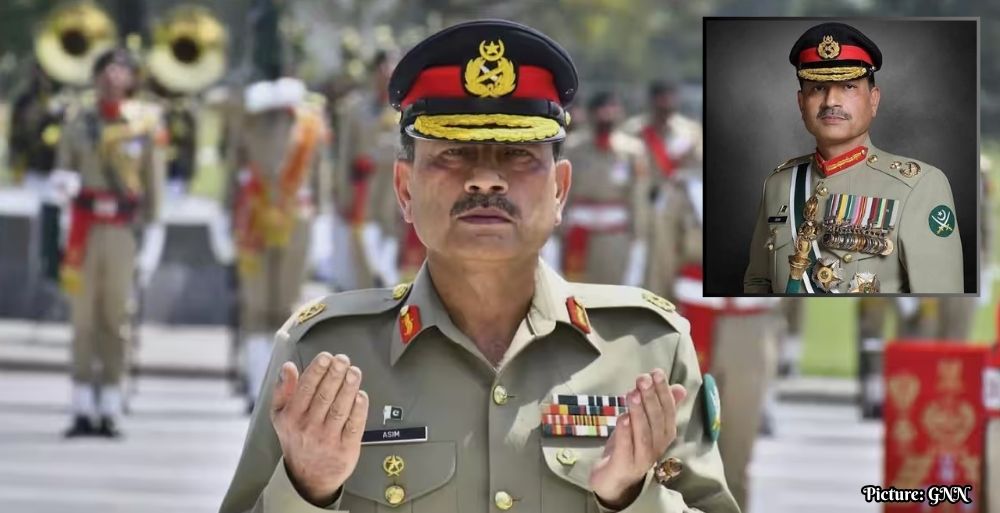
ISLAMABAD — In a sweeping institutional overhaul that fundamentally alters the balance of power within South Asia’s nuclear-armed state, Pakistan’s parliament has enacted landmark legislation granting absolute, centralized authority over the nation’s military apparatus to Chief of Defence Forces (CDF) Field Marshal Syed Asim Munir. Passed amid a sudden opposition walkout and zero substantive floor debate, the Defence Forces of Pakistan Act 2026—alongside statutory amendments to the National Command Authority Act 2010—formally merges operational control of the Army, Navy, Air Force, and nuclear strike assets under a newly established Integrated Defence Forces Headquarters. Political analysts and regional observers characterize the rapid legislative maneuver as a “soft coup” executed through democratic mechanics, transferring unbridled security, administrative, and strategic decision-making to a single military commander while reducing civilian political institutions to secondary instruments of diplomatic governance.
ISLAMABAD — Against a backdrop of choreographed political drama in the capital, Pakistan’s National Assembly and Senate approved the Defence Forces of Pakistan Act 2026 on August 20, granting Field Marshal Syed Asim Munir unprecedented command and personnel authority across all branches of the armed forces.
The passage occurred alongside high-profile political theater, including the sudden late-night transfer of an imprisoned former prime minister from a premier Islamabad hospital back to a high-security prison cell under the justification of broken medical equipment. While domestic media focused on the surrounding judicial and political spectacles, lawmakers in the National Assembly pushed through the historic defense bill without a single minute of formal committee review or parliamentary debate, triggering a immediate walkout by opposition members.
The statutory measure completes an institutional transition that began with the passage of the 27th Constitutional Amendment in late 2025, which created the office of the Chief of Defence Forces and abolished the long-standing Chairman of the Joint Chiefs of Staff Committee (CJCSC). By binding the role of Chief of Army Staff directly to the CDF post, the new legislation cements Field Marshal Munir as the undisputed center of Pakistan’s defense, intelligence, and strategic hierarchy.
Absolute Personnel Command and Institutional Restructuring
The most far-reaching provision of the Defence Forces of Pakistan Act 2026 resides in its complete overhaul of military personnel administration. Under the newly established statutory framework, the Chief of Defence Forces holds sole authority to accept, reject, or mandate the resignation, retirement, discharge, or service extension of any commissioned officer across the Army, Navy, and Air Force.
Crucially, this authority bypasses standard civilian oversight and traditional departmental boards. Service officers within the Pakistani armed forces will no longer effectively serve at the constitutional pleasure of the President of Pakistan or through executive orders of the Ministry of Defence; instead, they serve at the direct discretion of the CDF.
The legislation also establishes the Integrated Defence Forces Headquarters (DFHQ) as the nerve center for multi-domain integration. The CDF will exercise sole command over:
- Tri-Service Integration: Operational coordination, force deployment, and doctrine development across land, maritime, and air domains.
- Personnel Oversight: Retention, age-limit relaxations, discipline, and promotions across all branches excluding specific presidential appointees under Article 243 of the Constitution.
- Single-Point Advisory: Serving as the exclusive primary military advisor to the Federal Government on national security, operational posture, and defense policy.
To reinforce this dominance, the Act contains an explicit overriding clause. Its provisions, regulations, and executive directives supersede conflicting language in legacy statutes, including the Pakistan Army Act of 1952, the Pakistan Air Force Act of 1953, and the Pakistan Navy Ordinance of 1961. Remarkably, the law applies retrospectively from November 13, 2025, legally insulating command decisions and administrative orders issued during the transitional period.
Consolidation of Nuclear Command Dynamics
Concurrently, amendments to the National Command Authority (NCA) Act 2010 formally restructure the operational governance of Pakistan’s strategic nuclear arsenal. The legislation replaces legacy references to the Chairman of the Joint Chiefs of Staff Committee with the Chief of Defence Forces and establishes a streamlined National Strategic Command.
Under the revised structure, the operational commander of the National Strategic Command will be formally appointed by the Federal Government only upon the explicit approval of the CDF.
Regional defense analysts warn that shifting nuclear oversight from multi-member consultative bodies—such as the legacy Employment and Development Committees—to a centralized military executive creates a significantly tighter, less transparent decision loop during bilateral crises. The elimination of institutional checks shortens reaction times, increases opacity regarding nuclear signaling, and heightens the risk of miscalculation during periods of heightened military readiness.
Civilian Theater vs. Uniformed Power
The statutory consolidation marks a qualitative evolution in Pakistan’s historic governance model. Rather than exercising power through indirect political manipulation, backchannel directives, or overt martial law interventions, the military leadership has institutionalized its supremacy directly through statutory law passed by an elected parliament.
Under this operational architecture, civilian politicians are permitted to manage electoral campaigns, oversee routine legislative affairs, and conduct international trade negotiations. However, strategic national choices—including internal security priorities, counter-insurgency timelines, defense procurements, and foreign military alignments—remain the exclusive domain of the military hierarchy. Civilian executive legitimacy is leveraged to provide international optics and domestic calm, while real authority resides within the DFHQ.
Selective Use of Cross-Border Proxies and Internal Operations
The centralized command apparatus is expected to enforce a dual-track security strategy. Internally, the military is ramping up high-tempo counter-insurgency operations in restive provinces, particularly Balochistan and Khyber Pakhtunkhwa. These operations aim to suppress domestic insurgencies, reassert state authority, and secure critical economic infrastructure linked to Chinese investments under the China-Pakistan Economic Corridor (CPEC).
Externally, observers project that the command structure will preserve deniable, non-state proxy networks as instruments of strategic leverage against India. Rather than dismantling irregular groups, the centralized hierarchy is positioned to manage these networks more tightly, keeping cross-border provocations at calibrated thresholds designed to harass Indian security forces without triggering full-scale conventional retaliation.
This reliance on deniable tools allows the state to project asymmetric force while attempting to insulate itself from immediate international sanctions or attribution.
Geopolitical Hedging and Strategic Constraints
Despite the centralization of domestic power, Pakistan’s external posture remains bounded by severe economic and geopolitical realities. Islamabad continues to rely heavily on its strategic partnership with Beijing for military hardware and economic stability. However, Chinese support has proven transactional; key defense procurements—such as requested transfers of fifth-generation J-35 stealth fighters—have faced delays due to production bottlenecks and concerns over Islamabad’s fiscal capacity.
To balance its dependencies, the military leadership is actively engaging secondary global partners. Financial buffers from Saudi Arabia and the Gulf states, combined with defense technology cooperation from Turkey and transactional engagement with Washington, provide Islamabad with vital fiscal cushion and political leverage.
Regional Escalation Risks and Policy Implications for New Delhi
For India, the concentration of operational, administrative, and nuclear authority in a single office represents a structural shift in regional deterrence dynamics. Historical crisis management models—which relied on multi-tiered civilian and diplomatic intervention windows—may no longer apply against a streamlined military decision loop.
Defense experts emphasize that New Delhi must adapt to narrowing escalation timelines. Key strategic priorities recommended by security analysts include:
- Advanced Technical Attribution: Investing in rapid intelligence, surveillance, and reconnaissance (ISR) fusion centers to instantly counter plausible deniability during proxy or cross-border incursions.
- Direct Crisis Channels: Maintaining operational, low-profile military-to-military hotlines to prevent accidental escalation stemming from miscalculated conventional probes.
- Calibrated Deterrence: Deploying precise, rapid, and proportionate military responses that impose immediate costs on coercive actions without triggering uncontrolled nuclear spirals.
- Diplomatic Counter-Leverage: Engaging international patrons and regional partners to raise the financial and diplomatic costs for state-sponsored irregular warfare.
The passage of the Defence Forces of Pakistan Act 2026 confirms that Pakistan’s military dominance is no longer merely an informal political reality, but the explicit statutory foundation of the state. As decision-making shifts entirely to the Integrated Defence Forces Headquarters, regional stability will increasingly depend on how a centralized command calculates risk, deterrence, and crisis management along one of the world’s most volatile borders.