As the global climate crisis intensifies, scientists warn of an era characterized by unprecedented extreme weather events, urging nations to recognize the urgent need for action.
NEW YORK — Recent discussions centered on climate change have taken a more urgent tone, as scientists warn that the world is on the brink of experiencing a series of catastrophic weather events. The stark warning resonates with themes explored in Kim Stanley Robinson’s novel, “The Ministry for the Future,” which depicts a devastating heat wave in India leading to millions of deaths and ultimately prompting global cooperation against climate change.
Historically, scientists have long cautioned that climate change would result in increasingly severe weather phenomena, including heat waves, storms, floods, and droughts. What was once speculative has now shifted into a looming reality, as experts predict that such events may become inevitable. Daniel Swain, a climate scientist at the California Institute for Water Resources, articulates the challenge of communicating these risks, noting, “The risk is that people just think you are exaggerating. It’s the ‘Boy Who Cried Wolf’ problem. Sometimes wolves are real. If it’s outside the door, wouldn’t you want to know?”
Historical Context of Climate Change
The understanding of climate change has evolved significantly over the last century and a half. In the 1850s, Eunice Newton Foote, an amateur scientist, conducted experiments demonstrating that carbon dioxide, a greenhouse gas released from fossil fuels, could trap heat. Her early findings laid the groundwork for our understanding of how greenhouse gases contribute to rising global temperatures. Today, the Earth has warmed by approximately 1.44 degrees Celsius (2.59 degrees Fahrenheit) since the early 1800s, a change that has been linked to an uptick in extreme weather occurrences.
The United States is the largest historical emitter of greenhouse gases, yet significant governmental initiatives to mitigate climate change remain limited. During his presidency, Donald Trump characterized climate change as a hoax, deeming climate policies as a “Green New Scam.” As the nation prepares to celebrate its 250th anniversary, this perspective continues to influence public discourse and policy surrounding environmental issues.
Recent Extreme Weather Events
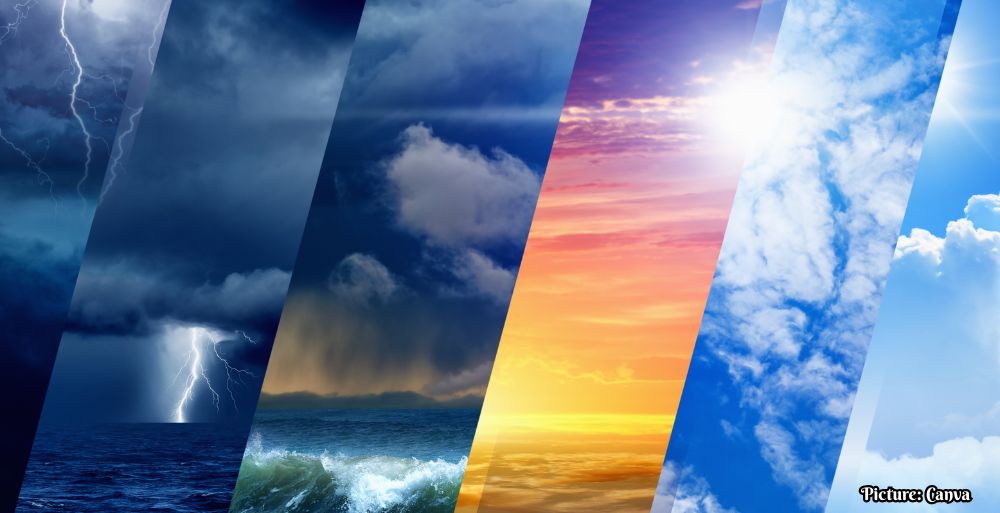
Extreme weather has manifested across the globe, underscoring the urgency of the situation. Australia’s “Black Summer” wildfires in 2019-2020 burned over 46 million acres, while catastrophic flooding in Pakistan in 2022 submerged a third of the country. In 2024, Hurricanes Milton and Helene wreaked havoc in the southern United States, alongside numerous smaller disasters such as the Texas floods and wildfires in Los Angeles. These events illustrate a concerning trend: the planet may be entering an era marked by frequent and severe climatic disturbances.
Sarah Perkins-Kirkpatrick, a climate scientist at the Australian National University, emphasizes that even if the world were to achieve net-zero greenhouse gas emissions immediately, the repercussions of past emissions would persist for centuries. “If we get used to bracing ourselves, are we going to notice?” she questions, highlighting the ongoing nature of climate impacts.
Preparedness and Public Perception
Despite the clear risks, no country is fully prepared for a major climate disaster. Robinson suggests that if he were rewriting his novel today, he would include a chapter on the escalating threat of wildfires, which have become increasingly larger and more destructive. While advancements in renewable energy may reduce dependence on traditional electrical grids, the risks of climate catastrophe remain heightened.
Psychologically, humans often avoid confronting uncomfortable realities, a tendency that complicates efforts to address climate change. Rather than proactively reducing greenhouse gas emissions or modernizing infrastructure, many individuals and governments have opted for denial or inaction. Sonia Seneviratne, a climatologist with the Intergovernmental Panel on Climate Change, draws parallels between climate risk and smoking-related health issues, stating that while not every smoker develops lung cancer, the risk is significantly elevated.
Lessons from Natural Disasters
The preparedness strategies employed in California for earthquake risks may offer insights for climate change mitigation efforts. Lucy Jones, a seismologist, has been instrumental in promoting earthquake preparedness in Los Angeles, fostering a culture of readiness that could be applied to climate-related disasters. Jones asserts that belief in the reality of risks—and the viability of solutions—is crucial for motivating change. “Climate denial is one way of coping,” she explains, noting that some rationalize their inaction by dismissing the issue entirely.
Media Representations of Climate Change
Popular media often portray extreme weather events in exaggerated terms, leading to a dichotomy of outcomes: either miraculous recovery or total devastation. Films like “The Day After Tomorrow” and “Don’t Look Up” reflect public anxieties about climate change, yet they can oversimplify the complexities involved. Such narratives may inadvertently contribute to a sense of helplessness rather than encouraging proactive measures.
Future Projections and Tipping Points
As climate scientists continue to study the implications of greenhouse gas emissions, the consensus is that more extreme weather events are inevitable. The pace of climate change is accelerating, with significant historical emissions contributing to current risks. Recent studies have demonstrated that the frequency and intensity of climate impacts are occurring at a pace faster than previously predicted.
One alarming indicator is the phenomenon of “tipping points,” which refer to thresholds beyond which significant environmental systems may fail to recover. For instance, coral reefs globally are experiencing unprecedented stress, with NOAA reporting that 84% of corals are expelling vital algae due to heat stress. The Amazon rainforest, a crucial carbon sink, faces similar threats from deforestation and climate-induced drought.
Looking ahead, this year’s El Niño, expected to be the strongest on record, may exacerbate existing climatic conditions, further elevating global temperatures. Experts like Tim Lenton, a climate science professor at the University of Exeter, assert the importance of addressing worst-case scenarios, stating, “We need to be talking about some of the worst things that can happen.” The growing consensus among scientists is clear: larger shocks from climate change are on the horizon.