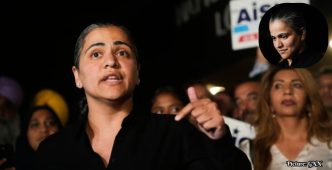
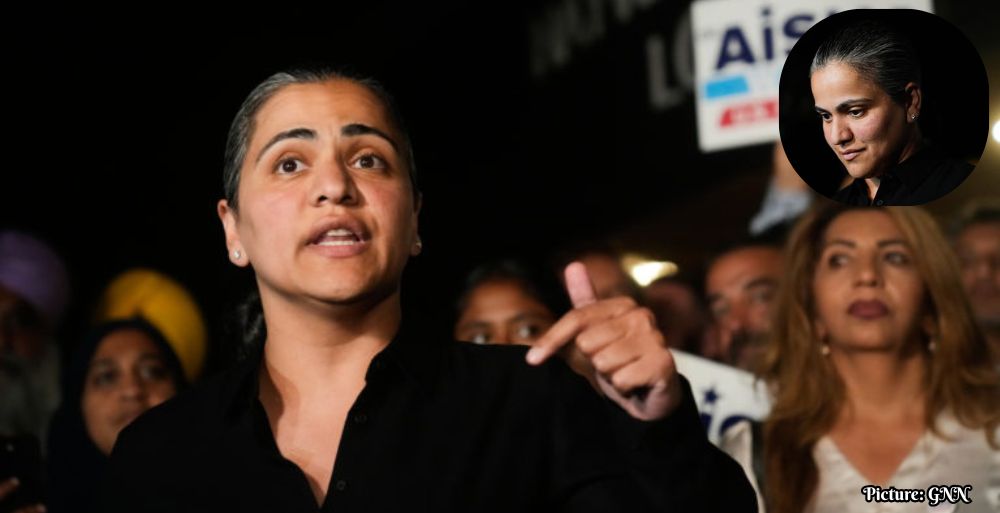
Aisha Wahab has been elected to Congress in a closely monitored special election to fill the seat vacated by Eric Swalwell, highlighting significant intra-party dynamics within California’s Democratic Party.
Aisha Wahab, a progressive state senator, has emerged victorious in a special election to represent California’s 14th congressional district, a seat that was previously held by Eric Swalwell. Swalwell resigned in April following allegations of sexual misconduct, which he has denied. Wahab’s election is significant not only for her political alignment but also for her historic status as the first Muslim woman and Afghan American to be elected to the California legislature.
The special election took place on Tuesday, with Wahab consistently viewed as the frontrunner throughout the campaign. She won the primary to complete Swalwell’s remaining term by securing a lead of over 20 percentage points against her closest competitor, Melissa Hernandez, the president of the board of directors for the Bay Area Rapid Transit (BART) agency. However, as of Thursday afternoon, with approximately 95% of the votes counted, Wahab’s margin over Hernandez had narrowed to just over six points, indicating a much closer race than many analysts had anticipated.
Campaign Dynamics and Financial Influence
Wahab’s campaign was bolstered by endorsements from various influential groups, including the California Democratic Party, labor unions, local officials, and state Attorney General Rob Bonta. These endorsements positioned her as the favored candidate among the progressive base of the party. However, the race was significantly impacted by the financial influence of Super PACs associated with the American Israel Public Affairs Committee (AIPAC). Reports indicate that these groups poured over $5 million into the race in its final weeks, funding pro-Hernandez advertisements and attack ads targeting Wahab.
According to Track AIPAC, an organization that monitors the financial activities of political groups, nearly $6.4 million was spent to support Hernandez’s candidacy. The influx of such substantial financial backing for Hernandez raised concerns regarding the potential impact of outside money on the electoral process. Wahab expressed her apprehensions about this interference, stating in an interview with the Guardian, “There had been a sudden surge of critical ads that had misrepresented my record,” underscoring her belief that external funding was attempting to manipulate the election outcome.
Endorsements and Party Dynamics
The campaign intensified further following a notable endorsement from Congresswoman Zoe Lofgren, who is the chair of California’s Democratic delegation. Lofgren publicly endorsed Hernandez, criticizing Wahab for not supporting an initiative to elect a caretaker candidate to fill Swalwell’s seat promptly. This endorsement sparked significant backlash from Wahab’s supporters, particularly those aligned with the progressive wing of the party.
Amar Shergill, a former chair of the California Democratic Party’s progressive caucus, labeled Lofgren’s actions as “astounding” and continued to vocally support Wahab amid the evolving dynamics of the race. This situation reflects the ongoing tensions within the Democratic Party, particularly between its establishment and progressive factions. The endorsement highlighted a schism that could have longer-term implications for party unity as it prepares for future elections.
Despite the challenges posed by Hernandez’s campaign and the substantial financial support she received, Wahab maintained a strong presence in the district. This connection was evident in her victory speech, where she stated, “I will fight for this district that raised me. From foster care to Congress, this journey shows the possibility of the American Dream.” Her remarks resonate with many voters who value personal stories of resilience and empowerment.
Hernandez’s Response and Future Outlook
In her response to the outcome of the election, Hernandez expressed pride in her campaign, emphasizing her history of fighting for the residents of California’s 14th district. “I’ve been a fighter my whole life, and when I promised the residents of CA-14 I would fight for them, I never gave up,” she stated, reflecting her commitment to public service and the constituents she aimed to represent.
As Wahab prepares to take office, her election may signal a shift in the political landscape of California’s East Bay. Her alignment with progressive priorities—such as social justice, healthcare reform, and economic equity—could influence not only local governance but also the broader Democratic Party as it grapples with internal divisions. The implications of this election extend beyond the immediate context, potentially affecting future electoral strategies and candidate selections within the party.
Overall, Wahab’s victory represents a significant moment for her district and for progressive politics in California. As she steps into her new role, the dynamics of her leadership and the policies she champions will be closely monitored by both supporters and critics alike, as they seek to understand the future direction of Democratic representation in the region.