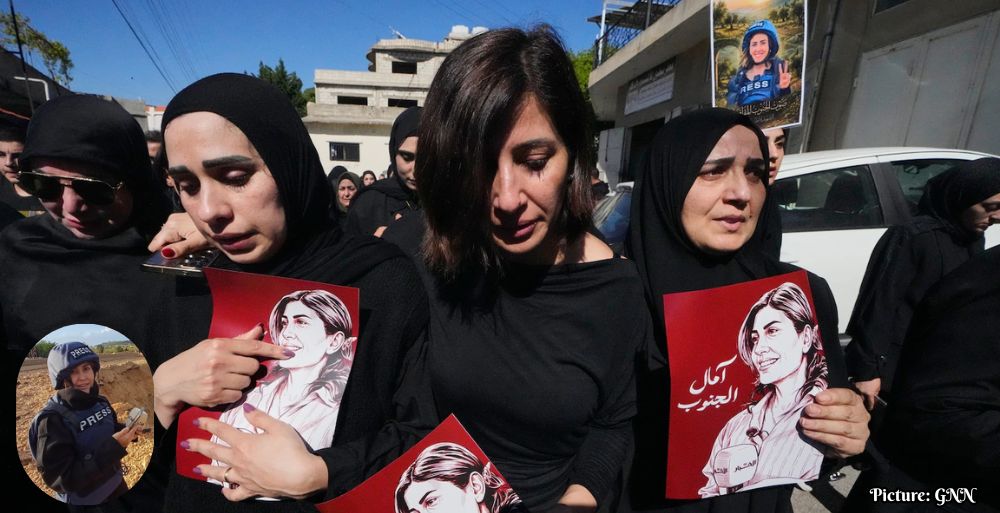
An Israeli airstrike that resulted in the death of Lebanese journalist Amal Khalil and injuries to her colleague Zeinab Faraj has been classified as a war crime by multiple human rights organizations, prompting calls for accountability and sanctions against Israeli officials.
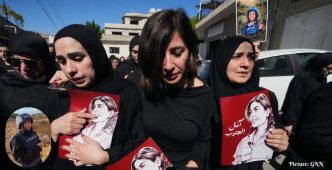
An Israeli airstrike on April 22, 2023, which killed Lebanese journalist Amal Khalil and injured her colleague Zeinab Faraj, has been condemned as a war crime by three prominent human rights organizations—Human Rights Watch (HRW), Amnesty International, and Legal Agenda. These organizations assert that the Israeli military conducted a deliberate attack on civilians, demonstrating a clear disregard for the safety of non-combatants.
Incident Overview
The investigation conducted by HRW, Amnesty International, and Legal Agenda revealed that the Israeli military was aware that Khalil and Faraj were civilians at the time of the attack. The organizations noted that the Israeli military has killed at least 15 journalists in Lebanon and 210 in Gaza since the onset of conflict in 2023, as documented by the United Nations human rights office.
On the day of the incident, Khalil, a 42-year-old journalist for al-Akhbar, and Faraj, a 21-year-old freelance camerawoman, were in the village of al-Tiri in southern Lebanon to verify claims about the withdrawal of Israeli troops from the area. They were following a vehicle carrying Ali Nabil Bazzi, a municipal official, and his friend, Mohammed Hourani, when an airstrike struck the vehicle at approximately 2:25 PM, killing both men.
In the aftermath, Khalil contacted the Lebanese civil defense for assistance. However, rescue efforts encountered significant delays at a military checkpoint, where civil defense teams were instructed to wait for authorization from the Israeli military to enter the area safely. This delay in rescue efforts would prove critical.
Timeline of Events
According to reports, the United Nations peacekeeping force in Lebanon provided a safe route for civil defense teams by 5 PM. However, the Israeli military had not yet granted permission for entry at that time. While waiting for assistance, Khalil and Faraj left their vehicle to seek shelter in a nearby building. During this period, Israeli drones were observed circling overhead, adding to the tension of the situation.
At approximately 3:40 PM, the Israeli military conducted a second airstrike, targeting the journalists’ car and injuring both women. Faraj later described the chaos: “Glass and debris flew towards us. My ear felt like it burst. Amal was bleeding heavily from the nose and head and had shrapnel wounds in her arm and thigh; she couldn’t move her leg.” Following the attack, the two women attempted to find safety in a nearby building.
Compounding Delays in Rescue Operations
Despite their urgent pleas for assistance, the rescue teams were not allowed to enter the area until about 5 PM, when the Israeli military granted access. Tragically, by that time, Khalil had been trapped under the rubble for hours. The Lebanese Red Cross was finally able to evacuate Faraj, who sustained severe injuries, including a fractured skull and multiple other wounds. However, rescuers were unable to rescue Khalil, who remained buried under the debris.
Khalil’s body was recovered at approximately 11 PM, and an examination indicated that she likely died around 7 PM, two-and-a-half hours after the final strike. This timeline raises significant questions regarding the Israeli military’s responsibility in facilitating a timely rescue.
Responses from Human Rights Organizations
Human Rights Watch and other organizations have condemned the actions of the Israeli military. Ramzi Kaiss, a Lebanon researcher for HRW, stated, “The evidence is clear that the Israeli military knew, or should have, that Faraj and Khalil were civilians, but attacked them anyway, and then prevented paramedics from rescuing them for hours.” The organizations have called for thorough investigations into these attacks and urged the international community to impose an arms embargo against Israel, emphasizing the ongoing pattern of civilian casualties attributed to Israeli military operations.
Israeli Military’s Position
In response to the allegations, the Israeli military expressed regret for any harm caused to journalists but contended that the attacks were part of a broader military operation targeting Hezbollah operatives. They maintained that the journalists were killed amidst a series of events connected to military actions in the vicinity. However, the justification of such strikes raises ethical questions regarding the protection of civilians, particularly journalists, in conflict situations.
Implications for Press Freedom and Civilian Safety
This incident underscores the ongoing dangers faced by journalists in conflict zones and the responsibilities of military forces to distinguish between combatants and non-combatants. The high number of journalist casualties in the region raises critical concerns about press freedom and the safety of media professionals working in war-torn areas.
The international response to these allegations will likely influence discussions surrounding military operations and the protection of human rights amid ongoing conflicts. As calls for accountability grow louder, the implications of this incident extend beyond the immediate tragedy, highlighting a broader pattern of violence against civilians and the necessity for a comprehensive reassessment of international arms policies regarding Israel.
Heba Morayef, director for the Middle East and North Africa at Amnesty International, emphasized the need for change, stating, “The impunity enjoyed by Israeli forces for the killing of journalists and other civilians in Lebanon over the past three years has enabled the Israeli military to continue with its unlawful airstrikes, including direct attacks on civilians.” Morayef concluded, “It is well past time that the international community impose a comprehensive arms embargo on Israel.”