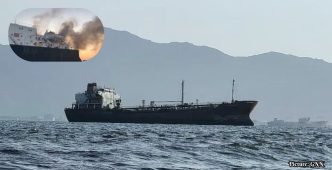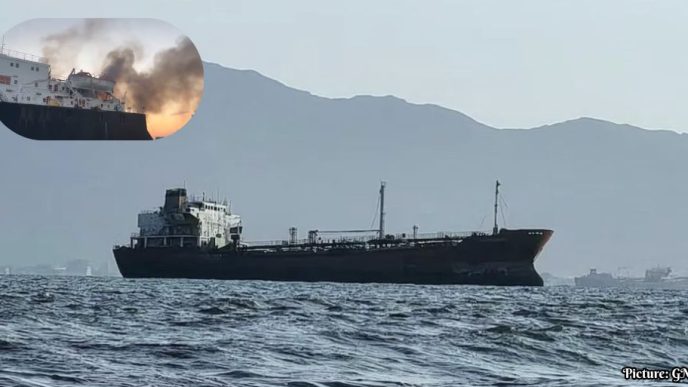
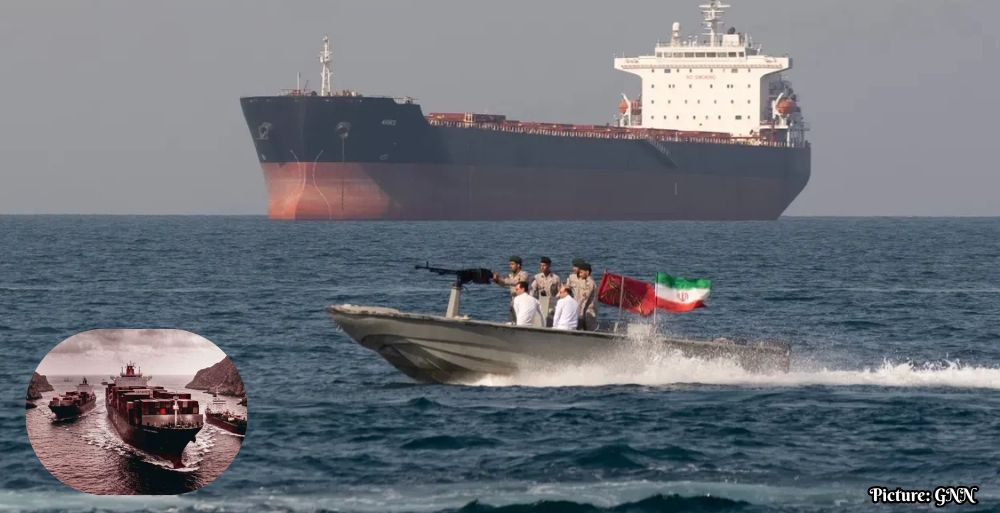
The risk to oil tankers navigating the Middle East has reached unprecedented levels since the onset of the Iran conflict, with recent attacks heightening concerns over maritime security and oil supply.
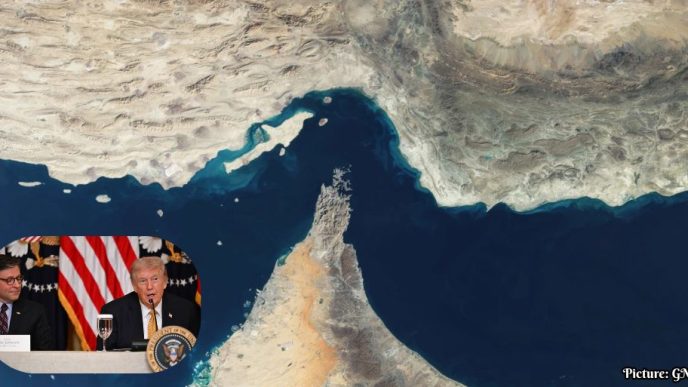
The ongoing conflict in the Middle East has resulted in a significant increase in threats to oil tankers, marking the most critical period for maritime security since the start of the Iran war. Analysts are expressing grave concerns following a series of recent attacks on vessels in the Red Sea, which has become an alternative route for oil transportation since Iran’s blockade of the Strait of Hormuz.
Matthew Wright, an analyst at Kpler, a ship-tracking firm, stated, “In terms of threat to the trade of crude, we’re at the worst period that we’ve been in since this crisis began.” Recent data indicates a drastic reduction in the number of ships traversing the Strait of Hormuz, with only eight vessels reported on Sunday and eleven on Saturday, a sharp decline from the more than 100 ships per day that passed through before hostilities escalated.
Impact on Global Oil Supply
Historically, the Strait of Hormuz has been a critical chokepoint, accounting for approximately 20% of the world’s oil and gas supply. The situation worsened after a temporary peace agreement reached with the United States in early June, which briefly increased traffic through the strait. However, a resurgence of hostilities between the U.S. and Iran in July led to a significant decrease in maritime activity.
The recent spate of attacks on oil tankers, particularly those attributed to Yemen’s Houthi fighters, has forced many vessels to adopt evasive measures. Ships have increasingly opted to turn off their transponders—essentially going dark—to avoid detection while navigating through the high-risk zones of the strait and surrounding waters.
Tim Wilkins, managing director of Intertanko, a trade organization representing tanker owners, has described the evolving situation as “broadening, deteriorating, and increasingly complex.” He noted that the high-risk area now extends into parts of the Red Sea, further complicating maritime navigation and impacting the oil market.
Recent Attacks and Market Reactions
Reports from the UK Maritime Trade Operations agency confirmed several attacks on vessels in the Red Sea, particularly following the Houthi militia’s declaration of a blockade on Saudi Arabia’s ports on July 20. The number of commodity vessels passing through the Bab el-Mandeb strait has also seen a decline, with only 28 reported on Saturday, six of which had their transponders turned off, indicating attempts to evade detection.
While some vessels continue to navigate these waters, the overall shipping volume has fallen to approximately 50% of pre-conflict levels. Notably, the number of ships loading crude oil for export to Asia has plummeted to about four per day—the lowest since the conflict began, according to Kpler.
Future Prospects and Shipping Adjustments
A spokesperson for Hapag-Lloyd, a leading global shipping company, indicated that while some of its vessels are still operating in the Red Sea, the company is closely monitoring developments and will adjust its operations accordingly. The spokesperson emphasized that although the reopening of the Strait of Hormuz could allow for a quick departure of many ships, restoring normal cargo flows would likely take three to four months due to the necessary redeployment of services.
Despite ongoing discussions with Oman regarding the potential reopening of the strait, Iranian officials have stated that no imminent deal is on the horizon, particularly as tensions with the U.S. persist. Foreign Ministry spokesperson Esmaeil Baqaei reiterated that any agreement would not lift current restrictions while what he termed U.S. “aggression” continues.
Analyst Matthew Wright has noted that while talks with Oman could yield some positive outcomes, any effective resolution would require U.S. involvement. He cautioned that there is a significant risk that current negotiations could lead to a “false start” unless concessions are made by one or both parties.
Market Responses to Geopolitical Tensions
The uncertainty surrounding the situation has already begun to impact global oil prices. Following former President Donald Trump’s announcement of his decision to call off planned strikes on Iran, oil prices experienced a sharp decline, with Brent crude trading down by 4.4% to $84.05 per barrel, after dipping as low as $81.55 earlier in the day.
Peter Sand, chief analyst at Xeneta, remarked on the current state of the shipping industry, stating that the ongoing conflict has effectively returned the sector to a state of uncertainty. He emphasized that the available alternatives for transporting both hydrocarbons and container shipments are limited, and the future remains troubling with little clarity on potential resolutions.
The combination of escalated military actions and maritime attacks poses a complex challenge for the shipping industry as it navigates these turbulent waters, underscoring the critical importance of stability in the region for global oil supply and economic implications.