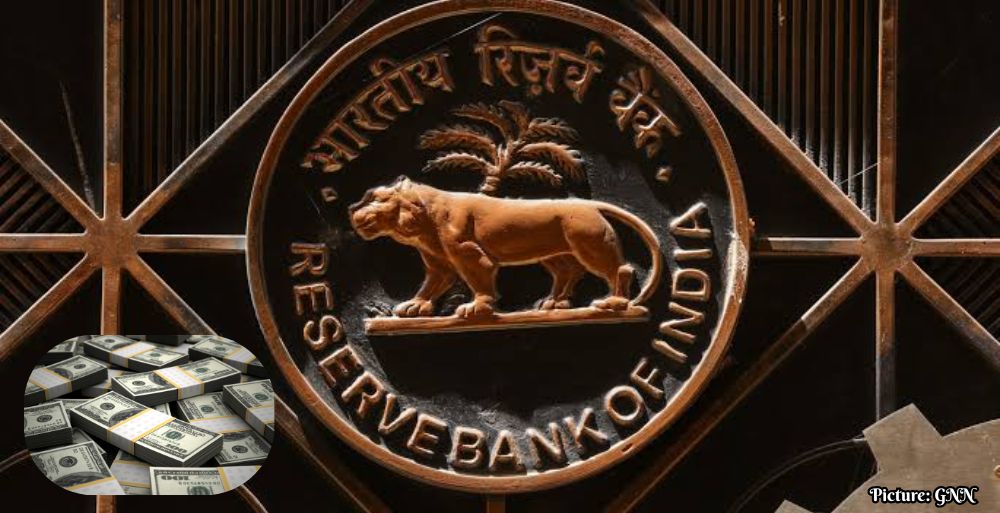
Indian banks and companies have attracted $32 billion from the Reserve Bank of India’s special forex initiative aimed at increasing foreign capital inflows, with expectations of reaching up to $85 billion.
The Reserve Bank of India (RBI) has reported that Indian banks and corporations have successfully mobilized $32 billion through its ongoing special forex initiative, which is aimed at enhancing foreign capital inflows. RBI Governor Sanjay Malhotra indicated that total inflows are likely to be “robust” as the program continues to attract considerable international interest.
In a report released on Monday, Soumya Kanti Ghosh, Group Chief Economic Adviser at the State Bank of India, projected that the total amount raised could potentially reach between $80 billion and $85 billion. This figure encompasses funds sourced from the concessional swap window, which facilitates Foreign Currency Non-Resident (Bank) deposits, External Commercial Borrowings (ECBs), and Overseas Foreign Currency Borrowings (OFCBs).
Details of the Forex Initiative
Governor Malhotra, in an interview with The Hindu Businessline, explained that the majority of the $32 billion raised so far has come from FCNR(B) deposits, while ECBs and OFCBs have contributed in a more sporadic manner. He stated, “Till date, banks have mobilised almost $32 billion. Obviously, most of it is coming through FCNR(B) deposits.” In addition, he noted that over $7 billion has flowed into government securities since the RBI’s policy announcements made on June 5, which began this special forex initiative.
The momentum of these inflows has markedly increased following a previously lackluster performance. Between June 8 and July 17, the RBI reported that a total of $20.72 billion was raised, with $17.41 billion attributed solely to FCNR(B) deposits. This surge in foreign capital is particularly significant when compared to the RBI’s previous initiative in 2013, during which approximately $34 billion was raised amid concerns regarding inflation and the tightening of US monetary policy that adversely affected the Indian rupee.
Current Market Conditions
The RBI’s swap facilities, which were introduced on June 5, are designed to remain operational until September 30 for the FCNR(B) scheme, while the facilities for ECBs and OFCBs will be available until December 31. Governor Malhotra elaborated that new FCNR(B) deposits under the swap scheme could total between $65 billion and $70 billion, which would significantly bolster the overall expected inflows.
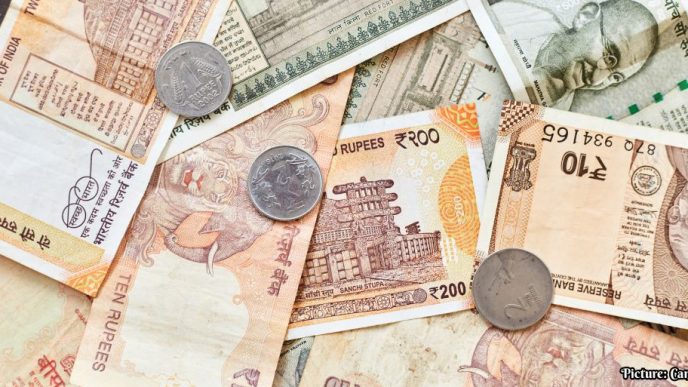
Following these announcements, along with the Indian government’s decision to exempt foreign investors from withholding tax on government bond investments, the Indian rupee has shown signs of recovery. The currency, which was under substantial pressure and nearing the 100-per-dollar mark, is currently trading around 95.9 per dollar. In June alone, foreign inflows into government bonds rebounded to $5.85 billion after net outflows of $1.8 billion were recorded from March to May. Additionally, July has already seen an inflow of $2.71 billion into government bonds.
Foreign Investment Trends
In a broader context, foreign investors have started to re-enter the Indian stock market, which had been experiencing significant net outflows in the preceding months. After witnessing approximately $28 billion in net outflows from March to June, there have been net foreign inflows of $1.57 billion so far in July, indicating a potential stabilization in investor sentiment.
However, the landscape for Foreign Direct Investment (FDI) presents a contrasting scenario. Following a positive inflow of $6.58 billion in April, FDI returned to negative territory in May, recording an outflow of $74 million. Governor Malhotra acknowledged that weak FDI inflows have been a critical factor contributing to the challenges faced by the rupee. He remarked, “It would be reasonable to think that the rupee is not overvalued. If anything, one could argue that the rupee has become undervalued, both in nominal and in REER (real effective exchange rate) terms.” He expressed optimism that, once geopolitical tensions in West Asia stabilize, the rupee could appreciate, as has been observed in previous instances of external shock-driven volatility.
Historical Context and Future Implications
The RBI’s current initiative comes at a time of heightened scrutiny and concern over foreign investment patterns in India. Historically, foreign capital inflows have played a significant role in stabilizing the Indian rupee and enhancing the overall economic landscape. The 2013 episode serves as a reminder of the volatility that can ensue when foreign investors retreat, driven by global economic uncertainties and local challenges.
With the current geopolitical climate still in flux, the RBI’s strategies to attract foreign capital are crucial for maintaining economic stability. The success of the special forex drive could not only help to shore up the rupee but also foster greater confidence among international investors, which is essential for sustained economic growth. Furthermore, the implications of this initiative may extend beyond immediate financial gains, potentially influencing future policy directions and economic reforms aimed at attracting further foreign investment.
In summary, the RBI’s special forex drive appears to be generating significant momentum in capital inflows and market confidence, reflecting broader economic conditions and investor sentiments. The ongoing developments will be closely monitored as they unfold, with potential effects on the Indian economy and its currency in the coming months.