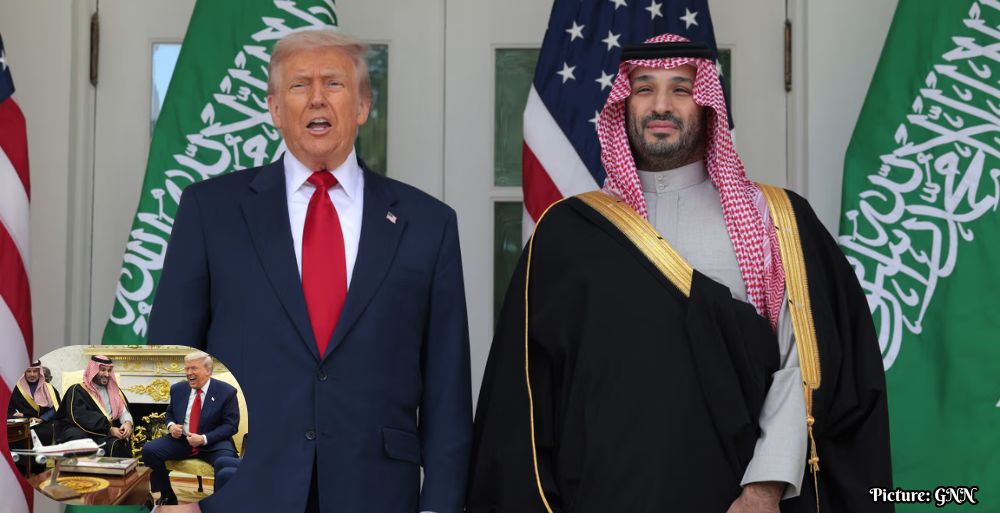
The Trump administration’s recent nuclear agreement with Saudi Arabia marks a significant shift in U.S. foreign policy towards the Middle East, sparking concerns over potential nuclear proliferation and regional stability.
On March 1, 2024, the Trump administration announced a nuclear agreement with Saudi Arabia, reversing longstanding U.S. policy that tied the transfer of nuclear technology to the normalization of relations between Saudi Arabia and Israel. This shift has been met with skepticism and concern from various quarters, including Israeli officials and some U.S. lawmakers.
The agreement, which has not yet been fully detailed, reportedly allows Saudi Arabia to develop its civilian nuclear energy capabilities without the stringent conditions that characterized previous U.S. nuclear deals, such as the 2009 accord with the United Arab Emirates (UAE). Analysts suggest this could pave the way for Saudi Arabia to pursue military nuclear capabilities in the future, raising alarms about a potential arms race in an already volatile region.
Background and Context
Historically, U.S. presidents have conditioned the provision of nuclear technology to Saudi Arabia on the kingdom’s commitment to recognize Israel. Under the Trump administration, however, this condition appears to have been waived, despite President Trump’s assertion on social media that the nuclear pact was contingent on Saudi Arabia joining the Abraham Accords, a series of agreements aimed at normalizing relations between Israel and several Gulf states. The lack of clarity regarding the actual terms of the agreement has left many questions unanswered about Saudi Arabia’s obligations in this arrangement.
Critics of the deal argue that it signals a departure from the traditional U.S. approach to Middle Eastern diplomacy, which has typically emphasized Israel’s security and the pursuit of a two-state solution to the Israeli-Palestinian conflict. The agreement comes at a time when tensions with Iran are high, and it is seen by some analysts as a strategic move by the U.S. to maintain its influence in the region while responding to the ambitions of its allies.
Implications for Regional Stability
The potential for Saudi Arabia to develop nuclear weapons has raised concerns among experts about a new arms race in the Middle East. Imran Bayoumi, a resident fellow at the Atlantic Council, stated that the agreement could lay the groundwork for future nuclear capabilities, stating, “It certainly helps lay the groundwork for nuclear weapons in the future.”
Saudi Crown Prince Mohammed bin Salman (MBS) has long sought a nuclear agreement with the U.S., asserting in 2018 that if Iran were to develop nuclear weapons, Saudi Arabia should be permitted to do the same. This sentiment underscores the delicate balance of power in the region and the potential consequences of nuclear proliferation.
Economic Considerations
From an economic standpoint, the agreement is designed to diversify Saudi Arabia’s energy sector and reduce its reliance on oil. Energy experts note that the development of nuclear power could help the kingdom meet its rising electricity demands and insulate its economy from the volatility of the global oil market. Christopher Russo, an energy expert, emphasized that nuclear power is “pretty self-contained,” indicating a strategic shift towards energy independence.
However, the realization of this nuclear infrastructure is expected to take a decade or longer, meaning that immediate economic benefits may be limited. In the interim, Saudi Arabia will collaborate with U.S.-based companies, creating potential business opportunities for firms such as Westinghouse, which specializes in nuclear reactor technology.
Political Fallout
The announcement of the nuclear agreement has already prompted criticism from both Israeli leaders and U.S. lawmakers. Avigdor Lieberman, a member of the Israeli parliament, expressed concern that a civilian nuclear program in Saudi Arabia could trigger a nuclear arms race across the region. Similarly, Democratic Congressman Ro Khanna characterized the deal as a “giveaway to the Saudis” that could further destabilize the region.
In response, U.S. Energy Secretary Chris Wright defended the agreement, asserting that it would enhance the American economy and bolster national security while adhering to high standards of nuclear safety and nonproliferation.
Despite the administration’s assurances, the decision to forgo immediate transparency regarding the agreement’s details has fueled skepticism. The timing of the announcement remains unclear, but it coincides with ongoing tensions with Iran and a desire to solidify U.S. relations with Gulf allies.
The Trump administration’s nuclear agreement with Saudi Arabia represents a pivotal moment in U.S. foreign policy and raises critical questions about the future of regional stability, nuclear proliferation, and the delicate balance of power in the Middle East.