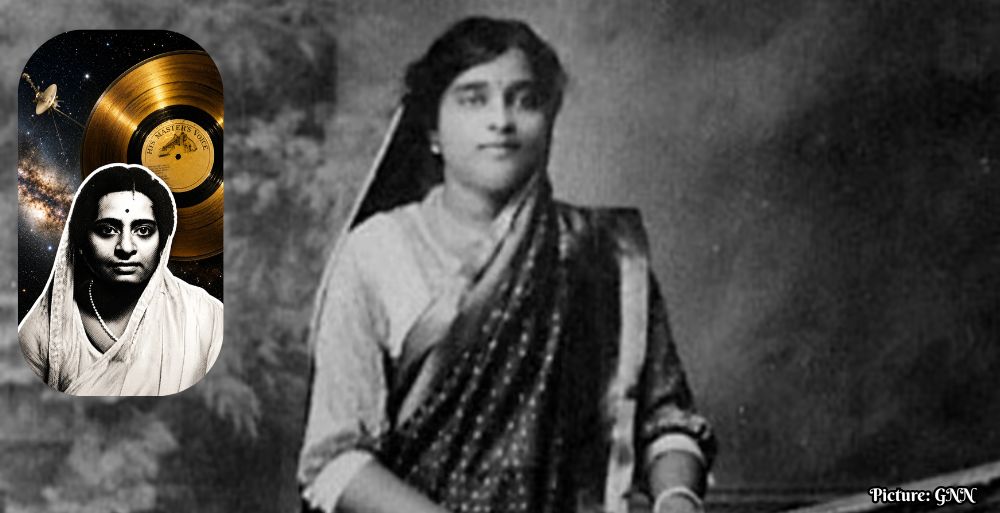
The inclusion of Kesarbai Kerkar’s voice on NASA’s Voyager Golden Record not only highlights the significance of Indian classical music but also emphasizes the importance of cultural representation in humanity’s narrative to the cosmos.
In a landmark decision during the late 1970s, NASA selected the voice of Indian classical singer Kesarbai Kerkar to be part of the Voyager Golden Record, a unique time capsule intended to represent humanity to potential extraterrestrial civilizations. This selection marks a crucial moment in the representation of Indian culture on a global platform, underscoring the role of music as a bridge across the cosmos.
The Voyager mission, which launched in 1977, was designed to explore the outer solar system and send back data about the planets. A key element of this mission was the Golden Record, which carries a diverse collection of sounds and music from around the world, chosen to encapsulate the breadth of human culture and experience. Kerkar’s inclusion is particularly significant as she is the only Indian artist featured, showcasing the importance of Indian classical music within the global cultural landscape.
Understanding the Voyager Golden Record
The Voyager Golden Record comprises 27 musical tracks representing various cultures, along with greetings in 55 languages and an assortment of natural sounds from Earth. The selections were curated to provide a broad overview of human experience, illustrating the diversity of life and culture on our planet. The record serves as a message in a bottle, intended for any intelligent life that might encounter it in the far reaches of space.
Kesarbai Kerkar’s recording, a rendition of a traditional Indian raga, was chosen for its emotional depth and cultural significance. Her music exemplifies the rich traditions of Indian classical music, which has a history dating back thousands of years. The decision to feature her voice in such a monumental project highlights the global recognition of Indian music’s complexity and its ability to convey deep human emotions.
Kesarbai Kerkar: A Voice of Tradition
Kesarbai Kerkar, born in Goa in 1914, became a prominent figure in Hindustani classical music. Her career spanned several decades, during which she gained acclaim for her exceptional vocal talent and her dedication to traditional Indian music forms. Trained under various maestros, she became a cultural ambassador for India, representing its rich musical heritage both nationally and internationally.
Her selection for the Voyager Golden Record not only honors her contributions to the world of music but also solidifies her legacy as a cultural icon. Kerkar’s work has inspired countless musicians and has played a significant role in the preservation and promotion of classical music traditions in India.
The Significance of Cultural Representation in Space Exploration
The choice of Kesarbai Kerkar’s voice for the Voyager Golden Record extends beyond mere representation; it reflects NASA’s commitment to inclusivity and the recognition of diverse cultures as part of the human narrative. In an era where space exploration often emphasizes scientific advancements, the inclusion of a wide array of cultural artifacts highlights the essential role of art and music in conveying what it means to be human.
Moreover, the Golden Record has become a symbol of hope and unity, suggesting that despite our differences, there exists a shared human experience that transcends geographical and cultural boundaries. As Voyager continues its voyage through the cosmos, Kerkar’s voice resonates not only as a piece of music but as a testament to the collective aspirations of humanity.
Legacy and Ongoing Influence
Since the launch of Voyager, the Golden Record has ignited discussions about the significance of cultural representation in space exploration and the importance of showcasing diverse voices. Kesarbai Kerkar’s legacy endures through her music, which continues to be revered and performed by new generations of musicians. The inclusion of her voice on the Voyager Golden Record serves as a poignant reminder of the potential for cultural exchange and understanding in our increasingly interconnected world.
A Reflection on Cultural Identity
The selection of Kesarbai Kerkar’s voice is not merely an acknowledgment of her individual talent but also a celebration of the rich tapestry of Indian culture. It signals a recognition of the importance of preserving and sharing cultural identities as part of the broader human experience. The Voyager project, by incorporating a diverse array of cultural expressions, fosters a sense of global community, encouraging future generations to appreciate and engage with the world’s cultural heritage.
As humanity continues to push the boundaries of exploration, the inclusion of voices like Kesarbai Kerkar’s on such a significant platform invites reflection on the role of culture in shaping our understanding of existence. It underscores the idea that our diverse cultural identities are not just historical artifacts but vital components of our present and future narratives.
In conclusion, Kesarbai Kerkar’s selection as the sole Indian voice on NASA’s Voyager Golden Record accentuates the essential role of cultural representation in the narrative of humanity. It highlights the power of music to connect individuals across time and space, reinforcing the notion that our varied cultural identities are integral to the shared human experience.