Senate Democratic Leader Chuck Schumer and a group of senior Democratic senators launched a coordinated anti-corruption initiative on Monday, unveiling a comprehensive report alleging that President Donald Trump and his family have leveraged the presidency to generate billions of dollars in private business revenues while everyday citizens struggle with elevated living expenses. The report, titled “The Cost of Corruption,” asserts that President Trump has accumulated $2 billion in earnings since taking office for his second term in 2025, alongside $4 billion generated by family-linked commercial enterprises, including foreign-backed cryptocurrency funds and defense technology ventures. The White House firmly rejected the report’s conclusions, stating that the president’s assets are managed entirely through independent third-party discretionary accounts and that his financial holdings reflect his long-standing career as a successful private real estate developer and executive prior to his presidency.
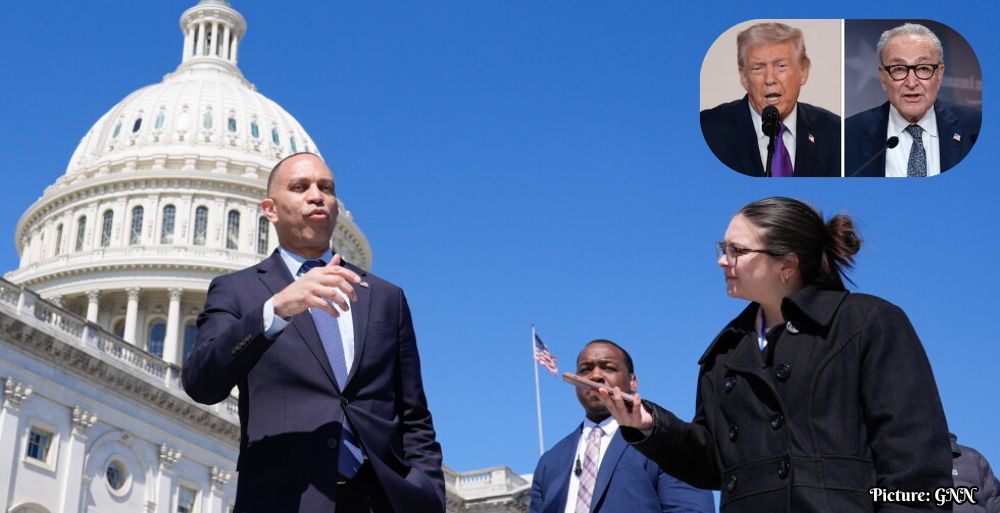
WASHINGTON — Senate Democratic Leader Chuck Schumer (D-N.Y.) joined a group of Democratic lawmakers on Capitol Hill Monday to unveil a new congressional anti-corruption campaign aimed at scrutinizing the personal financial dealings and commercial operations of President Donald Trump and his immediate family.
The initiative, anchored by a new report titled “The Cost of Corruption: How Trump Turns Power Into Profit At Americans’ Expense,” marks a structured effort by Senate Democrats to connect presidential business activities directly to consumer price pressures, federal spending decisions, and broader economic challenges facing American households. Democrats announced the formation of a dedicated “anti-corruption working group” that will draft oversight legislation, hold public briefings, and attempt to curb executive branch self-dealing.
“Trump is without question the most corrupt president in American history,” Schumer stated during remarks delivering the report’s findings. “Trump has betrayed the American people by using our highest office not for the good of country, but to pad his own bank account, at the expense of working families. Senate Democrats are launching this effort to expose the corruption, show Americans exactly what it is costing them, and build the reforms needed to stop any president from using public office for personal profit.”
Detailed Breakdown of Alleged Commercial Profits
Drawing from recently filed presidential financial disclosures and public corporate records, the Democratic report outlines several key sectors where Trump family business interests have expanded significantly since the start of the administration’s second term in 2025.
According to the report’s calculations, President Trump has personally earned approximately $2 billion since returning to the executive mansion. Simultaneously, businesses and investment vehicles tied to his immediate family members have generated more than $4 billion in revenue over the same period.
The report highlights several major international and domestic commercial ventures:
- Cryptocurrency Holdings: The primary target of the report’s scrutiny is World Liberty Financial, a cryptocurrency entity backed by the Trump family. The firm holds more than $1 billion in assets and has secured major capital investments originating from the United Arab Emirates.
- Foreign Mining Operations: The report details a government-level strategic deal involving a billion-dollar tungsten mining agreement with the government of Kazakhstan. Democratic researchers report that President Trump’s sons maintain substantial equity stakes in entities tied to the arrangement and stand to profit directly from the strategic mineral trade.
- Defense Technology Ventures: The inquiry highlights a portfolio of defense technology startups in which the president’s sons hold investment positions. The report states these technology firms have collectively secured $3.2 billion in direct government contracts and related business allocations.
Senate Democrats argue that these ventures demonstrate a systemic overlap between presidential authority, foreign diplomatic relations, and private enrichment.
White House Defends Structure of Assets and Rejects Conflict Claims
The executive branch moved swiftly to refute the report’s charges, dismissing the findings as politically motivated allegations designed to distract from the administration’s policy achievements.
White House Principal Deputy Press Secretary Anna Kelly issued a direct statement asserting that President Trump’s personal net worth is the product of decades in commercial enterprise rather than his tenure in public service.
“The president has a lot of assets because he was a massively successful businessman prior to becoming President,” Kelly said. “All of the President’s assets are held in fully discretionary accounts managed by independent third-party financial institutions. There are no conflicts of interest.”
Administration officials maintain that the financial structures surrounding the president’s holdings strictly adhere to existing federal ethics requirements and ethical guidelines governing executive power. By placing operational and management authority into third-party accounts, the administration argues that the president remains insulated from everyday investment decisions, preventing official actions from influencing personal asset performance.
Linking Presidential Profits to Household Consumer Costs
A central objective of the new Democratic working group is to establish a link between executive branch commercial dealings and consumer prices in energy, healthcare, and basic commodities. Joining Schumer in launching the initiative were Sens. Sheldon Whitehouse (D-R.I.), Jeff Merkley (D-Ore.), Catherine Cortez Masto (D-Nev.), Alex Padilla (D-Calif.), and Andy Kim (D-N.J.).
Senator Whitehouse, speaking to reporters with a measured but forceful delivery, focused his criticisms on the administration’s national energy agenda, arguing that shifts toward traditional fossil fuels directly benefit corporate campaign donors at the expense of average consumers.
“The scale of President Trump’s corruption is mind-boggling, and it is directly responsible for the higher costs swamping American families,” Whitehouse said. “Look no further than skyrocketing electricity and gas prices. Trump is sending energy bills through the roof by tanking lower-cost clean energy to keep dirty, expensive fossil fuels on the grid, and he’s giving Big Oil cover to jack up prices at the pump with his senseless war.”
The Democratic report explicitly links executive branch policies to legislative actions passed during the previous year’s legislative session. Specifically, lawmakers targeted the “One Big Beautiful Bill Act,” a flagship economic measure enacted during Trump’s second term.
Democrats noted that funding offsets used to make permanent corporate tax reductions included major spending reductions to safety-net programs, including Medicaid and the Supplemental Nutrition Assistance Program (SNAP). According to Senate Democrats, these policy choices illustrate a pattern where public assistance programs for lower-income families were curtailed to facilitate tax relief for corporate entities and high-net-worth individuals.
Senator Merkley echoed those sentiments, asserting that public confidence in government institutions is being undermined by commercial influences.
“The Trump swamp of corruption is a mile deep and MEGA-wide,” Merkley said. “Trump and his family use his office and official connections to rake in billions for themselves at every turn. Not only is this making life more expensive for hard-working Americans, it’s a threat to government ‘by and for the people.'”
Legislative Strategy and Congressional Outlook
The formation of the anti-corruption working group represents a strategic attempt by Senate Democrats to establish an oversight framework leading into upcoming legislative debates and midterm congressional cycles.
With Republicans holding majorities in both chambers of Congress, Democratic-led legislative proposals face high procedural hurdles. However, committee members indicate they plan to utilize public reporting, floor statements, and requests for information from federal agencies to keep attention focused on political ethical reform, executive branch disclosures, and conflict-of-interest regulations.
The working group plans to draft statutory language aimed at tightening presidential disclosure mandates, mandating divestment from commercial operations that receive federal contracts, and restricting foreign investment in entities owned by immediate family members of high-ranking executive branch officials. Whether those measures can attract bipartisan consensus in a deeply polarized Senate remains uncertain, but Democrats insist that highlighting the nexus between executive wealth and family finances will remain a central component of their economic message.