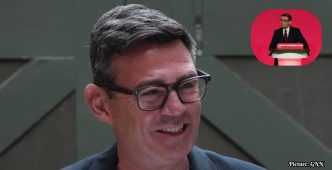
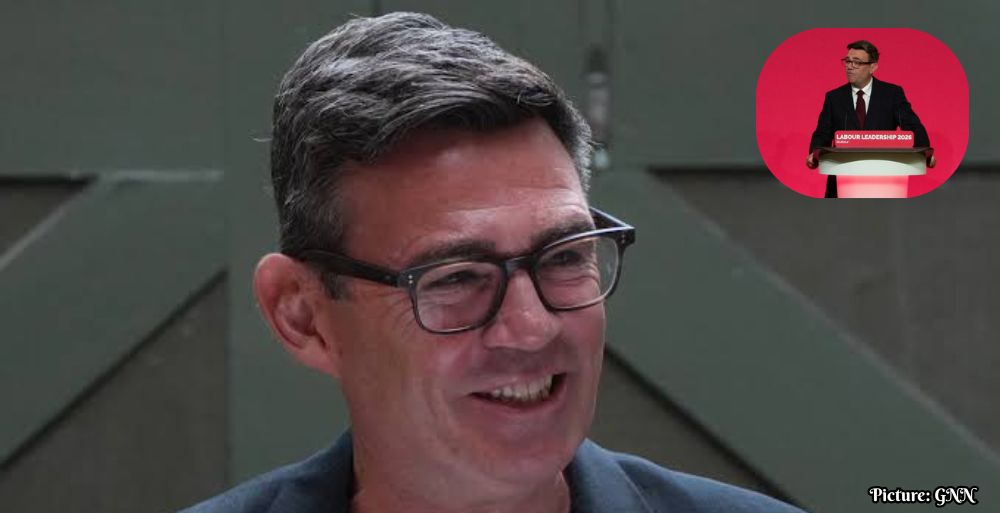
In his inaugural address as the newly elected leader of the Labour Party, Andy Burnham emphasized the need for unity within the party and the importance of a ‘new politics’ focused on problem-solving rather than point-scoring.
Andy Burnham was officially confirmed as the leader of the Labour Party during a special conference at the Trades Union Congress in London. His election, which received support from 379 Labour MPs and 23 affiliate organizations, marks a significant moment for the party as it prepares for future electoral challenges.
In his first speech as leader, Burnham sought to connect with party members and the broader electorate by emphasizing the importance of emotional resonance in politics. This approach has been characterized by some critics as offering mere ‘vibes,’ a term suggesting a lack of substantive policy detail. However, Burnham countered this perception by invoking the effective communication styles of historical figures like Winston Churchill and Martin Luther King Jr., suggesting that impactful political rhetoric often transcends specific policy proposals. He stated, ‘The right use the phrase “take back control,” but they are the ones who gave it away in the first place,’ effectively linking his critique of Thatcherism to the socioeconomic challenges faced by communities that voted for Brexit.
Leadership Approach and Priorities
Burnham articulated a vision for a leadership style that prioritizes listening and inclusivity. He asserted, ‘Change starts with honesty,’ and pledged to eliminate what he termed Labour’s ‘insidious briefing culture.’ His commitment to ensuring that the Labour Party remains ‘boldly, confidently, authentically Labour’ aims to restore hope among the electorate, particularly in light of the party’s recent electoral successes.
The Labour Party currently stands in a favorable position, particularly in anticipation of the upcoming Greater Manchester mayoral election, where polling suggests a strong likelihood of success for Labour candidates. Burnham’s declaration that he will be a ‘pro-business Labour leader’ reflects an attempt to balance economic growth with social responsibility—a delicate task that many believe is crucial for the party’s future.
Environmental and Economic Challenges
Despite the optimism surrounding his leadership, Burnham faces immediate challenges from various stakeholders, particularly concerning environmental policies. Advocacy groups such as Friends of the Earth have urged him to take a firm stance against controversial projects like North Sea drilling. Rosie Downes, the head of campaigns at Friends of the Earth, warned, ‘He must stand firm or risk undermining his credibility straight out of the gate.’ This highlights the critical intersection of environmental policy and public trust, especially given the growing urgency around climate change.
Simultaneously, Shevaun Haviland, director-general of the British Chambers of Commerce, underscored the necessity of a pro-business approach. Haviland stated, ‘If Burnham is serious about delivering growth across all parts of our economy, then he must be unequivocal in his backing for business.’ This sentiment reflects concerns among business leaders that Burnham’s administration must act swiftly to address economic pressures faced by firms, especially in the wake of recent national insurance increases that have affected business confidence.
Political Reactions and Expectations
Other political figures have responded to Burnham’s ascension with both encouragement and caution. Northern Ireland’s first minister, Michelle O’Neill, emphasized the need for a ‘different approach’ under Burnham’s leadership, pointing to the importance of addressing public service cuts and the ongoing cost of living crisis. O’Neill expressed her willingness to work collaboratively with Burnham to advocate for fair funding and respect for democratic rights in Northern Ireland, further indicating the interconnectedness of UK-wide issues.
Linda Hobson, chair of Unison’s Labour Link committee, praised Burnham’s track record and highlighted the expectations placed upon him to deliver on the party’s promise of change. ‘Now it’s over to him to show he’s the right person to deliver the party’s promise of change,’ Hobson remarked, emphasizing the critical role of public services in Labour’s platform.
Looking Forward
As Andy Burnham embarks on his leadership journey, his inaugural speech sets a promising tone for a potentially transformative period within the Labour Party. His emphasis on unity, problem-solving, and a commitment to addressing both economic and social issues positions him as a leader prepared to engage with the complexities of modern governance.
In the coming weeks, Burnham is expected to unveil more specific policies and strategies as he seeks to navigate the challenges ahead. His capacity to balance the demands of various stakeholders—ranging from environmental advocates to business leaders—will be closely scrutinized as the political landscape in the UK evolves. As Burnham stated, ‘Together, we will set Britain on a new path,’ illustrating his intention to not only lead the Labour Party but to influence the broader political discourse in the nation.