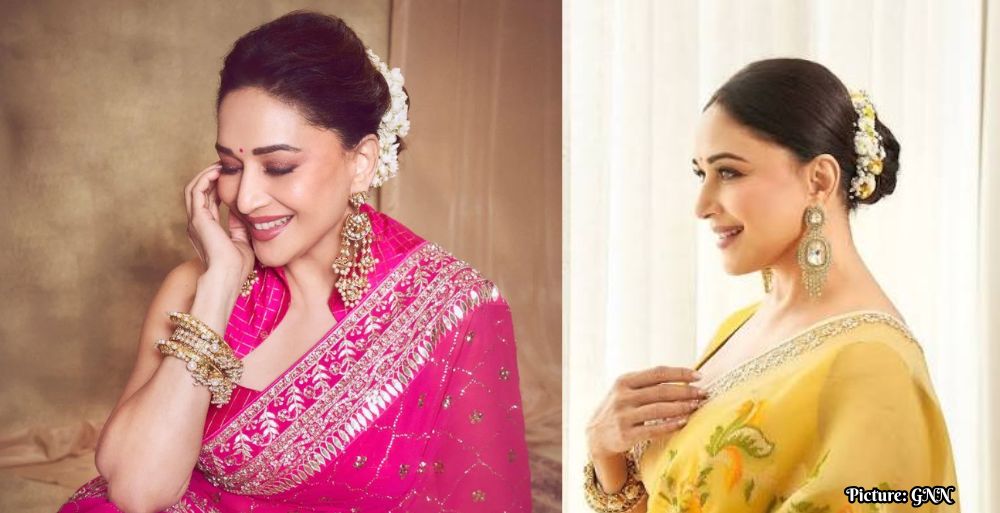
Madhuri Dixit recently donned a stunning mirror-embroidered saree designed by Anita Dongre, highlighting the intricate artistry of Indian textiles and their relevance in contemporary fashion.
Madhuri Dixit, a celebrated actress in Indian cinema, made headlines with her latest appearance, where she showcased a striking saree designed by renowned fashion designer Anita Dongre. This event, which took place recently, not only highlighted Dixit’s signature style but also served as a tribute to the rich heritage of Indian craftsmanship, particularly through the intricate mirror work that characterizes Dongre’s designs.
Illuminating Indian Craftsmanship
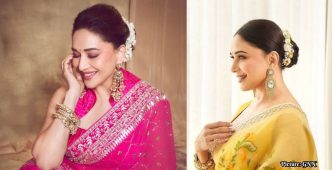
The saree worn by Dixit featured a vibrant magenta hue, a color deeply rooted in Indian culture, often associated with celebration and festivity. The intricate mirror work and delicate sequin embroidery adorned the fabric, allowing the saree to catch and reflect light beautifully with every movement. This meticulous attention to detail is a hallmark of Dongre’s approach, which merges traditional techniques with a modern aesthetic, making it suitable for various occasions from weddings to festive events.
Historically, mirror work is closely linked to the Kutch region of Gujarat and parts of Rajasthan, where it has been practiced for centuries. Known locally as Abhla embroidery, this craft involves stitching small mirrors into fabric with intricate hand embroidery techniques. The use of mirrors in textiles is believed to have originated in Persia, later evolving into a unique Indian tradition that enhances the visual appeal of garments. This cultural significance adds depth to Dixit’s outfit, showcasing not just fashion but also heritage.
A Modern Take on Tradition
To complement the saree, Madhuri Dixit opted for a sleeveless blouse in the same striking shade of magenta, creating a streamlined silhouette that emphasized the ornate embroidery of the saree. This monochromatic approach reflects a contemporary styling choice that resonates with current fashion trends, allowing traditional garments to remain relevant and stylish in modern contexts. By pairing the saree with a matching blouse, Dixit embraced a look that is both cohesive and polished.
Accessories That Harmonize
The choice of accessories by Dixit followed a philosophy of enhancing rather than competing with her attire. She adorned herself with statement kundan chandelier earrings and stacked bangles, which introduced a regal touch without overshadowing the saree’s intricate mirror work. The warm gold tones of her jewelry echoed the embroidery woven throughout the saree, creating a harmonious look that elevated the overall aesthetic.
Timeless Elegance in Presentation
True to her signature style, Madhuri Dixit completed her look with a sleek low bun wrapped in fresh jasmine flowers. This classic choice lent an air of timeless elegance to her appearance, while her makeup—characterized by a softly blended smokey eye, luminous skin, and glossy pink lips—added warmth without overwhelming the ensemble. The overall effect was undeniably festive yet refreshingly understated, exemplifying a balance between tradition and modernity that resonates with many contemporary audiences.
The Importance of Craftsmanship
Dixit’s sartorial choice serves as a reminder of the significance of craftsmanship in Indian fashion. The artistry of Anita Dongre’s mirror work takes center stage, showcasing how traditional techniques can be celebrated in contemporary settings. Fashion commentators have noted that such looks highlight the notion that elegance often lies in simplicity and the ability to let beautifully crafted pieces speak for themselves. The emphasis on quality craftsmanship over ostentation reflects a growing trend in fashion, where the focus is increasingly on sustainability and artisanal skills.
Cultural Significance of Mirror Work
The resurgence of interest in traditional crafts like mirror work also points to a broader movement within the fashion industry that seeks to celebrate and preserve regional arts. As Indian fashion evolves, the integration of traditional elements into modern designs helps to maintain cultural narratives and supports local artisans. This dynamic not only ensures that these art forms remain relevant but also provides economic support to communities that rely on these crafts for their livelihoods.
Conclusion: A Celebration of Heritage
This recent display of Indian craftsmanship by Madhuri Dixit not only highlights her personal style but also underscores the cultural significance of traditional textile arts in contemporary fashion. As the fashion industry continues to evolve, the integration of traditional elements like mirror work into modern designs serves to preserve and celebrate India’s rich artistic heritage. Dixit’s embrace of this artistry through her sartorial choices exemplifies how fashion can be a powerful medium for cultural expression and identity, bridging the gap between the past and the present in a vibrant tapestry of style.