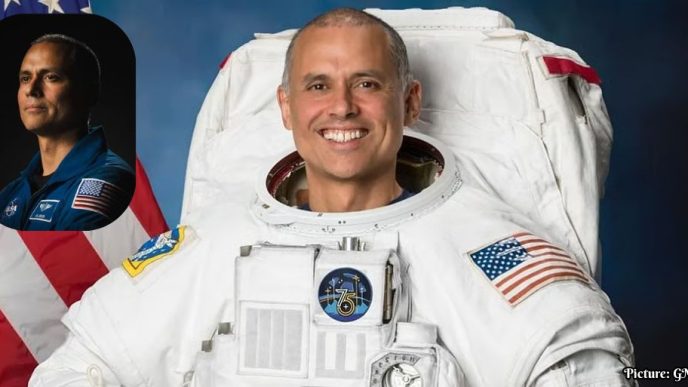
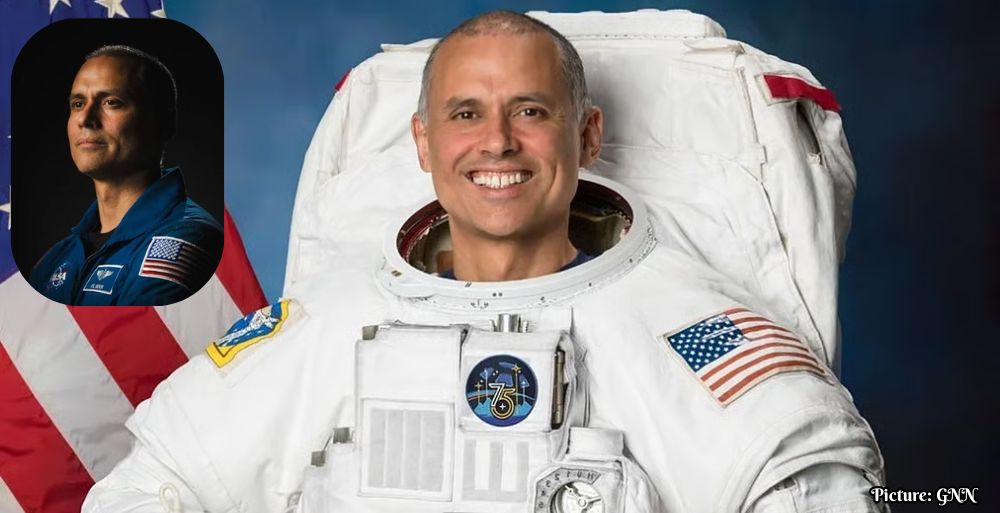
Anil Menon, a NASA astronaut of Indian descent, is set to embark on an eight-month mission to the International Space Station starting July 14, 2023, aboard the Soyuz MS-29 spacecraft from Baikonur Cosmodrome in Kazakhstan.
NASA astronaut Anil Menon is scheduled to launch from the Baikonur Cosmodrome in Kazakhstan on July 14, 2023, as part of the Soyuz MS-29 mission, marking the start of an eight-month deployment aboard the International Space Station (ISS). Menon, who is 49 years old, will travel alongside Russian cosmonauts Pyotr Dubrov and Anna Kikina, participating in critical research that could influence the future of human space travel.
Menon’s Background and Professional Experience
Born in Minneapolis, Minnesota, to Ukrainian and Indian immigrants, Menon has established a multifaceted career that spans medicine, military service, and space exploration. He is an emergency medicine physician and serves as a colonel in the United States Space Force. His military career includes a deployment with the U.S. Air Force during Operation Enduring Freedom in Afghanistan, where he provided care under challenging conditions.
In addition to his military service, Menon has been actively involved in humanitarian efforts. He worked with the Himalayan Rescue Association, providing medical support to climbers on Mount Everest, an experience that underscores his commitment to serving others in extreme environments. His dedication to global health initiatives was further exemplified during a year spent in India as a Rotary Ambassadorial Scholar, where he contributed to polio vaccination efforts.
Menon joined NASA in 2014 as a flight surgeon, offering medical support to astronauts aboard the ISS. His transition to SpaceX in 2018 marked a significant step in his career; he initiated the company’s medical program, played a vital role in preparations for its first crewed flights, and contributed to the development of the Starship rocket, which is intended for future missions to the Moon and Mars. In December 2021, he was selected as a NASA astronaut and subsequently entered a rigorous two-year training program.
Menon is married to Anna Wilhelm, who is also an astronaut and participated in the Polaris Dawn mission, a private crewed flight operated by SpaceX that took place in September 2024.
Mission Objectives and Research Focus
During his tenure aboard the ISS, Menon will engage in a series of experiments designed to investigate the physiological effects of long-duration spaceflight on the human body. One of the primary areas of research will focus on how microgravity influences blood flow, vein structure, and blood composition in astronauts. Such investigations are paramount as space agencies prepare for future deep-space missions, where understanding human health in a microgravity environment is essential for the safety and efficacy of crewed missions.
Menon’s research will also include testing advanced technologies for producing intravenous fluids utilizing the ISS’s potable water system. This capability could be crucial for medical emergencies on long-duration missions, where traditional medical supplies may be limited. The challenges of self-sufficiency in space are significant, particularly as missions push further from Earth.
Additionally, Menon will continue his work on the in-space production of semiconductor crystals, which are vital for the manufacture of high-performance computing components and advanced medical devices. The ability to produce these materials in microgravity could greatly enhance the technological capabilities of future space missions, facilitating innovations that are increasingly necessary as exploration expands beyond low Earth orbit.
Menon’s research will further explore the application of augmented reality and artificial intelligence in ultrasound investigations. By leveraging these technologies, he aims to develop methods that could reduce the reliance on Earth-based medical support during future missions, thereby enhancing the autonomy of astronauts in space.
Implications for Future Space Exploration
The significance of Menon’s mission extends beyond his personal career milestones; it represents a crucial step in understanding and optimizing human health in the context of space travel. As space agencies like NASA and private organizations like SpaceX pursue ambitious goals of exploration, including missions to Mars, research conducted on the ISS will inform strategies to mitigate health risks associated with prolonged exposure to microgravity.
Furthermore, Menon’s dual focus on medical and technological advancements highlights the interdisciplinary approach required for successful human spaceflight. The integration of health sciences with cutting-edge technology is critical as humanity seeks to explore more distant frontiers of space.
Menon’s mission embodies the ongoing commitment of NASA and its international partners to ensure the health and safety of astronauts during extended missions. As space exploration becomes increasingly ambitious, the findings from Menon’s research could have profound implications for future human endeavors in the cosmos.
In conclusion, Menon’s eight-month mission aboard the ISS represents not only a significant milestone in his career but also a vital contribution to the broader efforts of the global space community. The insights gained from his research will be instrumental in shaping the future of human exploration in space, ensuring that astronauts are equipped to handle the challenges of long-duration missions as humanity reaches for the stars.