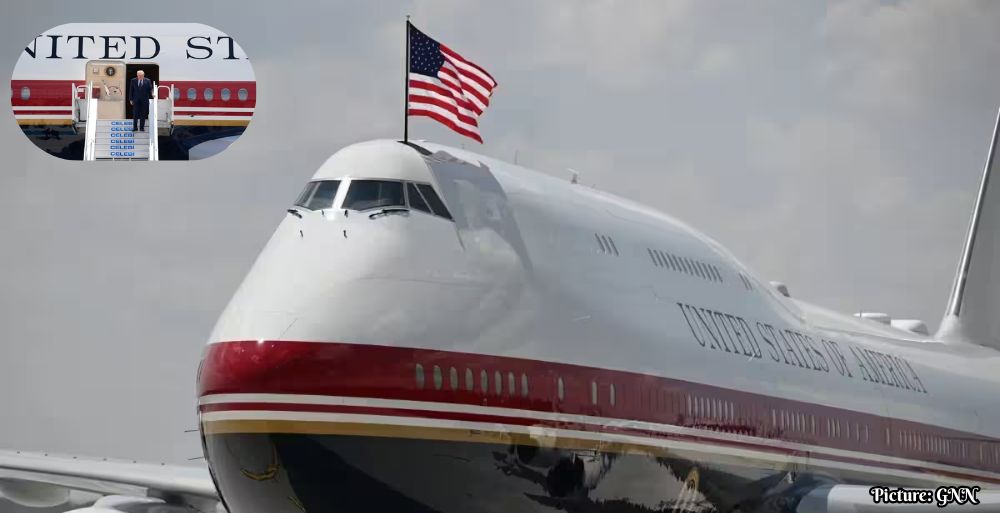
The Trump administration has issued subpoenas to several New York Times journalists following their reporting on security concerns regarding the new Air Force One, raising significant questions about press freedom and government transparency.
WASHINGTON (AP) — The Trump administration has taken a controversial step by subpoenaing multiple journalists from The New York Times in connection with their reporting on security issues surrounding the newly commissioned Air Force One. The subpoenas were issued on Friday, July 8, 2026, and demand that the reporters testify before a federal grand jury in Manhattan on Wednesday, July 13, 2026. Reports indicate that federal agents served some of the subpoenas directly at the journalists’ homes.
No immediate response was available from the White House or the Department of Justice regarding the subpoenas as of Saturday, July 9, 2026. David McCraw, a lawyer representing The New York Times, expressed grave concerns about the implications of federal agents visiting reporters’ homes, stating, “The appearance of federal law enforcement agents on the doorstep of news reporters should shock the conscience of any American who believes in the Constitution and the press freedom it protects.”
Escalating Tensions Over Press Freedom
This latest action is seen as a significant escalation in the Trump administration’s ongoing efforts to challenge the independence of the press. Critics argue that this move aligns with a broader pattern of behavior by President Trump, who has frequently criticized and sought to undermine media organizations that he perceives as hostile. Historically, the administration’s relationship with the press has been contentious, marked by accusations of “fake news” and attempts to delegitimize unfavorable coverage.
Earlier in 2026, the Justice Department issued subpoenas to journalists from The Washington Post and The Wall Street Journal, although those were subsequently withdrawn. This raises questions about the potential for a systemic approach to press intimidation under the current administration. President Trump has previously labeled the media as an “enemy of the American people,” and his administration has pursued various measures against news organizations, including lawsuits and threats to revoke broadcasting licenses.
Details Surrounding Air Force One Reporting
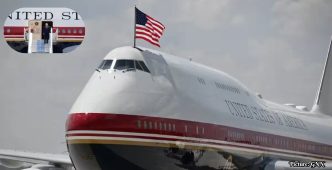
The new Air Force One, which President Trump received as a gift from Qatar, began its operational service just last week. The controversy arose after the president opted to fly one of the older Air Force One jets during a trip to Turkey for a NATO summit, despite the newer aircraft being present. Reports suggest that Trump switched planes at the behest of the Secret Service due to concerns that the newer jet lacked certain advanced security features, notably antimissile capabilities.
Amid rising tensions with Iran, including recent airstrikes by the U.S. and Iranian retaliation against Gulf Arab states, speculation intensified regarding potential security vulnerabilities of the new aircraft. The New York Times, utilizing anonymous sources, reported that the Secret Service recommended the switch to the older aircraft due to these perceived shortcomings.
President Trump publicly dismissed any security concerns during the flight, telling reporters that the decision to use the older plane was merely to allow service members at Mildenhall, a Royal Air Force base in Suffolk, England, to get a glimpse of the new jet. He further downplayed the notion of credible threats against Air Force One, asserting, “I have a threat all the time. I’m No. 1 on their list.”
The White House later issued a statement denying any claims of security inadequacies, emphasizing that the new Air Force One is equipped with high-level security protocols designed to protect the president and his staff. Spokesman Steven Cheung stated, “As the President has said recently, there are many enemies of America who have their sights on him, and we use every tool at our disposal — including distraction and misdirection — to address those threats.”
Journalists Targeted
The journalists from The New York Times who have received subpoenas include Julian E. Barnes, Eric Lipton, Tyler Pager, and Eric Schmitt. Their work has been instrumental in informing the public about critical issues related to national security and presidential decision-making.
The issuance of these subpoenas raises broader questions about the state of press freedom in the United States, particularly under an administration that has consistently shown a willingness to confront and challenge the media. As journalists navigate an increasingly complex environment, the implications of these actions may resonate beyond the immediate case, affecting how reporters cover sensitive topics related to national security and government transparency.