Conflicting statements between the United States and Iran regarding planned negotiations have raised significant concerns over the future of discussions aimed at addressing Iran’s nuclear program and ongoing tensions in the strategically critical Strait of Hormuz.
The diplomatic landscape between the United States and Iran has become increasingly complex as both countries issue conflicting messages regarding a high-stakes meeting scheduled to take place in Doha, Qatar. This meeting, which was originally set to occur in Switzerland, is intended to focus on Iran’s nuclear program but has been overshadowed by recent military confrontations in the Strait of Hormuz, a vital maritime corridor for global oil transportation.
Recent exchanges of military action, described as tit-for-tat strikes, have set a tense backdrop for the planned discussions. According to multiple sources, including a U.S. official, the venue and agenda for these crucial talks have shifted as a result of these provocations. As tensions escalate in the region, the efficacy of the upcoming diplomatic efforts remains in question.
U.S. Announcement and Iranian Rebuttal
On Monday, President Donald Trump took to social media to announce the meeting, asserting, “IRAN HAS REQUESTED A MEETING. IT WILL TAKE PLACE TOMORROW IN DOHA!” This statement reflects the Trump administration’s ongoing strategy to engage directly with Iranian officials in a bid to address nuclear concerns and stabilize the region. However, the clarity of this engagement has been muddled by subsequent statements from Iranian officials.
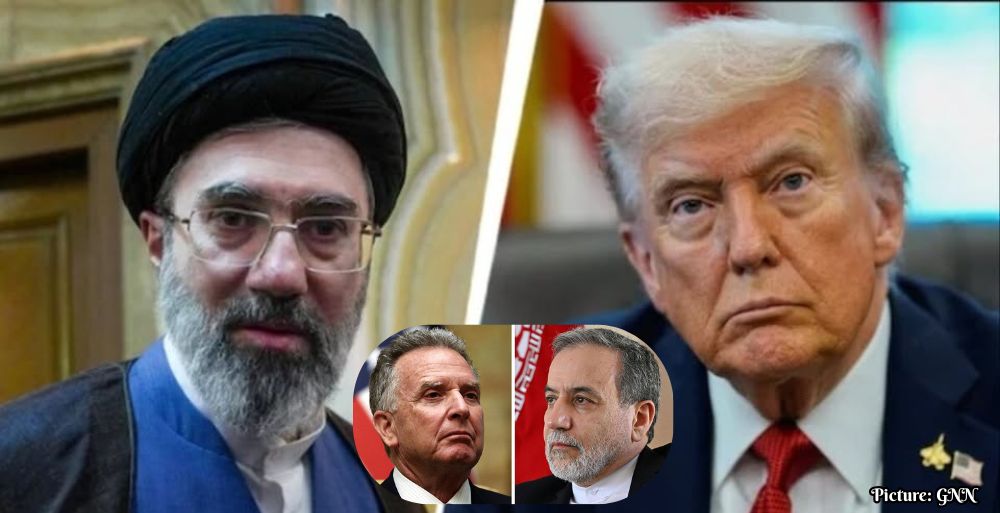
White House Press Secretary Karoline Leavitt confirmed that the U.S. delegation would include Special Envoy Steve Witkoff and Jared Kushner, the president’s son-in-law, signaling a high-level commitment to the talks. Leavitt emphasized that both high-level and technical discussions were anticipated, reinforcing the administration’s focus on diplomatic solutions.
In stark contrast, Esmail Baghaei, a spokesperson for Iran’s foreign ministry, provided a different narrative regarding the forthcoming meetings. He stated that while an Iranian delegation would travel to Doha, their discussions would focus specifically on the implementation of an interim deal previously established between the two nations. Baghaei asserted, “There are no negotiation meetings with the U.S. side at any level scheduled in the coming days,” highlighting Iran’s reluctance to engage in direct talks.
This divergence in messaging from both governments adds to the uncertainty surrounding the diplomatic process. Following a recent series of high-level discussions in Switzerland earlier this month, which culminated in the signing of a memorandum of understanding, the current situation marks a significant regression in diplomatic relations.
Context of the Interim Deal
The interim deal reached between the U.S. and Iran outlines provisions designed to ensure the safe passage of commercial vessels through the Strait of Hormuz. Specifically, the agreement stipulates that Iran must make arrangements to facilitate safe passage for a period of 60 days, effective only from the Persian Gulf to the Sea of Oman and vice versa. However, Iran’s history of threatening to close the strait complicates these assurances, as illustrated by a recent incident in which Iran attacked a container ship, leading to retaliatory strikes from the U.S. and significant disruptions in maritime traffic.
U.S. officials are intent on restoring navigational safety in the Strait of Hormuz to pre-war conditions. However, intelligence reports indicate that Tehran may continue to leverage threats against the waterway as a means of exerting pressure on the global economy. This situation underscores the geopolitical importance of the Strait of Hormuz, through which approximately 20% of the world’s oil supply is transported.
The memorandum of understanding also sets a timeline for a comprehensive agreement to be finalized within 60 days. With nearly a quarter of that period already elapsed, the pressure for decisive action is mounting. Although the interim deal allows for an extension by mutual agreement, Trump has made it clear that he would not permit Iran to unnecessarily prolong negotiations. “We’re negotiating from a position of pure strength, pure strength. They know that,” Trump stated, reinforcing the administration’s tough stance in the diplomatic arena.
Implications for Regional Stability
The ongoing negotiations hold significant implications not only for U.S.-Iran relations but also for broader regional stability and global economic security. The uncertainty surrounding the potential for direct talks raises questions about the commitment of both nations to resolve their differences through diplomatic means. If diplomatic efforts continue to falter, the risk of renewed hostilities could increase, further destabilizing the already volatile region.
Moreover, the outcome of these negotiations will likely influence the perceptions of U.S. credibility among its allies and adversaries alike. As the situation unfolds, both nations face substantial challenges in reconciling their conflicting narratives and objectives. The potential for military escalation remains a concern, particularly in a region where tensions have historically run high.
In conclusion, the conflicting statements from the U.S. and Iran exemplify the complexities of international diplomacy, particularly when national interests intersect with regional security concerns. As both countries navigate these turbulent waters, the coming days will be critical in determining the trajectory of their relationship and the stability of the broader Middle East.