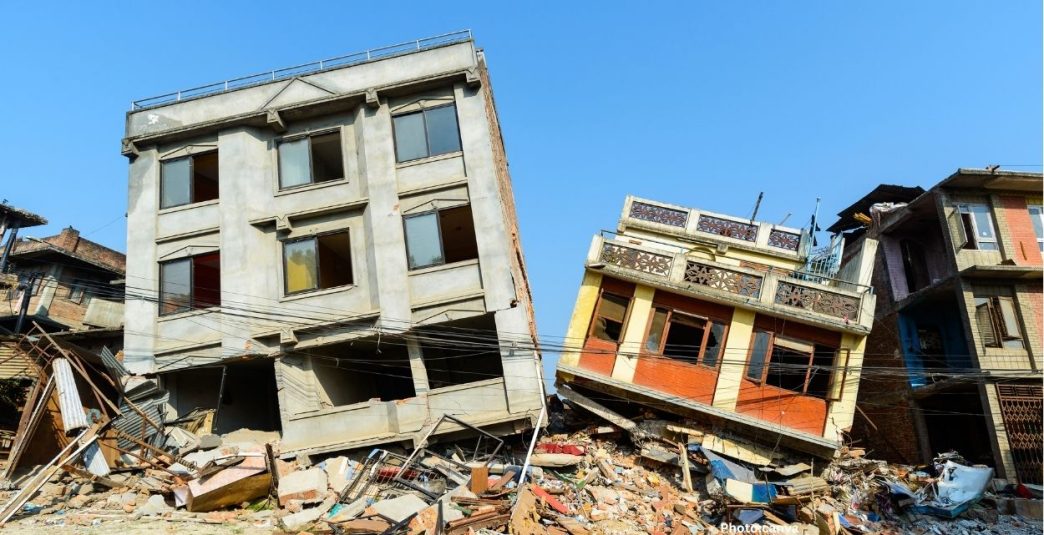
A catastrophic humanitarian crisis is unfolding across north-central Venezuela following back-to-back earthquakes that have left at least 920 people dead, more than 3,360 injured, and over 50,000 officially missing. The rapid succession of 7.2 and 7.5 magnitude shallow tremors flattened dense urban sectors throughout Greater Caracas and the northern coastal state of La Guaira, leaving tens of thousands of displaced families exposed to the elements. As specialized international urban search-and-rescue teams deploy to navigate the precarious structural ruins, the emergency response is colliding with severe local civil unrest, a healthcare system crippled by a decade of financial disinvestment, and an extraordinarily complex geopolitical landscape following the capture of former President Nicolás Maduro by U.S. special forces earlier this year.
CARACAS, Venezuela — The first full 48 hours of a sprawling international rescue campaign are underway across northern Venezuela as emergency personnel mount a desperate race against time to pull survivors from beneath mountains of pulverized concrete. The large-scale mobilization follows two of the most powerful seismic events to strike the South American nation in more than a century, which struck less than 40 seconds apart on Wednesday evening and fundamentally compromised the region’s infrastructure.
The official casualty count surged dramatically on Friday evening when Jorge Rodríguez, the president of Venezuela’s National Assembly, announced that at least 920 fatalities have been confirmed, alongside 3,360 documented injuries requiring immediate trauma care. With United Nations humanitarian officials warning that more than 50,000 individuals remain unaccounted for, emergency crews are operating under immense pressure to clear debris before the vital 72-hour “golden window” for sub-surface survival officially closes. The displacement has left thousands of families sleeping in open public squares, parks, and makeshift camps across Caracas, Maracay, and the heavily devastated coastal municipalities of La Guaira.
A Doublet Seismic Sequence Destroys the Capital Corridor
Data provided by the United States Geological Survey (USGS) indicates that the catastrophe was caused by a rare and destructive “doublet” earthquake sequence centered near the Yaracuy region and the Caribbean coast, approximately 100 miles west of Caracas. The first shockwave, a magnitude 7.2 foreshock, registered at a shallow depth of roughly 22 kilometers. Just 39 seconds later, a second, more violent magnitude 7.5 mainshock ripped through the same fault line at an even shallower depth of 10 kilometers.
Geophysicists noted that this rapid-fire delivery of seismic energy multiplied structural stress exponentially, causing hundreds of older residential mid-rises and unreinforced brick homes to collapse. According to a preliminary exposure analysis conducted by the Pan American Health Organization (PAHO), an estimated 3.9 million people were exposed to severe shaking. The coastal state of La Guaira has been identified as the epicenter of physical ruin, with multiple high-density apartment complexes experiencing catastrophic “pancake” collapses that trapped entire families within seconds.
Mounting Local Frustration Amid State Fragility
The natural disaster has struck a country already profoundly fractured by years of severe hyperinflation, administrative degradation, and deep societal polarization. In many hard-hit neighborhoods, municipal emergency responses have proved entirely insufficient, forcing desperate residents to form ad-hoc civilian brigades to manually clear blocks of concrete with shovels, crowbars, and bare hands.
Local medical professionals have expressed open fury regarding the state of institutional readiness. Decades of chronic underfunding, a lack of basic pharmaceutical imports, and intermittent electrical grids have left regional hospitals entirely unequipped to manage the sudden influx of thousands of severe crush-injury and trauma patients.
“Our emergency rooms were short on basic saline, surgical gloves, and sterile gauze before the first tremor even hit,” said Dr. Arnaldo Gutiérrez, an orthopedic surgeon working out of a severely damaged hospital in Caracas. Speaking from a makeshift triage tent erected in a parking lot, Gutiérrez noted that the facility’s backup generators had already failed twice since Wednesday night. “We are being forced to make battlefield decisions on who receives oxygen. This is not just a natural disaster; it is the physical consequence of a collapsed state infrastructure.”
The Volatile Political Landscape and Global Intervention
The logistical friction of the rescue operation is further exacerbated by Venezuela’s highly volatile political environment. The country is currently navigating a delicate executive transition under Acting President Delcy Rodríguez, who was ordered to assume the interim presidency by the Supreme Tribunal of Justice in January 2026. This legal maneuvers followed a deadly, high-stakes military raid conducted by United States special forces that resulted in the capture and removal of former President Nicolás Maduro, who currently remains in federal custody in the United States awaiting trial on narco-terrorism charges.
While Acting President Rodríguez has declared a national state of emergency and militarized the state of La Guaira to enforce order and oversee aid distribution, her administration has had to explicitly coordinate with the very foreign powers that orchestrated the ouster of her predecessor.
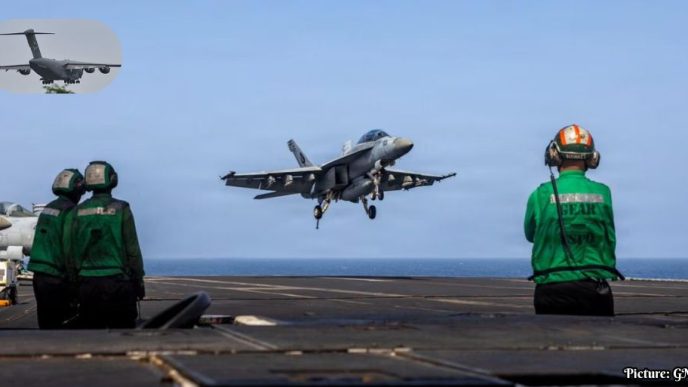
In a notable geopolitical shift, the U.S. military is actively on the ground within Venezuelan territory, deploying heavy transport aircraft, engineering units, and field hospitals to support the rescue effort. From Washington, U.S. officials confirmed that American resources are being rushed to the coastal corridor, working alongside international teams from 17 different nations. However, the arriving wave of foreign machinery and search-and-rescue technicians faces severe physical bottlenecks: Simón Bolívar International Airport in Maiquetía sustained critical damage to its control towers and primary runways, forcing incoming humanitarian flights to utilize secondary domestic airfields or execute precarious visual landings.
Appearing before a packed legislative session, National Assembly President Jorge Rodríguez struck a somber, nonpartisan tone as he pleaded for continued international solidarity and domestic unity. “Every single person we are able to pull out alive from this rubble is an absolute miracle,” Rodríguez stated, visibly exhausted as he addressed the assembly floor. “This is a moment where political divisions must be buried under the immediate, sacred duty of saving human lives.”