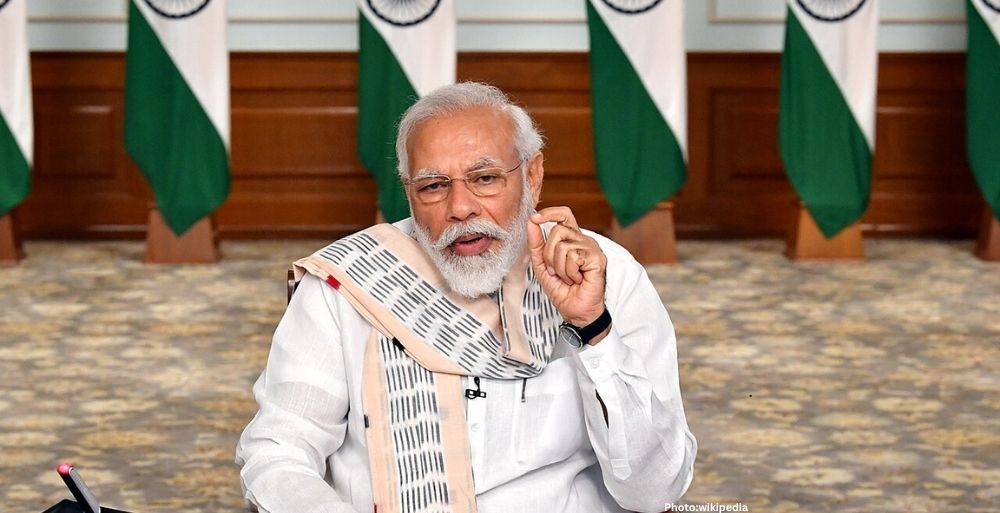
Amit Shah announced that Prime Minister Narendra Modi is poised to surpass Jawaharlal Nehru’s record for the longest-serving Prime Minister, coinciding with the National Democratic Alliance’s 12-year anniversary in power.
On June 10, 2026, Union Home Minister Amit Shah made a notable announcement in New Delhi, revealing that Prime Minister Narendra Modi has completed 4,398 days in office. This marks a significant milestone as Modi is set to surpass the record of Jawaharlal Nehru, who served as Prime Minister from 1947 until his death in 1964, totaling 16 years and 286 days. This proclamation coincides with a gathering of the National Democratic Alliance (NDA), commemorating 12 years of governance under the coalition.
Shah emphasized that Modi’s tenure has been defined by a commitment to public welfare, asserting that this principle has guided the administration’s policies and governance strategies. The significance of surpassing Nehru’s tenure extends beyond mere numbers; it signifies a profound transformation in the Indian political landscape, where Modi’s Bharatiya Janata Party (BJP) has emerged as a dominant political force.
Historical Context and Political Implications
The milestone of surpassing Nehru’s record not only celebrates Modi’s time in office but also reflects the broader narrative of the NDA’s political journey. The NDA has strategically consolidated power, expanding its voter base across various demographics, including urban middle-class voters, rural populations, and first-time voters. The coalition’s ability to navigate challenges, including economic fluctuations and social issues, has been pivotal in maintaining its hold over the Indian electorate.
Shah’s remarks underscore a crucial point: Modi’s leadership style and governance strategies have aimed to reshape public perception and policy direction in India. For instance, Modi’s emphasis on economic development through initiatives like ‘Make in India’ and digital governance has resonated with many citizens, positioning the NDA as a catalyst for change. However, the implications of Modi’s extended tenure also raise questions regarding accountability, democratic norms, and the opposition’s ability to mount a credible challenge.
Launch of the Land Port Management System
In conjunction with this announcement, Shah also launched the Land Port Management System (LPMS), named ‘VINIMAY’. This initiative reflects the government’s commitment to modernizing border management practices. During the launch, Shah articulated that the approach to border security has evolved since 2014, shifting from a strictly security-centric focus to one that incorporates trade facilitation and enhanced connectivity.
Land ports have been characterized as essential infrastructure that not only ensures national security but also fosters economic opportunities and cultural exchanges between India and its neighbors. Shah’s vision encompasses a comprehensive strategy, termed ‘Smart Borders’, aimed at integrating advanced technology into border management, which is critical for a country like India with extensive land borders.
Technological Advancements in Border Management
The LPMS is designed to provide an integrated digital platform that streamlines the management of cargo, passengers, and vehicles at land ports. Shah noted that the implementation of this system would significantly reduce bureaucratic inefficiencies, potentially eliminating up to 90% of paperwork associated with border crossings. The introduction of a Single Electronic Window and an Automatic Number Plate Recognition (ANPR) system is projected to enhance operational efficiency, reducing truck waiting times by approximately 40% to 60% and decreasing gate processing times by 22% to 35%.
These technological advancements are expected to catalyze not only trade and tourism but also foster better coordination and dialogue between citizens of neighboring countries. Shah’s remarks hinted at a broader vision of nurturing mutual trust and cultural exchanges, which are essential for sustainable diplomatic relations in a region frequently marked by geopolitical tensions.
NDA’s Future and Modi’s Legacy
The effective implementation of the LPMS and the Smart Borders initiative reflects the NDA’s broader commitment to modernizing India’s infrastructure while addressing challenges related to migration and cross-border trade. As the NDA celebrates its 12-year milestone, these governance strategies that emphasize both security and economic growth are likely to continue shaping India’s policy landscape.
As Modi approaches the historic milestone of surpassing Nehru’s tenure, the implications of his extended leadership will be closely scrutinized by both supporters and critics. The NDA’s ability to maintain its coalition and voter support will be pivotal in the upcoming electoral landscape, where regional parties and opposition coalitions are poised to challenge the BJP’s dominance.
Shah’s announcement not only commemorates a significant record in Indian political history but also signals the ongoing evolution of governance strategies in India. The interplay between national security, economic development, and public welfare will continue to be central to the discourse as the nation navigates the complexities of its democratic process. As India moves forward under Modi’s leadership, the balance between these critical elements will determine the trajectory of the country’s future.