
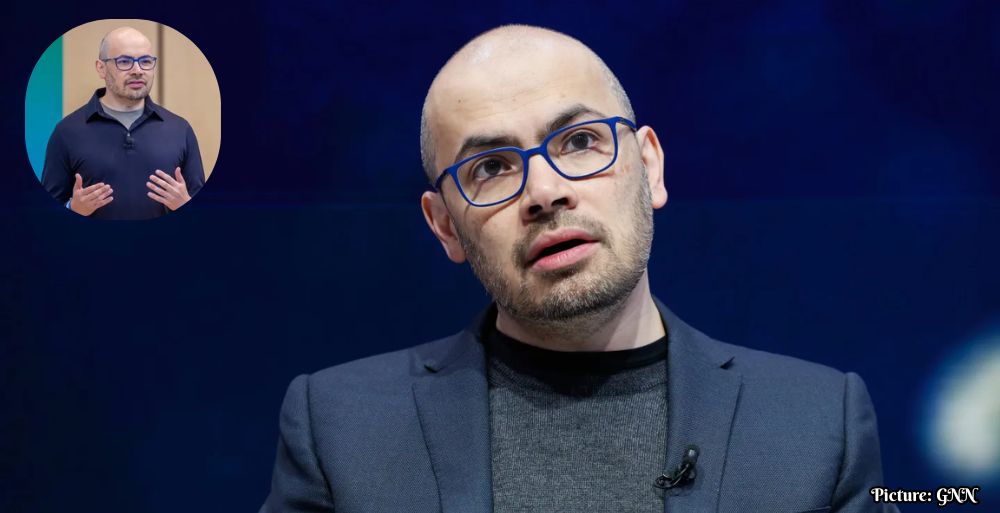
Demis Hassabis, CEO of Google DeepMind, predicts that artificial general intelligence (AGI) may emerge by the end of the decade, urging society to proactively prepare for its transformative implications.
STANFORD, CA – At an event hosted by the Stanford Graduate School of Business last week, Demis Hassabis, the CEO of Google DeepMind, conveyed his belief that artificial general intelligence (AGI) is on the horizon, potentially emerging within the next few years. AGI, characterized by the capability of artificial intelligence to perform a wide array of intellectual tasks at or above human levels, could be realized as early as 2030, according to Hassabis.
“We’ve been calling AGI this next version of really general artificial intelligence,” Hassabis emphasized. “I believe that we’re only a few years away from that, maybe like 2030 plus or minus a year, which is astounding to think, really.” He framed this anticipated development as the inception of a “new human era.”
Significance of 2026
Hassabis specifically pointed to 2026 as a pivotal year, suggesting that advancements in AI agents and tool-use capabilities have reached a level of utility that significantly impacts various professional sectors. He argued that this progress has provided developers with clearer insight into the remaining hurdles to achieving AGI. However, he cautioned that the responsibility for preparing for this shift cannot rest solely with technologists.
“Society needs to hear that because we don’t have long to prepare for what that means. It’s going to be enormously profound,” Hassabis stated. “The future, in my view, is still to be written, but these next few years are going to be very critical as to which way that will go and how we collectively want that to look like.” His comments underscore a growing urgency for a broader societal dialogue about the implications of AGI.
Current Landscape of AGI Predictions
Hassabis’ remarks come amidst increasing discourse in the tech community regarding the timeline for achieving AGI. Last year, OpenAI CEO Sam Altman claimed that his organization possesses the knowledge required to construct AGI “as we have traditionally understood it,” suggesting that AI agents could soon begin integrating into the workforce. Similar optimistic predictions have emerged from other influential figures, including Anthropic CEO Dario Amodei and SpaceX CEO Elon Musk.
Musk, during a December interview with Peter Diamandis, executive chairman of the XPRIZE Foundation, expressed his belief that AGI could be realized by 2026. “I think we’ll hit AGI in 2026,” Musk stated, adding, “I’m confident by 2030, AI will exceed the intelligence of all humans combined.” Such assertions align with a burgeoning consensus among certain tech leaders that AGI-level systems may be imminent.
Contrasting Views and Skepticism
Conversely, some experts contend that AGI has already been achieved and that current AI models may fulfill the criteria for general intelligence. Shaw Walters, founder of Eliza Labs, previously asserted, “I think that we’re at the inflection point where we have AGI. I completely believe that this is general intelligence.” This perspective highlights a significant divide in the tech community regarding the status and capabilities of contemporary AI systems.
Nonetheless, skepticism persists about the actual capabilities of existing AI systems. In March, the ARC Prize Foundation released its ARC-AGI-3 benchmark, designed to assess whether AI systems can learn and adapt in unfamiliar environments. Notably, leading models from major firms such as Google, OpenAI, Anthropic, and xAI scored below 1%, while human participants achieved perfect scores. This stark contrast raises questions about the readiness of current AI systems to meet the complex demands associated with AGI.
The Challenge of Defining AGI
The discussion around AGI is further complicated by the absence of a universally accepted definition. Malo Bourgon, CEO of the Machine Intelligence Research Institute, pointed out the confusion surrounding competing definitions of AGI. “There’s a bunch of different definitions,” Bourgon noted. “When we start to talk about, is this system AGI? Is that system AGI? What precisely qualifies as AGI by what definition? I think that’s kind of difficult to do.” This lack of consensus makes it challenging to ascertain when or if AGI will truly be achieved.
Looking Ahead: The Implications of AGI
Despite the ongoing debate, Hassabis remains optimistic about the trajectory of technological advancement. “Everything is going to change in the next 10 years, probably more than people assume,” he remarked. This sentiment reflects a broader concern within the tech community about the implications of AGI’s potential arrival. As discussions about AGI continue to unfold, there is a growing recognition of the need for thoughtful consideration and preparation to navigate the profound changes it may bring to society.
As the landscape of artificial intelligence evolves, the anticipation surrounding AGI presents both opportunities and challenges. The urgency communicated by Hassabis and other industry leaders serves as a call to action for policymakers, researchers, and the public to engage in meaningful dialogue about the future of AI and its implications for humanity.