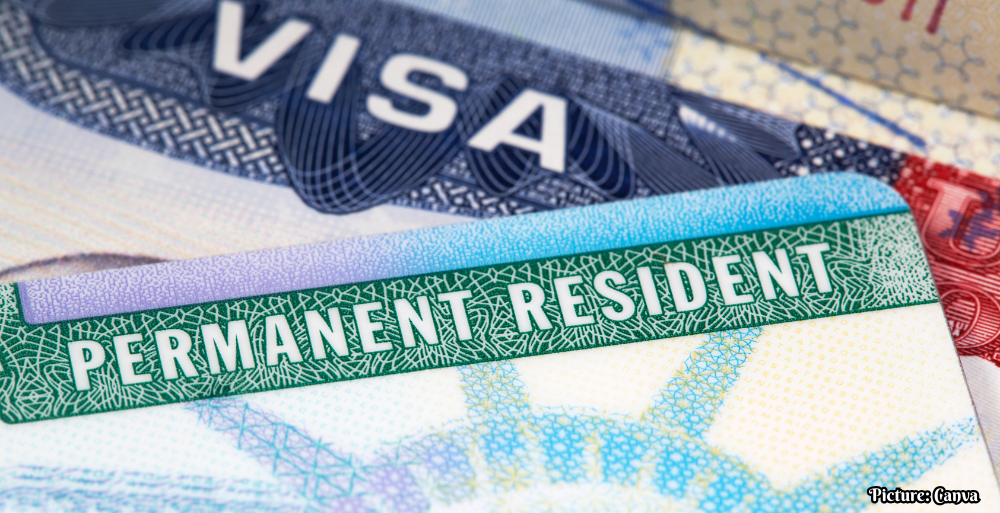
The United States Citizenship and Immigration Services has clarified that not all H-1B visa holders are required to leave the country while applying for green cards, following a period of confusion sparked by earlier policy statements.
The United States Citizenship and Immigration Services (USCIS) has announced a clarification regarding the green card application process for holders of H-1B visas, indicating that many may remain in the country while their applications are being processed. This announcement follows a previous policy memo that had suggested a more stringent approach, leading to widespread concern among foreign workers, particularly those from India, the largest group of H-1B visa holders.
Clarification on Application Process
On May 26, 2026, USCIS spokesperson Zach Kahler stated that applicants who can demonstrate their contributions to the U.S. economy or whose roles serve the national interest would likely be permitted to continue their residency in the United States during their green card application process. Kahler emphasized, “People who present applications that provide an economic benefit or otherwise are in the national interest will likely be able to continue on their current path,” highlighting a more flexible stance than previously communicated. However, he also noted that some applicants may still be required to apply from abroad, depending on individualized circumstances.
Previous Guidance and Its Implications
This clarification came after a previous statement from Kahler suggested a significant tightening of immigration policy, which indicated that temporary visa holders would need to return to their home countries to apply for permanent residency, except in extraordinary circumstances. This shift prompted immediate concern among foreign workers, especially in the technology sector, where many H-1B visa holders are employed. Historically, many temporary visa holders have utilized the adjustment of status process, allowing them to apply for permanent residency from within the United States.
The Impact on Indian H-1B Holders
Data from recent years shows that Indian professionals represent the majority of H-1B visa holders in the United States, with significant representation in critical industries such as technology, healthcare, engineering, and finance. These individuals have relied on the adjustment-of-status route to navigate the lengthy green card process, often waiting years for approval. Any changes to this pathway pose serious implications for this demographic, many of whom have established lives and careers in the U.S.
With the latest clarification suggesting that H-1B workers who can prove their roles contribute positively to the U.S. economy or align with broader national interests may remain in the country, some anxiety has been alleviated. However, uncertainty remains about how these conditions will be applied and which applicants will qualify for exemptions.
Concerns from Immigration Experts
Immigration experts have expressed concern about the potential disruptions that could arise from forcing workers to leave the U.S. during their application process. Such a requirement could lead to job and family instability, as applicants may face delays in securing visa appointments abroad, potentially resulting in prolonged absences from the United States. Additionally, the strict timelines imposed by visa regulations mean that workers facing layoffs must secure new employment within a limited timeframe or risk having to leave the country.
Criteria for Continued Residency
USCIS has outlined three potential conditions under which H-1B visa holders might be allowed to remain in the U.S. during their green card application: demonstrating an economic benefit to the country, serving the national interest, and an individualized circumstances review. However, the agency has not publicly defined how these criteria will be evaluated, leading to increased uncertainty among applicants.
Community Reactions and Ongoing Debate
The clarification has ignited a debate among Indian professionals in the United States. Notably, business leader Sridhar Vembu has publicly urged Indians to consider returning to their homeland, stating, “Please come home… self-respect should dictate your course.” His remarks have sparked mixed reactions within the community, with some expressing understanding of the challenges faced by those who have built their lives in the U.S. and others questioning the viability of returning.
While the recent announcement provides some relief, experts warn that the overall trajectory of U.S. immigration policy remains stringent. Authorities have indicated that certain applicants may still be required to apply from abroad based on their specific circumstances, compelling many H-1B visa holders to remain vigilant as they await further guidance from USCIS.
Conclusion: Navigating a Complex Landscape
As this situation continues to evolve, both applicants and employers find themselves navigating a complex and uncertain immigration landscape. The potential for significant impacts on the workforce and families involved underscores the importance of clear communication from immigration authorities. With many H-1B visa holders closely monitoring the developments, the future of immigration policy will remain a critical area of focus for those impacted by these changes.