In a major diplomatic push to deepen economic ties with the West, Indian Union Minister of Commerce and Industry Piyush Goyal conducted a series of high-level, one-on-one meetings with Wall Street’s top corporate executives and investment institutional heads during a critical transit visit through New York City. Facing an audience of more than 50 global industry titans at a closed-door roundtable hosted by the Consulate General of India and the US-India Strategic Partnership Forum, Goyal delivered an encouraging update on bilateral trade relations, declaring that a highly anticipated India-US interim trade agreement is now close to finalization. The intense economic diplomacy, which followed a three-day trade delegation to Canada, comes just days before an official American negotiating team arrives in New Delhi to hash out final sub-clauses on market access, customs facilitation, and non-tariff regulatory barriers, underscoring India’s strategic pivot toward establishing itself as a predictable, reform-driven alternative in global manufacturing and supply chains.
NEW YORK — Indian Commerce and Industry Minister Piyush Goyal met with elite financial, technology, and pharmaceutical executives in New York City, launching a concentrated charm offensive designed to accelerate long-term institutional investment and secure a landmark bilateral trade pact. The high-stakes engagements, held under the joint auspices of the Consulate General of India and the US-India Strategic Partnership Forum (USISPF), marked a pivotal moment in India’s broader economic diplomacy framework as the country aggressively markets its domestic structural reforms to global capital markets.
Addressing a closed-door roundtable of over 50 prominent global business leaders on May 28, Goyal provided what attendees described as an encouraging and confident update on long-stalled bilateral trade negotiations. According to corporate briefers present during the discussions, Goyal assured the international industry heads that an interim trade agreement between New Delhi and Washington is structurally close to completion. The announcement signals a potential breakthrough in trade relations between the two democracies, with a technical negotiating team from the United States scheduled to descend on New Delhi from June 1 to June 4 to finalize operational legal texts regarding customs facilitation, harmonized tariffs, and market access.
Wall Street One-on-Ones: Banking on Digital Infrastructure and Fintech
The centerpiece of Goyal’s New York transit tour consisted of intense, one-on-one executive brief sessions with the chief executive officers of the world’s most powerful financial institutions and private equity funds. Amid the quiet rooms of Manhattan’s premier financial districts, Goyal positioned India’s sprawling Digital Public Infrastructure (DPI)—anchored by the Unified Payments Interface (UPI)—as a highly mature, secure playground for international fintech platforms.
In a highly anticipated meeting with Mastercard Chief Executive Officer Michael Miebach, the conversation bypassed basic pleasantries to focus on the technical synchronization of next-generation payment networks, digital commerce architectures, and global cybersecurity frameworks. Minister Goyal, maintaining an assertive yet collaborative demeanor, outlined India’s trajectory from a cash-heavy system to a digitized powerhouse.
“Conversations centered around India’s growing digital economy, robust digital public infrastructure, and its emergence as a trusted global hub for fintech innovation,” Goyal stated in an official dispatch following the corporate summit. Industry insiders noted that Mastercard has been seeking to expand its processing footprint within South Asia, making India’s domestic regulatory predictability a key topic of discussion during the sit-down.
Transitioning from digital payments to deep-capital institutional funding, Goyal held a focused meeting with Morgan Stanley Chairman and Chief Executive Officer Ted Pick. The session focused heavily on creating reliable pipelines for long-term institutional capital into India’s expanding core infrastructure and green energy sectors. According to ministry officials, the discussions focused on strengthening structural investment frameworks, with Goyal actively urging Morgan Stanley to act as a primary institutional conduit for global pension and sovereign wealth funds looking to diversify away from traditional East Asian manufacturing hubs.
Private Equity and Pharma: Tapping Scale and Supply Chain Security
The ministerial economic caravan also prioritized global private equity and healthcare supply chain security, sectors that have taken on immense strategic weight as Western corporations seek to build “friend-shoring” networks. Goyal sat down with Warburg Pincus Chairman Charles “Chip” Kaye to dissect the shifting global investment landscape, emphasizing India’s relative macroeconomic insulation against current global inflationary shocks.
During the exchange, Goyal leaned heavily into India’s distinct structural advantages—namely its massive domestic consumption base, competitive tech talent pool, and stable policy environment under Prime Minister Narendra Modi’s administration. “Highlighted that with scale, talent, rising domestic demand, and a steady policy push, India continues to create new opportunities across sectors for global investors,” Goyal remarked later, reinforcing the official stance that New Delhi will maintain a predictable and non-arbitrary regulatory stance for foreign private equity deployments.
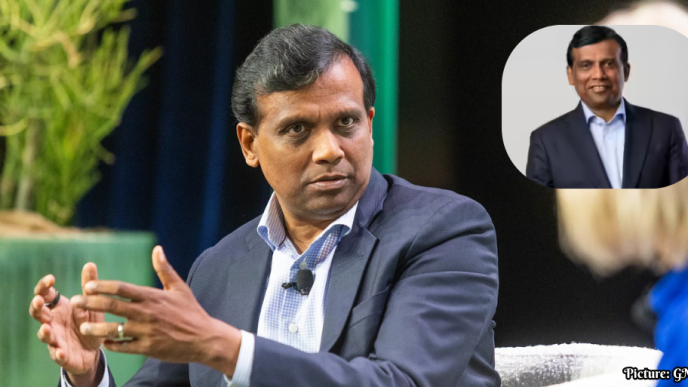
The geopolitical necessity of diversifying active pharmaceutical ingredients (APIs) and medical manufacturing pipelines formed the backdrop of Goyal’s meeting with Chintu Patel, the co-founder and co-CEO of Amneal Pharmaceuticals. With India long known as the “pharmacy of the world” due to its dominant generic drug manufacturing footprint, the dialogue centered on elevating the country into high-value pharmaceutical innovation, complex biologics, and clinical research. Patel and Goyal evaluated specific regulatory and investment models to strengthen India’s domestic R&D ecosystems, aiming to transition the Indian pharmaceutical sector from a low-cost volume producer into a high-margin global research hub.
The Roundtable: A Message of Stability to Global Capital
The culmination of the outreach occurred at the expansive roundtable interaction in New York, where Goyal faced more than 50 chief executives, fund managers, and multinational corporate directors. Organized by the Consulate General of India in partnership with USISPF, the room reflected an atmosphere of high economic stakes, as Western corporate entities seek clear regulatory guarantees before executing multi-billion-dollar capital investments.
Goyal delivered an expansive presentation detailing the Indian macroeconomic story, pointing to consistent gross domestic product expansion figures that lead major emerging economies. He highlighted that under the current political leadership, India has systematically dismantled archaic bureaucratic red tape, implemented sweeping ease-of-doing-business modifications, and introduced robust Production Linked Incentive (PLI) frameworks across 14 critical manufacturing sectors.
According to a post-event brief released by the USISPF leadership, the minister successfully conveyed that “investor confidence, business stability, and a predictable regulatory environment remain top priorities for the Indian government.” The forum noted that Goyal’s transparency and detailed updates regarding the upcoming June 1–4 trade rounds in New Delhi injected fresh momentum into corporate planning corridors, assuring American corporations that an interim trade framework would lower reciprocal trade barriers in the near term.
Comparative Framework and Global Economic Diplomacy
Goyal’s intense New York engagement did not occur in isolation. It served as the secondary phase of a wider North American economic diplomatic tour. Directly preceding his arrival in New York, Goyal led a massive, high-powered delegation of over 150 elite Indian business leaders to Canada from May 25 to May 27.
While the Canadian leg of the tour sought to inject fresh momentum into a proposed Comprehensive Economic Partnership Agreement (CEPA) and secure critical mineral supply lines, the American leg focused on deep financial integration and high-technology partnerships, including collaboration in artificial intelligence, semiconductors, and advanced manufacturing.
The deliberate timing of these dual North American outreaches underscores a highly coordinated strategy by New Delhi to exploit the ongoing global re-alignment of industrial supply chains. By engaging directly with both political negotiators and private capital commanders, the Indian Ministry of Commerce and Industry aims to build a dual-track economic bridge that secures both the legislative frameworks and the private investment dollars required to transform India into a primary global export engine over the next decade.