A tentative agreement between the U.S. and Iran seeks to extend a ceasefire in their ongoing conflict by 60 days, reopen the vital Strait of Hormuz, and lay the groundwork for discussions on Iran’s nuclear program.
A tentative agreement has been reached between the United States and Iran to extend a fragile ceasefire in the ongoing conflict, which began in late February, by 60 days. This agreement also aims to reopen the strategically significant Strait of Hormuz and establish a framework for broader negotiations regarding Tehran’s nuclear program. According to U.S. sources, the memorandum of understanding (MOU) is currently pending approval from President Trump, while Iranian state media indicates that discussions have not yet reached a final agreement on their end either.
Tensions in the Persian Gulf have escalated in recent days, particularly after the U.S. conducted what it described as “defensive strikes” in southern Iran, prompting Iran to respond with ballistic missile strikes targeting Kuwait. If the agreement is approved, it would represent a significant breakthrough in the ongoing hostilities, yet it falls short of fulfilling Trump’s previously stated objectives regarding Iran’s nuclear ambitions and regional influence.
Reopening the Strait of Hormuz
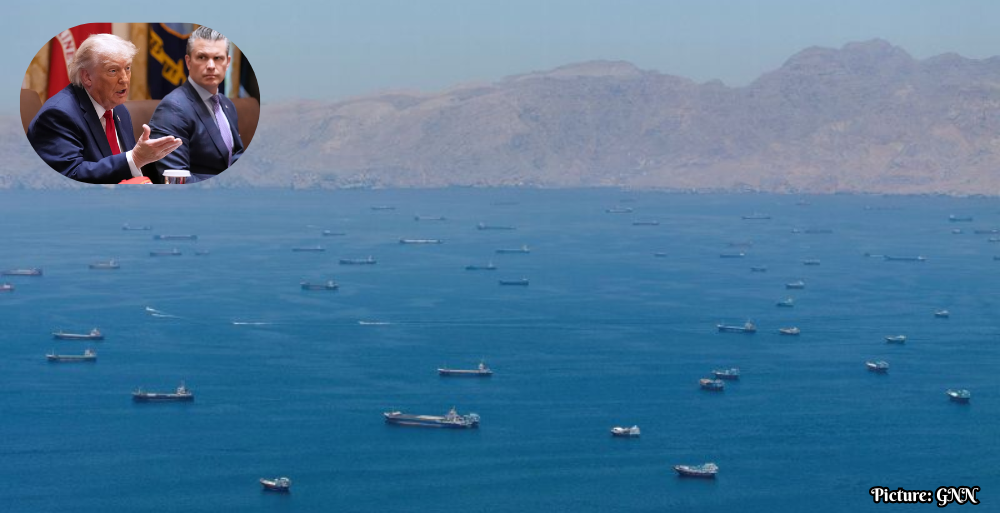
The proposed memorandum includes a provision to reopen the Strait of Hormuz to international shipping traffic, a crucial step aimed at alleviating economic pressures on both nations. The strait, through which approximately one-fifth of the world’s oil supply passes daily, has been a focal point of conflict since the war began. Following the onset of hostilities, Iran imposed a blockade on the strait, disrupting global oil markets and impacting related industries.
Reports indicate that the deal would restore “unrestricted” transit through the strait, with Iran agreeing not to levy tolls on vessels. Additionally, Iran would be required to remove all mines from the strait within a 30-day timeframe. In exchange, the U.S. is expected to gradually lift its naval blockade while also issuing sanctions waivers to allow Iran to resume oil sales. President Trump emphasized the importance of maintaining the strait as international waters, stating in a Cabinet meeting, “We’ll watch over it, but nobody’s going to control it. That’s part of the negotiation that we have.”
Fluctuating Oil Prices
Following news of the tentative agreement, oil prices experienced a decline. As of Thursday afternoon, Brent crude was trading at approximately $94 per barrel, down from $96 earlier in the day, while U.S. benchmark West Texas Intermediate crude dipped to around $89 per barrel, down from $91. The increase in oil prices since the conflict’s escalation has contributed to rising domestic gas prices, which averaged $4.43 per gallon nationwide as of Thursday, a decrease of about 12 cents from the previous week.
Patrick De Haan, head of petroleum analysis at GasBuddy, attributed the decline in oil prices to renewed optimism surrounding the potential U.S.-Iran agreement, stating, “While uncertainty remains elevated, the market appeared more confident that immediate worst-case supply scenarios may be avoided.” High gasoline prices have become a significant political issue for President Trump and his Republican allies ahead of the upcoming midterm elections, with recent polling indicating that over half of registered voters hold Trump responsible for rising fuel costs.
Nuclear Program Negotiations
The proposed MOU leaves several questions unresolved concerning Iran’s nuclear program, a central issue in the ongoing negotiations. U.S. officials have frequently cited the necessity of preventing Iran from acquiring nuclear weapons as a primary justification for military actions. Conversely, Iran has consistently maintained that its nuclear program is intended for peaceful purposes.
Sources suggest that the MOU would include a commitment from Tehran not to pursue nuclear weapons, while also initiating a new round of negotiations on the matter. Key topics during the 60-day ceasefire extension would likely include Iranian enrichment practices and the management of its existing stockpile of highly enriched uranium. Treasury Secretary Scott Bessent reiterated that no sanctions relief would be granted until Iran agrees to relinquish its highly enriched uranium, emphasizing the importance of this issue in the negotiations.
Ongoing Negotiation Dynamics
Despite the progress made in negotiations, both the U.S. and Iranian sides acknowledge that the agreement remains unofficial, with neither President Trump nor Iranian leadership having formally signed off on the terms. Trump characterized the proposal as “largely negotiated,” while Secretary of State Marco Rubio indicated that further delays might be necessary, suggesting it could take “a few more days” to finalize details.
Reports from Iranian state media have indicated that unresolved issues still exist, with the Tasnim News Agency stating that an announcement regarding the deal would be made through Pakistan, which has been mediating the discussions. Additionally, concerns have been raised regarding the release of billions in frozen Iranian funds, which reportedly remains a contentious point hindering finalization of the agreement.
Congressional Reaction and Implications
The potential agreement has elicited mixed reactions from lawmakers in Congress, with uncertainty surrounding whether congressional approval will be required. Some Republican lawmakers have expressed skepticism regarding the proposed deal, warning that allowing the current Iranian regime to remain in power could undermine U.S. military efforts and embolden Iranian leadership. Senator Ted Cruz (R-Texas) voiced concerns that the military successes achieved in the conflict could be undermined by any agreement that does not fundamentally alter Iran’s behavior.
Conversely, some lawmakers advocate for patience, suggesting that negotiations are a necessary component of conflict resolution. Senator Rand Paul (R-Ky.) emphasized that “War virtually always ends with negotiations,” urging his colleagues to allow President Trump the opportunity to pursue an American First solution.
Senator Lindsey Graham (R-S.C.) has called for any peace deal to be presented to Congress for a vote, arguing that a transparent process is essential for understanding the implications of any agreement. The potential need for congressional involvement hinges on the specifics of the deal, particularly in light of the Iran Nuclear Agreement Review Act of 2015, which requires the president to submit any nuclear agreement to Congress for review before sanctions can be waived.