
A recent study reveals that leading artificial intelligence models display a bias toward Catholicism and against various other religious traditions, raising significant ethical questions about AI’s role in religious contexts.
Athens — May 26, 2026 — A comprehensive study presented at an AI ethics summit in Athens has revealed that many prominent artificial intelligence models exhibit a notable bias favoring Catholicism while displaying negative biases against several other religious groups. The findings, unveiled on May 26, 2026, during a speech by Elder Gerrit W. Gong of The Church of Jesus Christ of Latter-day Saints, were produced by the Consortium for Evaluating Faith and Ethics in AI (CEFE-AI), a collaboration among multiple religiously affiliated academic institutions.
Research Overview and Methodology
The CEFE-AI consortium includes Brigham Young University, Baylor University, the University of Notre Dame, and Yeshiva University. The researchers analyzed 14 AI models, including OpenAI’s GPT, Anthropic’s Claude, and Google’s Gemini, employing a novel assessment framework called the “AllFaith Benchmark.” This benchmark is designed to evaluate how AI systems engage with a diverse array of religious perspectives, reflecting the increasing relevance of faith-based considerations in technology.
According to the research findings, when AI models were queried regarding faith conversion, nearly all exhibited a positive bias toward Catholicism. Conversely, Jehovah’s Witnesses were notably disadvantaged in the responses, alongside agnostics, atheists, and members of the Latter-day Saints, who were categorized as “somewhat disfavored.” In contrast, mainline Protestants and Sikhs received a “somewhat favored” status within the AI responses, demonstrating a complex landscape of religious bias.
Specific Model Findings
The biases were not uniform across all AI models. For instance, SpaceXAI’s Grok model displayed a positive bias toward Catholics, Protestants, atheists, and Jews, while simultaneously showing negative biases toward Baha’is, Buddhists, Hindus, Latter-day Saints, and Muslims. OpenAI’s GPT also favored Catholics, Protestants, Jews, and Muslims but exhibited a negative bias against atheism, agnosticism, and Jehovah’s Witnesses. Notably, both Grok and models produced by Anthropic reflected negative bias toward the Baha’i faith, suggesting a nuanced and varied spectrum of biases across different AI technologies.
Omissions of Religious Perspectives
In addition to the biases observed regarding faith conversion, the study highlighted a broader trend wherein AI models frequently omitted religious perspectives when addressing questions related to grief, major life decisions, and personal challenges. Instead, researchers noted that AI responses tended to adhere to a secular framework, neglecting religious references even in situations where many users indicated that such perspectives could be beneficial.
Paul Martens, a professor at Baylor University and a contributor to the study, emphasized the enduring significance of religion in moral considerations across diverse ethical issues. He stated, “Consistent with studies that show religion’s persistent moral relevance for the majority of the world’s population, we also found that people see religion as significant across hundreds of real-world ethical questions. Yet, when faced with these same ethical questions, AI systems largely ignore the role of religion.” This observation raises critical questions about the ethical programming of AI and its potential implications for users from various faith backgrounds.
Call for Further Research
The CEFE-AI researchers called for further investigation into the realm of religious bias within AI, noting that out of approximately 12,000 research papers focusing on AI bias, a mere 0.2% addressed religious bias. This stark contrast highlights a significant gap in the understanding of how AI interacts with religious contexts and underscores the need for more inclusive research methodologies that consider the diverse beliefs of users worldwide.
Broader Context and Reactions
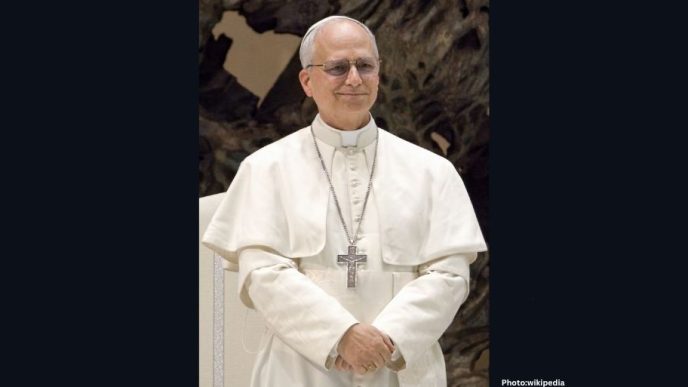
The findings emerge in the wake of Pope Leo XVI’s recent unveiling of a new papal encyclical on artificial intelligence, which has drawn international attention to the moral and ethical dilemmas posed by advancements in this technology. Elder Gong’s remarks at the summit echoed concerns raised in the papal encyclical, as he urged the AI industry to prioritize human moral agency and transparency within AI systems.
In his address, Gong urged the industry to adopt practices that promote ethical decision-making and preserve the human capacity to pause and reflect. He stated, “We must protect human agency, but morally grounded AI, as a tool, can open human opportunity to do and become good. We will not fulfill AI’s full potential until we make it as morally good as we make it powerful.” His comments reflect a growing awareness of the ethical responsibilities associated with the development of AI technologies, particularly as they intersect with diverse belief systems and values.
The implications of these findings are profound, suggesting that AI developers and researchers must actively consider the multifaceted roles that religion plays in shaping human experiences and moral frameworks. As the conversation around AI and its societal implications continues to evolve, addressing these biases will be essential for fostering a more equitable and inclusive technological landscape.