An Indian scientist at Harvard discovered ATP. Then invented the first chemotherapy drug. Then invented the first tetracycline antibiotic. Harvard denied him tenure. A bowling alley refused to let him bowl. He died at 53 with no obituary.
His drugs save tens of millions of lives every year.
Most American doctors prescribing them don’t know his name.
His name was Yellapragada Subbarow.
He was born in 1895 in Bhimavaram, India. A village. His father was a Sanskrit scholar who died of tropical sprue. The disease killed two of his brothers too. Subbarow watched them waste away as a child and decided he was going to fight disease for the rest of his life.
He failed his school exams twice. Matriculated on the third try. His future father-in-law paid for his medical school books. Subbarow married the man’s daughter and repaid the debt.
October 1922. Arrived in Boston with broken English and borrowed money. Age 27. Got into Harvard Medical School. Then into the biochemistry PhD program.
He started working under a senior researcher named Cyrus Fiske. Long hours. Low pay. He was at Harvard. He didn’t care.
- They developed the Fiske-SubbaRow assay — the method for measuring phosphorus in body fluids. Still used today for kidney failure, vitamin D testing, prostate cancer. One of the most cited methods in the history of biochemistry.
Then they discovered something bigger.
- ATP. Adenosine triphosphate. The energy molecule that runs every cell in every living thing on Earth.
The discovery rewrote biochemistry. It also proved the 1922 Nobel laureate had been wrong about how muscles work. Muscles don’t run on glycogen. They run on ATP.
Subbarow got his PhD in 1930.
Worked at Harvard another decade. Paper after paper. Discovery after discovery.
And every year, Harvard refused to promote him.
The biochemistry department had never given tenure to a foreigner. They weren’t going to start with an Indian.
His colleagues took him fishing. Played tennis with him. Came to dinner at his house.
Then voted against him every year.
Outside the lab he hit the same wall. He bought an airplane and learned to fly because he loved it. He tried bowling once. The local alley turned him away. The sign said it was “open only to the Caucasian race.”
Then Fiske turned on him. The senior researcher started blocking Subbarow’s discoveries out of jealousy. Some of Subbarow’s work had to be rediscovered years later by other scientists, because Fiske kept his findings buried.
May 1940. Harvard denied him tenure for the final time. After 17 years of groundbreaking work, he walked out.
Lederle Laboratories in New York hired him as Associate Director of Research. He was Director by the end of the year.
In the eight years that followed he did the following.
He developed diethylcarbamazine — an oral drug that killed the tropical worms crippling American soldiers in the Pacific. The World Health Organization still uses it.
He isolated folic acid from liver and figured out how to mass-produce it. Folic acid in pregnancy now prevents birth defects in tens of millions of pregnancies every year. The same disease family that killed his father and brothers became preventable because of him.
Then Dr. Sidney Farber called from Boston with a theory: maybe a drug that blocked folic acid in cancer cells could kill childhood leukemia.
Subbarow’s team made the drug. They called it Aminopterin.
December 1947. Farber gave it to an 8-year-old boy dying of leukemia.
Within weeks the cancer cells started disappearing.
It was the first chemotherapy drug in history. The first time anyone had put cancer into remission with a pill.
Subbarow’s team refined it into Amethopterin — now called methotrexate. It became the gold standard for leukemia, lymphoma, breast cancer, lung cancer. Then for rheumatoid arthritis. Psoriasis. Crohn’s disease. The World Health Organization lists it as an essential medicine. Tens of millions of people take it every year.
- His lab made Aureomycin. The first tetracycline antibiotic. Broad spectrum. Killed typhus, cholera, pneumonia — dozens of bacteria penicillin couldn’t touch. It opened the entire tetracycline class: doxycycline, minocycline, drugs used today against plague, malaria, anthrax, drug-resistant infections.
He was 53 years old. He had created drugs that would save tens of millions of lives.
August 8, 1948. Yellapragada Subbarow had a heart attack at his home in New York and died.
No American newspaper ran a front-page obituary. No university held a memorial. The Nobel Committee never honored him. His own colleague George Hitchings would later win a 1988 Nobel Prize for work built directly on Subbarow’s foundation. Subbarow was not even nominated.
In 1950, Argosy magazine ran a feature on him titled “Miracle Man of the Miracle Drugs.” It opened with a line that still lands.
“You’ve probably never heard of Dr. Yellapragada Subbarow. Yet because he lived you may be alive and are well today. Because he lived you may live longer.”
Most Americans hadn’t heard of him in 1950.
Most still haven’t.
Harvard has never officially honored him. American medical schools mostly don’t teach his name. The Nobel committee that gave Hitchings a prize for derivative work never went back and corrected the record. Every prescription of methotrexate written today is silent about whose work it is.
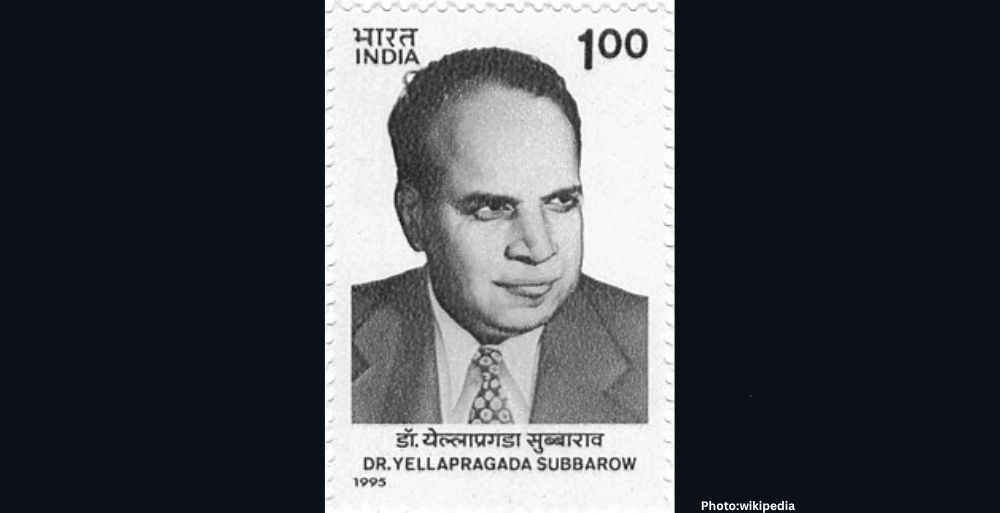
India remembers. The government issued a postage stamp on his 100th birthday. His childhood home is a museum. Indian medical schools teach his name.
The country that denied him tenure, refused to let him bowl, and let him die unknown the country that takes his drugs every day still mostly doesn’t know him.
Here’s the thing.
If you have ever taken methotrexate for cancer or autoimmune disease.
If anyone you love has ever taken folic acid during pregnancy.
If you have ever been prescribed doxycycline for an infection.
That was him.
Yellapragada Subbarow. Born 1895. Died 1948. Saved tens of millions of lives a country he loved doesn’t even know it owes him.
Now you do.
Say his name.
YellapragadaSubbarow #IndianScientist #Methotrexate #ForgottenHero #StillSavingLives
~Weird But True