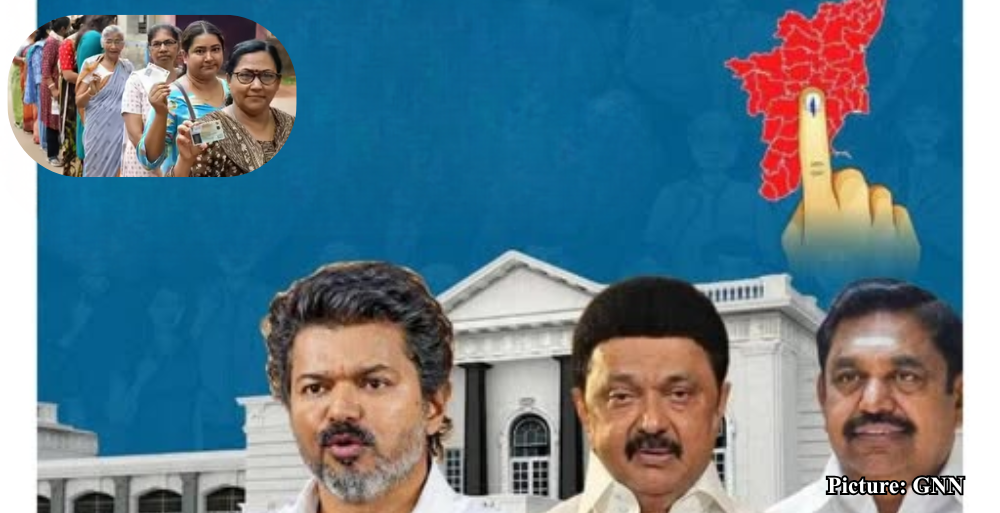
A demographic shift is influencing the political landscape of Kanniyakumari district, where the rise of Hindutva is becoming increasingly noticeable in the context of the upcoming 2026 Assembly elections.
Kanniyakumari district, located at the southernmost tip of India, is undergoing significant demographic and political changes that are reshaping its future. Known for its fertile lands, lush paddy fields, and tropical groves, the region is witnessing a transformation as real estate development increasingly encroaches upon its agricultural heritage. This shift is not merely economic; it also has profound implications for the political landscape, particularly with the rise of Hindutva ideology.
The district, historically celebrated for its agricultural wealth and referred to as the ‘rice bowl’ of the erstwhile Travancore, has a rich cultural legacy that dates back centuries. This heritage is captured in local literature, such as P. Sundaram Pillai’s verse drama, which highlights the wealth of Nanjil Nadu, an area now part of Kanniyakumari. Since the district’s annexation to Tamil Nadu in 1956, it has maintained a unique cultural identity that reflects both Tamil and Kerala traditions.
Demographic Shifts and Their Implications
Recent demographic data reveal significant shifts within Kanniyakumari. According to the 2021 Census, Hindus comprise approximately 60% of the population, while Christians and Muslims represent 30% and 10%, respectively. This gradual increase in the Hindu population is believed to be influencing the political climate, contributing to the growing presence of Hindutva ideologies in the area.
The Bharatiya Janata Party (BJP) has been actively campaigning in Kanniyakumari, leveraging these demographic changes to bolster its political ambitions. During the upcoming 2026 Assembly elections, Prime Minister Narendra Modi is expected to conduct multiple rallies in the region, with the aim of solidifying the party’s foothold in a district traditionally dominated by the Indian National Congress and various regional parties. The BJP’s strategy appears to focus on appealing to Hindu sentiments while simultaneously addressing local economic concerns.
Political Landscape and the Rise of Hindutva
The rise of Hindutva in Kanniyakumari is representative of broader trends across India, where the BJP has increasingly sought to consolidate its support among Hindu voters. The party’s message resonates particularly well in regions where demographic changes have altered traditional political dynamics. In Kanniyakumari, the BJP’s outreach efforts are designed to engage the local Hindu population through community events, cultural programs, and a narrative that emphasizes Hindu identity and cultural heritage.
Political analysts suggest that the BJP’s focus on Hindutva may also be a strategic response to the historical presence of Christian and Muslim communities in the region, which have often aligned with the Congress party. By promoting a narrative centered on Hindu identity, the BJP aims to foster a sense of local pride and cultural nationalism, which may enhance its appeal among voters.
Economic Factors and Development Challenges
The economic landscape of Kanniyakumari is also evolving, as the encroachment of real estate development creates tensions between agricultural interests and urbanization. The growth of the real estate sector is largely driven by rising demand for housing and commercial spaces, spurred by the district’s picturesque landscapes and proximity to tourist attractions, including the famous Kanyakumari Cape.
However, this development poses significant challenges. Local farmers express growing concern over the loss of agricultural land due to construction projects, arguing that such encroachments threaten their livelihoods and the region’s food security. This economic anxiety may translate into political sentiments, as residents grapple with the implications of development versus the preservation of their traditional way of life.
Implications for Upcoming Elections
As the 2026 Assembly elections approach, the political landscape in Kanniyakumari is poised to be a key battleground. The BJP’s attempts to harness demographic shifts and promote Hindutva ideology may resonate with voters seeking change. However, the district’s historical allegiance to Congress and regional parties presents a considerable challenge for the BJP. Voter sentiment will likely hinge on how effectively each party addresses local issues, including economic development, land rights, and cultural identity.
The upcoming elections will serve as a critical test for the BJP’s strategy in consolidating its influence in a region that has historically been diverse and politically complex. The ability of local candidates to connect with constituents and address their concerns may play a pivotal role in determining the electoral outcome.
Conclusion
The ongoing demographic changes and the rise of Hindutva in Kanniyakumari district highlight broader trends within Indian politics, where shifts in population dynamics are reshaping electoral landscapes. The interplay of economic development, cultural identity, and political allegiance will be essential to understanding the outcomes of the 2026 Assembly elections. As Kanniyakumari navigates this transformation, the region’s rich historical context and cultural diversity will undoubtedly play a significant role in shaping its future political landscape.