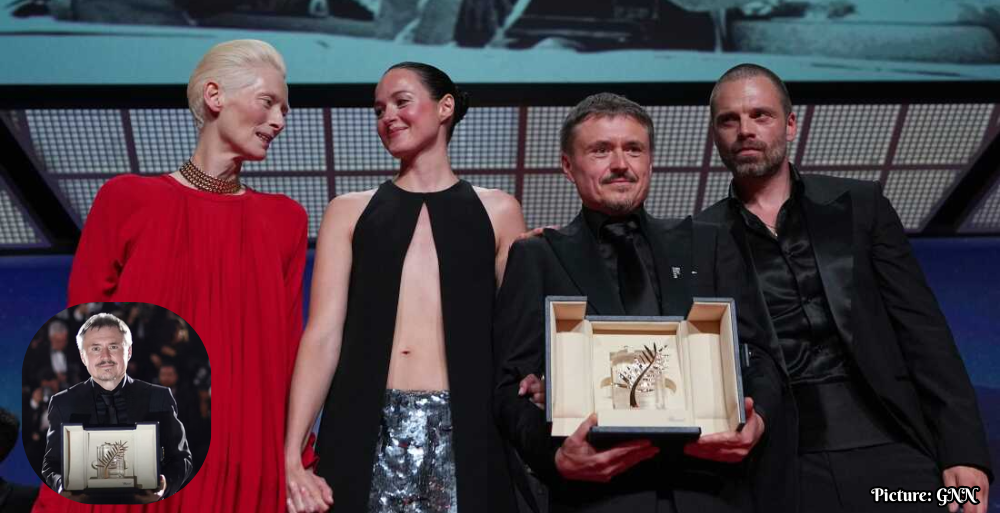
The 79th Cannes Film Festival concluded with the awarding of the Palme d’Or to Cristian Mungiu’s ‘Fjord,’ a poignant exploration of the clash between religious conservatism and social liberalism through the lens of a devout Christian couple accused of child abuse.
The 79th Cannes Film Festival, held from May 17 to May 28, 2026, culminated on Saturday, May 23, with the prestigious Palme d’Or awarded to Romanian director Cristian Mungiu for his multilingual drama ‘Fjord.’ The film features prominent actors Sebastian Stan and Renate Reinsve, portraying a devout Christian couple whose lives spiral into chaos when they become embroiled in allegations of child abuse. This narrative not only highlights the personal turmoil of the characters but also serves as a broader commentary on the societal tensions between religious conservatism and social liberalism.
Accepting the award, Mungiu delivered a heartfelt speech, seamlessly transitioning between English and French, emphasizing the significance of cinema in addressing contemporary societal issues. He stated, “Today’s society is split, it’s divided, it’s radicalized,” underscoring the urgency for films to engage with these pressing divides. The film ‘Fjord’ captures how a family crisis can escalate into national discourse, illustrating the complex dynamics of public perception in a polarized world.
Festival Atmosphere and Highlights
This year’s Cannes Film Festival was characterized by a more subdued atmosphere compared to previous years, particularly the previous edition in 2025, which showcased a robust array of films and star power. The notable absence of major American studios, which typically dominate the festival landscape, along with a lack of globally recognized celebrities on the red carpet, contributed to a feeling of quietness surrounding the event. Critics noted that while the selection of films was commendable, the absence of standout favorites in the main competition for the Palme d’Or created a palpable sense of disappointment among attendees.
In a departure from the norm, this year’s awards saw multiple winners in the categories for best director, actress, and actor. Head of the jury, renowned filmmaker Park Chan-wook, pointed to the diverse composition of the jury, which included actress Demi Moore and director Chloé Zhao, as an influential factor in the decision-making process.
A Closer Look at the Winners
The award for best director was jointly awarded to Polish director Paweł Pawlikowski for his film ‘Fatherland’ and the Spanish filmmaking duo Javier Calvo and Javier Ambrossi for their work ‘La Bola Negra.’ Pawlikowski’s film is a fictionalized account of a real trip taken by the author Thomas Mann to post-war Germany in 1949, while Calvo and Ambrossi’s film intertwines narratives across various historical periods, centering on the unfinished works of the playwright Federico García Lorca, who was assassinated during the Spanish Civil War. This thematic intertwining highlights the filmmakers’ commitment to exploring historical narratives through contemporary lenses.
The Grand Prize, effectively the second-highest distinction at the festival, was awarded to ‘Minotaur,’ a gripping exploration of personal and state power directed by Andrey Zvyagintsev. The film transposes the narrative of Claude Chabrol’s ‘The Unfaithful Wife’ to the contemporary Russian context amidst the backdrop of the ongoing war in Ukraine. Zvyagintsev, who now lives in exile in France, described his film as a pacifist statement opposing the war initiated by the Russian government, further solidifying the festival’s role as a platform for political commentary.
The best actress award was shared by Virginie Efira and Tao Okamoto for their performances in ‘All of a Sudden,’ directed by Ryusuke Hamaguchi. The film presents a deeply moving story about a care center director who develops an intense friendship with a Japanese playwright, showcasing the emotional depth and complexity of human relationships. The touching moment on stage, where the actresses held hands as they received their award, resonated strongly with the audience.
The best actor award was jointly awarded to Valentin Campagne and Emmanuel Macchia for their portrayals of young soldiers in the World War I drama ‘Coward,’ directed by Lukas Dhont. Their performances were noted for their emotional intensity and profound exploration of the human experience during wartime.
Other Notable Recognitions
This year’s Jury Prize was awarded to ‘The Dreamed Adventure,’ a contemplative drama directed by Valeska Grisebach, set in contemporary Bulgaria. The film follows an archaeologist who, while excavating the past, unearths significant elements of her identity and existence, offering a nuanced reflection on personal history and discovery.
The screenwriting award went to Emmanuel Marre for his powerful French World War II drama ‘A Man of His Time,’ which delves into the moral complexities faced by a bureaucrat in Vichy France who assists the Nazi war effort with chilling detachment. Marre’s work has been praised for its incisive commentary on complacency and complicity during times of moral crisis.
Overall, the 79th Cannes Film Festival not only served as a celebration of cinematic artistry but also as a critical forum for addressing pressing social issues. Cristian Mungiu’s ‘Fjord’ stands out as a poignant reflection of contemporary societal divides, encapsulating the festival’s ongoing legacy as a vital platform for artistic expression and political dialogue.