
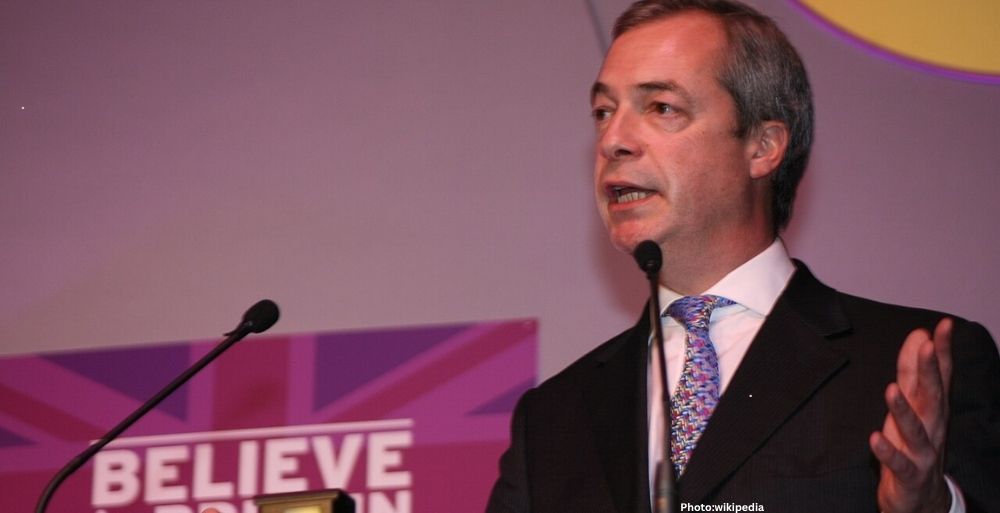
Nigel Farage’s Reform U.K. party has captured more than 400 council seats in early results from local elections, indicating significant political gains at the expense of Labour and Conservative parties.
Nigel Farage, the leader of Reform U.K., announced on May 8, 2026, that his party has achieved substantial victories in the recent local elections held the previous day. With early results indicating that Reform U.K. has won over 400 council seats across England, this development signals a potential shift in the long-standing political landscape dominated by the Labour and Conservative parties.
Speaking to reporters in the London Borough of Havering, Farage characterized the results as indicative of a “historic shift” within British politics. He stated, “Labour are being wiped out by Reform in many of their most traditional areas, and what you’re going to see later on today is the Conservative Party being wiped out in their heartlands.” His remarks reflect a growing belief among some political analysts that Reform U.K. is positioning itself as a formidable contender in future elections.
Election Results and Political Context
While initial results showcase Reform U.K.’s electoral strength, counting of votes continues across numerous council races and in elections that will affect the parliaments in Scotland and Wales. Farage expressed optimism regarding these results, asserting, “The best is yet to come.” However, political analysts caution against overestimating Reform U.K.’s performance, as projections suggest the party may secure less than 30 percent of the overall vote. This percentage, while it may place Reform U.K. ahead of other parties, falls short of the majority needed to govern independently in a general election setting.
The evolving political landscape in the United Kingdom is characterized by a fracturing of the traditional two-party system. In addition to Labour and the Conservatives, parties such as the Greens and the Liberal Democrats are increasingly competing for voter support. This fragmentation reflects a broader dissatisfaction among voters with established political entities, complicating the electoral environment.
Challenges Ahead for Reform U.K.
Despite its significant gains, Reform U.K. faces considerable challenges moving forward. The party’s hard-line positions on immigration—pledging to deport hundreds of thousands of individuals—alongside its opposition to environmental regulations, have drawn criticism and may alienate certain voter demographics. Some political observers believe that the recent electoral successes may be more reflective of voter discontent with Prime Minister Keir Starmer’s Labour government rather than a robust endorsement of Farage’s policies.
Historically, Reform U.K. has transformed from a small group advocating for Brexit into a political entity boasting over a thousand elected officials. This evolution is viewed as a strategic advantage as the party prepares for the next general election, which is mandated to occur by 2029. Farage commented on this rapid transformation, stating, “We have professionalized the party. We’ve done it at a very, very rapid rate.”
Controversies and Financial Backing
The rise of Reform U.K. has not been without its share of controversies. Earlier this year, the party received a record-breaking donation of nine million pounds (approximately $12.2 million) from a Thai cryptocurrency investor, marking the largest single political contribution in British history. This substantial financial backing raises concerns regarding the influence of wealth in politics and the potential implications for party integrity.
Moreover, Reform U.K. has experienced internal strife, with candidates facing backlash for incendiary remarks. For example, a candidate in Wales resigned after a photo emerged that appeared to depict him performing a Nazi salute. In another instance, a mayoral candidate was suspended after making derogatory comments about members of a Jewish neighborhood watch group.
Implications for Future Elections
As the dust settles from these local elections, the implications for Reform U.K. and the broader political landscape are significant. While the party has made notable inroads, the sustainability of its support remains uncertain. Analysts will closely monitor the results from Scotland and Wales, which could offer additional insights into the party’s trajectory and voter sentiment.
The local election results represent a pivotal moment for Farage and his party. Should Reform U.K. maintain its current momentum, it could reshape the dynamics of British politics, challenging the historical dominance of Labour and the Conservatives. However, whether this trend is a fleeting phenomenon or the beginning of a more enduring political shift will be crucial for the future of the party and the U.K.’s political fabric.
In conclusion, the recent local elections have underscored the potential for Reform U.K. to become a significant player in British politics. As the party navigates its newfound electoral success, it will need to address its internal controversies and refine its policy positions to appeal to a broader electorate. The coming months will be critical as Reform U.K. prepares for further electoral contests and seeks to solidify its standing in a rapidly changing political environment.