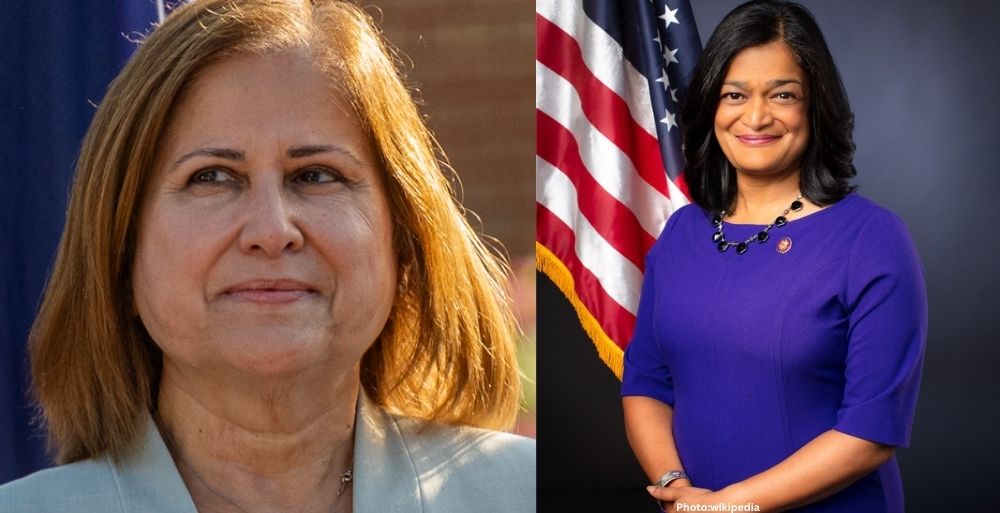
At the 2026 Impact Summit in Washington, D.C., Virginia Lieutenant Governor Ghazala Hashmi and Congresswoman Pramila Jayapal highlighted the interconnections between anti-Asian hate and anti-immigrant sentiment, urging collective action to combat hate crimes and promote immigrant rights.
On April 20, 2026, Virginia Lieutenant Governor Ghazala Hashmi and Congresswoman Pramila Jayapal addressed critical issues concerning the rise of anti-Asian hate and challenges facing immigrant communities during a closing plenary session at the 2026 Impact Summit held in Washington, D.C. The two leaders emphasized the urgent need for awareness and collaborative efforts to tackle these intertwined challenges.
Understanding the Context of AAPI Hate
Hashmi, who made history as the first Muslim woman elected to statewide office in the United States and the first South Asian American in Virginia, pointed to alarming statistics regarding anti-Asian hate. She noted that over 13,000 incidents of anti-Asian hate have been documented in recent years, with more than half of Asian American and Pacific Islander (AAPI) adults reporting experiences of hate or hate-related crimes within the past year. This data underscores a troubling trend that many in the community have faced amid rising political and social tensions.
Political Rhetoric and Historical Patterns
During her remarks, Hashmi highlighted the link between anti-immigrant rhetoric and the experiences of AAPI individuals, stating, “It’s fueled by the same anti-immigrant rhetoric and the policies that are targeting so many of our immigrant communities.” She drew parallels to historical injustices faced by Asian Americans, including exclusion laws aimed at Chinese immigrants and the internment of Japanese Americans during World War II. “We’re seeing it again now in heightened and more aggressive forms,” she added, reflecting on how such narratives contribute to a perception of AAPI communities as perpetual outsiders.
Hashmi pointed to advocacy efforts, including coalitions such as the Virginia Coalition for Immigrant Rights, which unites various organizations to promote dignity, equity, and improved quality of life for all communities. These groups have been active defenders of birthright citizenship, challengers of voter suppression, and proponents of policies that protect families.
Increasing Political Representation
Hashmi also remarked on the growing political representation of AAPI leaders in Virginia, expressing pride in the expanding influence of the community. “I’m really delighted to share that in Virginia, we have growing political power,” she said, recalling her journey as the first AAPI member in the Virginia Senate. The election of leaders such as Suhas Subramanyam, Kannan Srinivasan, and Saddam Salim has contributed to increasing representation, with the formation of an AAPI caucus in 2020 serving as a response to the rising anti-Asian hate during the COVID-19 pandemic. What began with four members has now grown to ten, illustrating the community’s increasing engagement in political processes.
Hashmi’s Personal Journey
Reflecting on her personal experiences, Hashmi shared insights from her 2019 campaign, where she faced skepticism due to her name and background. “You’re not going to win. No one’s going to vote for someone with a name like this, Ghazala Hashmi, of all names,” she recalled. This experience inspired her campaign motto, “Ghazala Hashmi is an American,” which resonated particularly with younger voters grappling with identity and belonging.
Congresswoman Jayapal’s Insights
Congresswoman Pramila Jayapal, representing Washington’s 7th congressional district, also spoke at the session, reflecting on her experiences during the 2024 presidential election. She highlighted the centrality of immigration in campaign discussions, noting the painful realities faced by immigrant families in the current political climate. “It is a deeply painful time to be an immigrant, to be in a mixed status family,” she stated, emphasizing that no group, including Indian Americans, is exempt from the pervasive challenges posed by xenophobic rhetoric.
Jayapal cited specific instances of discrimination against Indian Americans, including derogatory remarks about H1B workers and criticism directed at individuals like Vivek Ramaswamy based on religion. “All of this has led to more danger, more exclusion, more hate crimes against so many of our community members across the country,” she remarked, underscoring the urgent need for collective resistance against such sentiments.
Community Responses and Initiatives
In addition to addressing hate, Jayapal introduced a new initiative called Resistance Lab, which aims to provide virtual training on nonviolent strategies to respond to threats against democratic institutions. Over the past year, the program has conducted 14 sessions, training over 30,000 participants nationwide.
Deepinder Mayell, Executive Director of ACLU Minnesota, echoed concerns raised by Hashmi and Jayapal, discussing recent events in his state that reflect broader national trends. He described a disturbing increase in the use of executive authority, racial profiling, and the targeting of protesters, marking a significant shift in community relations with law enforcement.
Transforming Pain into Power
Manjusha Kulkarni, co-founder of Stop AAPI Hate, spoke to the necessity of transforming “collective pain to collective power.” She emphasized that the surge in anti-AAPI hate incidents prompted the launch of her organization in 2020, underscoring the ongoing need for vigilance and action in response to this persistent issue.
In summary, the discussions at the 2026 Impact Summit highlighted the critical intersections of immigration, civil rights, and the fight against hate. With leaders like Hashmi and Jayapal at the forefront, there is a renewed call for collective engagement and advocacy to address these pressing challenges.