
A new digital platform allows users to engage in conversations with an artificial intelligence modeled on Jesus Christ, igniting discussions about the implications of technology in spiritual practices.
ROME, April 20, 2026 – A new digital platform launched by the technology company Just Like Me has begun offering users the ability to converse with an artificial intelligence (AI) modeled on Jesus Christ. This innovative service is rapidly generating debate concerning the intersection of technology and religion, particularly regarding the nature of faith.
The AI feature, introduced in December 2025 just days before Christmas, allows users to engage in voice or video conversations with a digital figure inspired by a popular portrayal of Jesus from the television series The Chosen. This service is priced at $1.99 per minute, with subscription packages available, such as a monthly offering of 45 minutes for $49.99. According to Just Like Me, the platform aims to provide “guidance, compassion and healing” for those experiencing loneliness, stress, or uncertainty, without promoting any specific religious doctrine.
Context of the Debate
This initiative has sparked significant concerns among various Christian denominations, especially those that perceive the relationship with Christ as a profound encounter rooted in prayer, Scripture, and sacramental life. For instance, Catholic theology emphasizes that communication with Christ is not merely an exchange of messages but a personal relationship based on grace, particularly through sacraments such as confession and the Eucharist. Critics argue that an artificial system, despite its advanced capabilities, lacks consciousness, intentionality, and spiritual agency.
Philosophers and theologians drawing from the teachings of Thomas Aquinas have observed that artificial intelligence does not engage in thought or discernment in a human manner; instead, it processes data and replicates patterns based on prior inputs. This limitation raises practical issues, particularly since the AI does not adhere to any doctrinal authority and may provide responses that diverge from established Christian teaching. An earlier experiment in Switzerland, which involved an AI simulating Christ within a confessional context, highlighted these concerns. When questioned about assisted suicide, the AI provided general empathetic responses but failed to include essential moral teachings central to Catholic doctrine.
Broader Trends in AI and Spirituality
The emergence of AI tools in religious contexts reflects a broader trend where developers across various faiths are exploring how to incorporate artificial intelligence into spiritual practices. Some applications serve as scriptural assistants or sermon translators, while others aim to recreate religious figures or provide moral guidance. For example, in Buddhism, experimental robots trained on ancient texts have been introduced in limited settings, prompting discussions on the permissibility of such representations across various traditions.
The motivations driving these technological developments vary widely. Some initiatives are rooted in pastoral concerns, seeking to engage younger generations or those who feel disconnected from traditional religious institutions. Others appear to be commercially motivated, capitalizing on what is seen as a growing market for spiritual services. The founders of Just Like Me have indicated that their product responds to widespread emotional needs while inviting religious communities to promote the platform in exchange for a share of revenues, reportedly up to 25 percent.
Ethical Considerations and Community Responses
The blending of spiritual language with a business model has provoked comparisons to earlier forms of religious commercialization, a trend that is now amplified by the capabilities of artificial intelligence. Unlike traditional media, AI systems can simulate dialogue, remember past interactions, and foster a sense of personal connection. This capacity raises ethical questions, particularly as users may begin to develop emotional attachments to entities that inherently lack the ability to reciprocate.
Some developers within the Christian community have sought to establish criteria for the responsible use of such technologies. These considerations include ensuring that AI systems are clearly identified as artificial, maintaining fidelity to scriptural sources, and explicitly acknowledging that these tools cannot replace traditional prayer or spiritual direction. However, even among those who are open to technological innovation, there is growing concern about the potential confusion between simulation and reality.
Institutional Perspectives
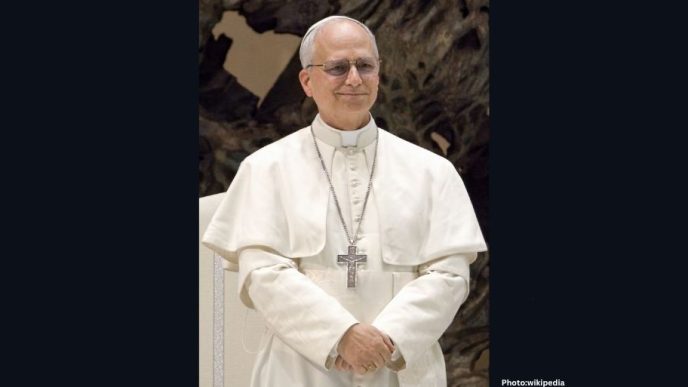
The Vatican has expressed caution regarding the implications of artificial intelligence. Pope Leo XIV has characterized AI as a product of human creativity but warned that it poses significant challenges for humanity, potentially impacting intellectual, neurological, and spiritual development. His concerns reflect a broader apprehension that, while technology can simplify access to information and forms of pseudo-spiritual interaction, it may inadvertently undermine the effort, discipline, and internal transformation that religious traditions consider essential.
Cultural Shifts and Future Implications
Beyond institutional responses, the phenomenon of AI interacting with religious concepts signals a deeper cultural shift. The representation of Jesus in these systems is inevitably shaped by user expectations, aiming to be accessible, non-confrontational, and universally affirming. This adaptation of religious authority to a consumer logic raises questions about the evolving expectations people hold regarding God and spiritual guidance.
Currently, the extent of adoption of AI in religious contexts is difficult to quantify, with researchers noting a lack of reliable data on usage. Despite this uncertainty, it is evident that as artificial intelligence continues to permeate daily life, its role in the religious sphere is likely to expand, presenting both opportunities and challenges.
At stake is not only the accuracy of algorithms but the very essence of mediation in religious experience. Faith traditions have historically emphasized the necessity of encounter through community, religious practice, and an interior life, while the rise of AI-driven substitutes introduces a fundamentally different paradigm: one in which the sacred may be reduced to a service available on demand, measured in minutes, and influenced by market logic.