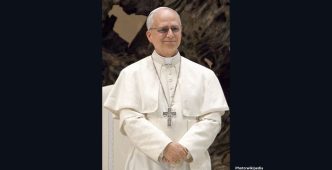
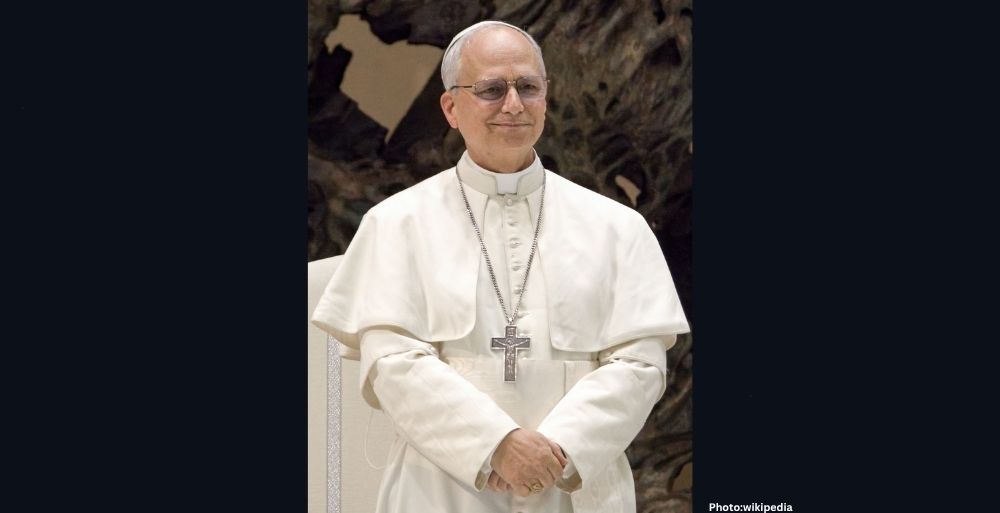
The recent public disagreement between President Trump and Pope Leo XIV marks a significant moment in U.S. politics, as it represents the first time a sitting American president has directly challenged the pontiff in modern history. The exchange has prompted diverse reactions across political and religious landscapes.
In a notable convergence of politics and religion, President Donald Trump publicly criticized Pope Leo XIV this week, a move that has drawn widespread attention and mixed reactions from political analysts and religious leaders alike. This unprecedented clash is particularly striking given that Leo is the first American pope, adding a unique dimension to an already contentious political landscape.
The backdrop to this confrontation began with Pope Leo’s veiled criticisms of Trump’s immigration policies and escalated when the pontiff spoke out against U.S. military actions in Iran. Trump’s response came swiftly via a post on his social media platform, Truth Social, where he labeled Leo as “weak on crime and terrible for foreign policy.” This marked a significant departure from the traditional decorum typically observed between U.S. presidents and the pope.
Political Implications and Reactions
As the week progressed, Trump sought to moderate his tone, stating that he was not in a conflict with the pope and acknowledged Leo’s right to express his views. This shift in rhetoric appears to be a response to mounting criticism from both Catholic leaders and international figures. Bishop Robert Barron, a member of Trump’s Religious Liberty Commission, suggested that the president should apologize to the pope, while Italian Prime Minister Giorgia Meloni, previously seen as an ally, described Trump’s remarks as “unacceptable.” Meanwhile, some members of Trump’s administration, including Vice President Vance, defended his statements, suggesting that the pope should refrain from political commentary.
According to ABC News exit polling from the 2024 presidential election, Trump received 59 percent of the Catholic vote, indicating a significant political alignment among this demographic. Kelsey Reinhardt, president of CatholicVote, characterized this support as one of the most significant political realignments in the last quarter-century. However, recent polling indicates a potential decline in Trump’s approval ratings among Catholic voters, with a CNN survey from March revealing only 42 percent approval and 57 percent disapproval.
Historical Context of Papal Relations
This episode is not the first instance of a U.S. president disagreeing with the pope. Historical precedents include Pope John Paul II, who opposed the 2003 invasion of Iraq during George W. Bush’s presidency, and the disagreements between Pope Francis and former President Bill Clinton over abortion. However, experts assert that Trump’s direct criticism of the pope is a departure from the usual diplomatic interactions seen between the two offices.
John McCarthy, a former political adviser to President Biden and liaison to the Catholic Church, emphasized that while disagreements within the church are common, they are typically handled with a degree of diplomacy. “This is so direct that it’s different,” he noted, highlighting the unusual nature of Trump’s comments.
Impact on Catholic Voter Sentiment
Political analysts suggest that while Trump’s criticism may not have immediate repercussions for Republican candidates in the upcoming midterm elections, it could influence Catholic voters in key swing states. McCarthy pointed out that 36 states have a Catholic majority, with populous areas including California, Pennsylvania, New York, Illinois, Arizona, and Iowa all featuring competitive congressional races.
Reinhardt remarked that future voting patterns among Catholics will likely depend more on policies than on the current political climate, suggesting that the long-term implications of Trump’s statements may be limited. The back-and-forth between Trump and Pope Leo also occurs during a time of resurgence for the Catholic Church in the United States, with a report from the American Catholic app Hallow indicating a 38 percent increase in new church members across dioceses compared to the previous year. Some dioceses, such as the Archdiocese of Los Angeles and the Archdiocese of Pensacola-Tallahassee, have reported growth rates as high as 139 and 144 percent, respectively.
Conclusion
In light of this unprecedented exchange, Trump has notably softened his rhetoric in subsequent statements about the pope, expressing a desire for respectful dialogue while asserting his right to disagree. He acknowledged his personal connection to the pope through family ties, stating he has a right to disagree with Leo’s positions while still respecting his role. As this story develops, the implications of this unprecedented political and religious discourse will be closely monitored, particularly as both figures navigate their respective roles in an increasingly polarized environment.