The health of democracy in the United States has significantly declined as reflected in new evaluations from multiple organizations, with many Americans expressing dissatisfaction with the current state of democratic governance.
The health of democracy in the United States has been assessed as declining in 2025, according to evaluations from three prominent organizations that specialize in tracking democratic governance worldwide. These evaluations, drawn from the Varieties of Democracy (V-Dem) Institute, Freedom House, and the Economist Intelligence Unit (EIU), highlight a troubling trend regarding the functionality and perception of democracy in America.
According to a Pew Research Center analysis, the ratings of U.S. democracy have shown a consistent downward trajectory over the past decade. The assessments indicate that many Americans believe the nation, once viewed as a model for democratic governance, has lost its standing on the global stage.
Democracy Indicators and Historical Context
Data from various sources illustrate the decline in U.S. democracy ratings from 2005 to 2025. For example, the Freedom in the World score from Freedom House dropped from stable levels of 93 in 2005 to 81 in 2025. Similarly, the V-Dem Liberal Democracy Index, which previously rated the U.S. above 0.80 from 2005 to 2016, fell to 0.57 in 2025, the lowest since 1965.
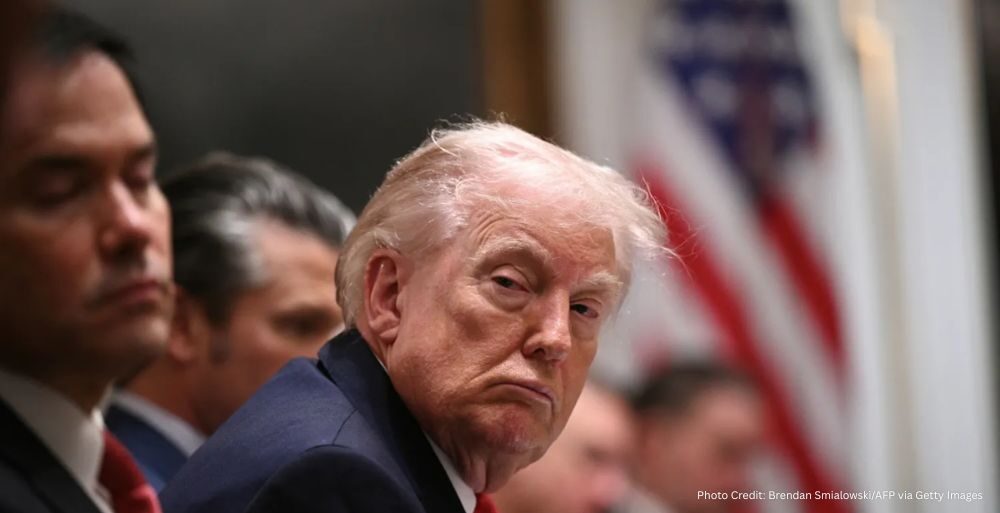
The report from V-Dem indicates that the U.S. has been downgraded from a “liberal democracy” to an “electoral democracy.” This change is largely attributed to substantial declines in checks and balances, with measures of legislative and judicial constraints on executive power reaching their lowest levels in over a century. This decline has coincided with the return of Donald Trump to the presidency for a second term, a period marked by increased executive action.
The EIU Democracy Index, which categorizes the U.S. as a “flawed democracy” in 2025, shows a score of 7.65, reflecting a significant drop from the threshold of 8 necessary to qualify as a “full democracy.” This index has categorized the U.S. as flawed since 2016, indicating an ongoing struggle to maintain democratic standards.
Public Sentiment and Survey Findings
Accompanying these evaluations is a Pew Research Center survey conducted from March 23 to 29, 2026, which found that approximately 68% of Americans believe that U.S. democracy used to be a good example for other countries but has not been in recent years. This sentiment spans across party lines, with significant majorities of both Democrats and Republicans echoing a sense of dissatisfaction with the current state of democracy in the country.
Despite the decline, the survey also revealed a slight shift in attitudes among Republicans, with an increased number describing the U.S. as a good example of democracy. This contrasts with a decrease in such views among Democrats. Overall, around 69% of U.S. adults expressed dissatisfaction with the way democracy is functioning, marking an increase from the previous year.
International Comparisons and Implications
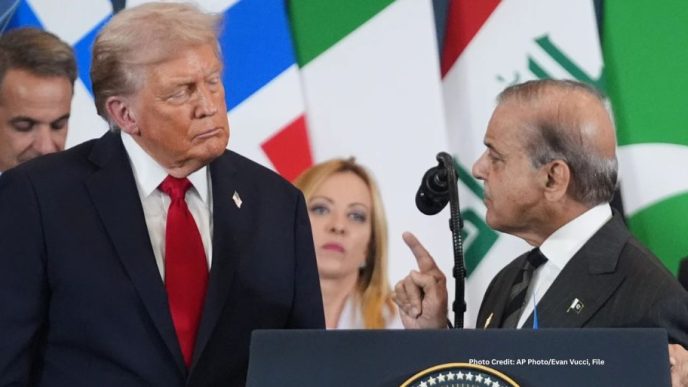
The decline of U.S. democratic health is particularly striking when compared to other nations in the Group of Seven (G7). Historically, the U.S. had ranked favorably compared to its peers, but recent evaluations indicate that it now trails behind all other G7 countries in the V-Dem Liberal Democracy Index. While other G7 nations such as Italy and the United Kingdom have also seen declines, the extent of the drop in U.S. ratings is notable.
Critics of democracy evaluations have emerged, with some scholars questioning the methodologies and conclusions drawn by organizations like V-Dem and Freedom House. Conversely, others defend the findings, emphasizing the consistent patterns observed over time. The Center for Systemic Peace’s Polity Project has also downgraded the U.S. from a +10 rating, indicating it is “no longer considered a democracy,” and suggesting the nation is on the cusp of autocracy.
Democracy Ratings: A Closer Look
The Varieties of Democracy (V-Dem) Institute surveys experts to assess countries on various elements of democracy, including electoral integrity, civil rights, and the functioning of government institutions. The U.S. score in the V-Dem Liberal Democracy Index has been declining since 2017, and it dropped to 0.57 in 2025. This score reflects a shift away from democratic norms, particularly in the areas of checks and balances and civil liberties.
The Freedom House report, which evaluates political rights and civil liberties, also revealed a concerning trend. The U.S. score has steadily declined since reaching a peak of 93 in 2005, falling to 81 in 2025—an alarming drop that places the U.S. among the countries experiencing significant democratic backsliding.
The Future of American Democracy
The decline in democracy ratings and the accompanying public sentiment raise concerns about the future of governance in the United States. As citizens express increasing dissatisfaction and skepticism about the political system’s ability to enact meaningful change, the implications of these evaluations extend beyond academic analysis to the very fabric of American political life. The findings underscore an urgent need for reflection and potential reform within U.S. democratic institutions.
As the political landscape continues to evolve, the challenge will be addressing the growing discontent among the populace and restoring faith in democratic processes. The data suggests that Americans are yearning for a more robust democratic system, and the growing number of “pessimistic reformers”—those who believe the system requires major changes but lack confidence in the ability to bring about such changes—indicates a critical juncture for the U.S. political landscape.
Conclusion
In summary, the evaluations by V-Dem, Freedom House, and EIU highlight a significant decline in the health of U.S. democracy, raising alarms about the erosion of democratic norms and public trust. As the nation navigates through these turbulent times, the need for comprehensive reforms to reinforce democratic institutions and restore public confidence has never been more pressing.