President Trump’s recent social media post featuring an AI-generated image depicting him in a Christ-like manner has faced criticism from various quarters, including notable conservative figures and some of his staunch supporters.
Washington — President Donald Trump faced significant backlash following a post on his social media platform, Truth Social, on April 12, 2026, that featured an AI-generated image portraying him in a manner reminiscent of Jesus Christ. The image, which shows Trump clad in a white robe and red sash, holding a ball of light in one hand while extending the other in a gesture of healing, was initially shared months earlier by right-wing influencer Nick Adams.
The timing of Trump’s post coincided with Orthodox Easter, a date that holds profound religious significance for Eastern Orthodox Christians, one week after the broader Christian community celebrated Easter Sunday. This juxtaposition has further fueled the criticism directed at the former president.
As of April 13, 2026, Trump has neither retracted his post nor issued an apology, and the White House did not respond to requests for clarification regarding the controversial image. The decision to share such imagery has raised questions about Trump’s motivations and its implications, particularly within his supporter base.
Criticism from Conservative Voices
Among those expressing discontent was Riley Gaines, a conservative activist known for her stance on transgender issues in sports. Gaines remarked, “Why? Seriously, I cannot understand why he’d post this. Is he looking for a response? Does he actually think this? Either way, two things are true: a little humility would serve him well, and God shall not be mocked.”
Cam Higby, a conservative media personality, took to social media to state, “Blasphemy from the Oval Office is not a funny troll,” indicating that the image was inappropriate for a sitting president. Similarly, Michael Knowles, a conservative author and podcaster, suggested that Trump should delete the post, arguing that it would benefit him both spiritually and politically.
Rep. Don Bacon, a Republican from Nebraska, described the post as “foolish,” pointing out that it could divide the Republican Party. He noted, “I saw a lot of Republicans commenting in it last night. Some saying he’s just trolling, and others saying it’s anti-Christian. When you divide your own party, it is self-destructive. To me, it was a gaudy and juvenile post.”
Ari Fleischer, a former White House press secretary under President George W. Bush, echoed these sentiments, labeling the image as “inappropriate and embarrassing,” and denouncing it as offensive.
Responses from Former Allies
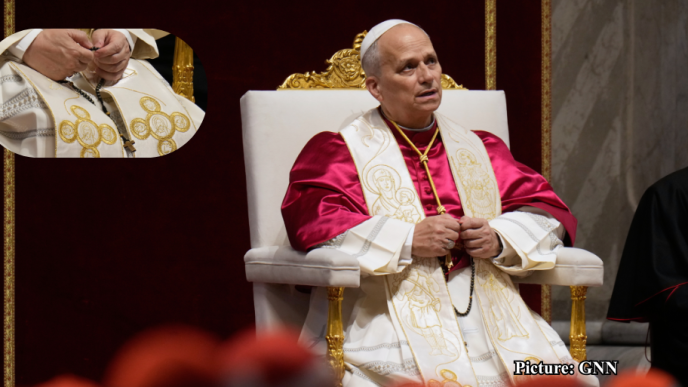
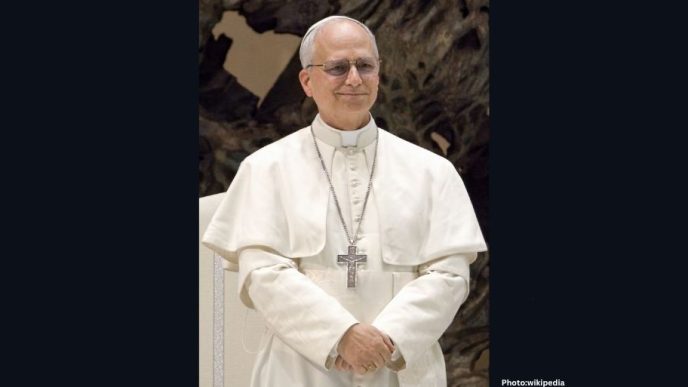
Even among those who have historically supported Trump, the reaction was pointed. Former Republican Rep. Marjorie Taylor Greene, who has voiced increasing criticism of Trump in recent months, condemned the post, linking it to his recent conflicts with religious figures, including Pope Leo XIV. Greene remarked, “On Orthodox Easter, President Trump attacked the Pope because the Pope is rightly against Trump’s war in Iran and then he posted this picture of himself as if he is replacing Jesus.”
In a broader commentary on Trump’s relationship with religious imagery, Allie Beth Stuckey, a conservative Christian commentator, suggested that the post reflects the influence of Trump’s pastor, Paula White, and the surrounding culture that elevates the former president’s status. Stuckey emphasized the importance of humility, urging Trump to recognize the gravity of the situation and the need for repentance.
Context Behind the Image
The image that sparked such controversy is not a standalone incident. It is part of a series of communications from Trump that have drawn scrutiny for their religious implications. In addition to the AI-generated likeness, Trump had recently criticized Pope Leo XIV, who has been vocal about advocating for peace in relation to the United States’ military actions in Iran. The Pope stated, “I will not shy away from announcing the message of the Gospel,” reinforcing a message of reconciliation and peace.
Nick Adams, the right-wing influencer who originally posted the image, described Trump as a healer of the nation, stating, “America has been sick for a long time. President Trump is healing this nation.” Adams was later appointed by Trump as a special presidential envoy for American tourism, exceptionalism, and values, further intertwining their narratives.
Political Implications
The reaction to Trump’s post underscores a growing rift within the Republican Party and among conservative voters regarding the appropriateness of his conduct and messaging. The backlash reflects broader concerns about the intersection of politics and religious symbolism, especially in an era characterized by heightened political polarization.
As Trump continues to navigate his political future, the implications of this incident may resonate beyond immediate reactions, potentially affecting his support among key demographics within the Republican Party. While some may view his actions as provocative humor, others see them as detrimental to the party’s unity and its relationship with religious communities.
In summary, Trump’s AI-generated depiction of himself as Christ has ignited a controversy that not only reflects his personal brand of politics but also highlights a significant divide among his supporters and critics alike. The ongoing discourse surrounding this image is likely to shape conversations as the political landscape evolves in the lead-up to upcoming elections.