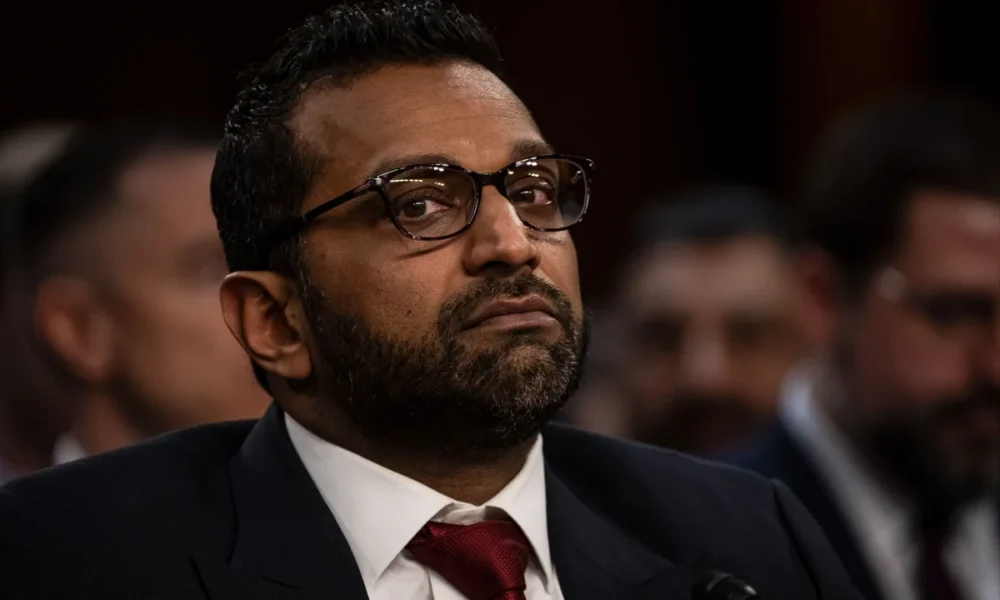
A federal court in Houston has dismissed FBI Director Kash Patel’s defamation lawsuit against former FBI official Frank Figliuzzi, ruling that Figliuzzi’s comments were protected as rhetorical hyperbole under the First Amendment.
A federal court in Houston dismissed a defamation lawsuit filed by FBI Director Kash Patel against former FBI official Frank Figliuzzi on Tuesday, determining that Figliuzzi’s remarks regarding Patel’s visibility at nightclubs did not constitute defamation. U.S. District Court Judge George Hanks Jr. ruled that Figliuzzi’s statements were classified as rhetorical hyperbole, a form of speech protected by the First Amendment.
The case originated from comments made by Figliuzzi during a May 2, 2025 episode of the MSNBC program “Morning Joe.” Figliuzzi, who previously served as the FBI’s assistant director for counterintelligence, remarked, “Yeah, well, reportedly, he’s been visible at nightclubs far more than he has been on the seventh floor of the Hoover building.” This statement was made in the context of discussing Patel’s leadership as FBI Director, and he characterized the remark as an exaggerated critique of Patel’s professional presence.
Court’s Rationale for Dismissal
In his ruling, Judge Hanks emphasized that Figliuzzi’s comments, when viewed in their full context, could not reasonably be interpreted as factual assertions about Patel’s activities. The judge articulated that “a person of reasonable intelligence and learning would not have taken his statement literally,” reinforcing the idea that Figliuzzi’s comments were not meant to be taken as a literal account of Patel’s whereabouts. Hanks characterized Figliuzzi’s nightclub comment as “exaggerated, provocative and amusing,” thus qualifying it as rhetorical hyperbole.
As a result of the ruling, Patel’s lawsuit was dismissed on the grounds that he failed to assert a valid claim of defamation. Despite the dismissal, Figliuzzi’s request for reimbursement of court costs and attorneys’ fees under Texas’ anti-SLAPP (Strategic Litigation Against Public Participation) law was denied. Figliuzzi’s attorney, Marc Fuller, expressed satisfaction with the ruling, stating, “This is a victory for press freedom and the First Amendment. Director Patel’s claim against Frank was baseless, and we are pleased that the court dismissed it.”
Context of the Legal Dispute
This dismissal comes amid heightened scrutiny surrounding Patel’s tenure as FBI Director, which has been marked by controversy and public debate. Just one day prior to the court’s decision, Patel had filed an unrelated $250 million defamation lawsuit against The Atlantic magazine, which published an article alleging that Patel has struggled with alcohol abuse. This series of legal actions reflects the tumultuous political environment in which Patel operates, as he faces increasing criticism regarding his management style and public communications.
In his lawsuit against Figliuzzi, Patel alleged that Figliuzzi harbored “clear animus” towards him, citing previous derogatory remarks that questioned his loyalty to the Constitution and characterized him as a partisan ally of former President Donald Trump. Patel’s lawsuit included statements alleging that “since becoming Director of the FBI, Director Patel has not spent a single minute inside of a nightclub,” underscoring his position that Figliuzzi’s claims were unfounded and rooted in personal bias.
Broader Legal Implications
The implications of this ruling extend beyond the immediate parties involved, shedding light on the legal protections that public figures enjoy in defamation cases. The court’s decision reinforces the notion that distinguishing between factual statements and hyperbolic expressions is a critical aspect of First Amendment jurisprudence. Legal experts suggest that this ruling could impact future defamation claims made by public figures, particularly those involving media commentary and public discourse.
Historically, defamation cases involving public officials have faced significant hurdles due to the precedent established in the 1964 Supreme Court case New York Times Co. v. Sullivan, which requires public figures to prove actual malice in defamation claims. This ruling from the Houston court echoes that precedent, highlighting the challenges public officials encounter when attempting to litigate perceived slights or falsehoods.
Public and Political Reactions
The dismissal of Patel’s lawsuit has ignited discussions surrounding the balance between public discourse and legal accountability in the political sphere. While some view the outcome as a reinforcement of First Amendment rights, others express concern that it may inhibit public figures from holding critics accountable through legal means. The ruling may also influence how public figures respond to disparaging remarks in an increasingly polarized media landscape.
As the political environment continues to evolve, particularly with the heightened scrutiny of government officials, the outcomes of cases like Patel’s could shape the future discourse regarding the limits of free speech and the accountability of public figures. The ruling serves as a reminder of the complexities involved in navigating public perception, media scrutiny, and the legal frameworks that govern speech.
Both Patel and Figliuzzi remain prominent figures in the ongoing conversations surrounding the FBI’s role in contemporary politics, reflecting the intricate dynamics of leadership, public perception, and the media’s role in shaping narratives. As legal battles progress, the implications of this case may resonate well beyond the courtroom, influencing the discourse surrounding public accountability, freedom of expression, and the responsibilities of those in positions of authority.