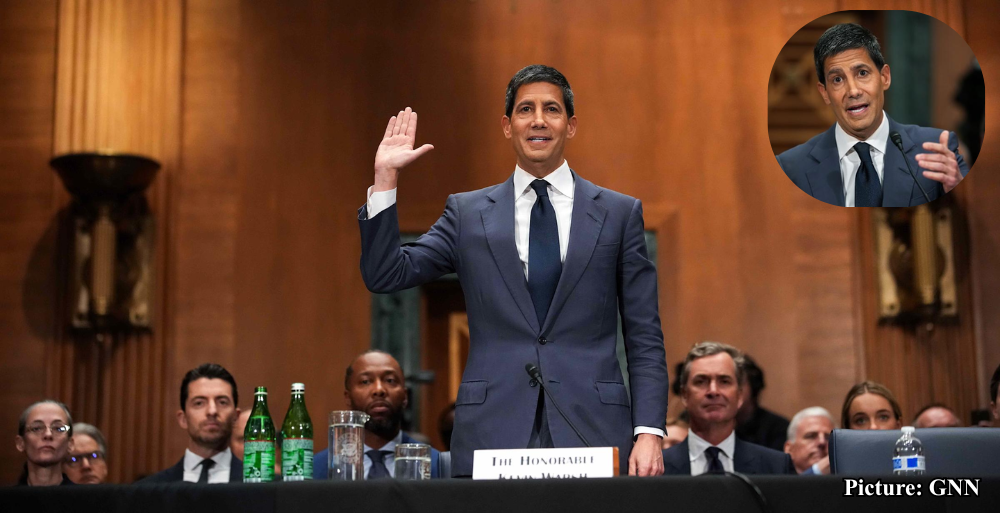
The Federal Reserve has opted to keep interest rates steady, coinciding with the Senate Banking Committee’s advancement of Kevin Warsh’s nomination to succeed Jerome Powell as chair, amidst ongoing economic challenges.
On Wednesday, the Federal Reserve announced its decision to maintain the baseline interest rate range between 3.5 percent and 3.75 percent, a move made during a Federal Open Market Committee (FOMC) meeting that is widely expected to be Jerome Powell’s last as chair. The decision to hold rates steady was reached by a vote of 8-4, reflecting a cautious approach amid rising inflation and escalating energy prices.
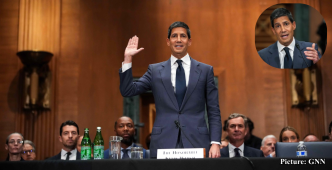
Hours before the FOMC meeting, the Senate Banking Committee voted along party lines to advance Kevin Warsh’s nomination to lead the Federal Reserve, positioning him to potentially take over the role by May, when Powell’s term officially concludes. This nomination process has been shaped by recent political developments, including a criminal investigation into Powell’s leadership, which had previously cast doubt on the timeline for Warsh’s confirmation.
Context Behind Warsh’s Nomination
Warsh’s nomination was approved by the Senate Banking Committee in a narrow 13-11 vote, making him the first nominee for the Fed chair position to advance to the Senate floor without bipartisan support. The committee’s decision came after the Department of Justice (DOJ) announced it would close its investigation into Powell’s handling of certain renovations at the Fed, providing clearer ground for Warsh’s confirmation. Senator Thom Tillis (R-N.C.), a key member of the committee, had initially opposed the nomination due to concerns over the ongoing investigation. Following the DOJ’s announcement, Tillis expressed his support for Warsh, stating, “It’s no secret that the reason that Mr. Warsh’s nomination could have been held up is because of my concern with the investigation.”
Powell, who has faced significant pressure from President Trump over interest rate policies, commented on the importance of maintaining the Federal Reserve’s independence from political influence, particularly in light of the aforementioned legal scrutiny. He emphasized that the integrity of the Fed is paramount for effectively conducting monetary policy.
Current Economic Climate and Rate Decisions
The decision to hold interest rates steady comes against a backdrop of rising inflationary pressures. The consumer price index (CPI) reported a year-over-year increase of 3.3 percent in March, marking the highest annual inflation rate in nearly four years. Notably, energy prices surged by 10.9 percent during the same month, with gasoline prices increasing by an alarming 21.2 percent. These developments have put significant strain on the Fed’s monetary policy strategy, particularly as geopolitical tensions, especially the conflict with Iran, continue to impact energy markets.
Financial analysts, including Stephen Kates from Bankrate, highlighted the implications of Warsh’s potential confirmation for future monetary policy. Kates noted that the movement towards Warsh’s confirmation is likely to shape the Fed’s strategy, emphasizing, “This accelerates the timeline for a Kevin Warsh confirmation and increases the likelihood that the April meeting will be Jerome Powell’s last.” Kates elaborated that Warsh is generally perceived as more favorable toward interest rate cuts than Powell, aligning with President Trump’s preference for a looser monetary policy.
Challenges Facing Warsh as Fed Chair
As Warsh prepares for a potential leadership role at the Federal Reserve, significant challenges lie ahead. The current economic environment presents critical uncertainties, particularly with inflation persisting well above the Fed’s target rate of 2 percent. Powell acknowledged these concerns during the press conference, stating, “I worry that these attacks are battering the institution, putting at risk the thing that really matters to the public, which is the ability to conduct monetary policy without taking into consideration political factors.” This underscores the delicate balance Warsh will have to navigate in fostering confidence among FOMC members and the broader financial markets.
Analysts predict that the likelihood of interest rate cuts in the near term remains slim, with Kates suggesting that “the odds of rate cuts in 2026 appear slim as of today.” For Warsh to effectively lead the Federal Reserve, he will need to build consensus within the FOMC and earn the trust of market participants, particularly as economic conditions evolve.
Political Reactions and Implications for the Future
The political implications surrounding Warsh’s nomination have sparked diverse reactions. Senator Elizabeth Warren (D-Mass.), a vocal critic of the Trump administration’s economic policies, has expressed her opposition to Warsh’s candidacy. In a statement, she linked rising costs to Trump’s policies, stating, “One man continues to stand in the way of lower interest rates and lower costs: Donald Trump.” Warren’s critique reflects broader concerns about the impact of political influence on economic stability and the Fed’s operations.
As the Federal Reserve prepares for its next meeting, scheduled for April, the outcomes of these discussions are anticipated to be pivotal in shaping U.S. monetary policy. Powell’s imminent departure marks the conclusion of an eight-year tenure characterized by significant policy shifts and frequent confrontations with the Trump administration over interest rate decisions. The transition to Warsh’s leadership could signal a new chapter for the Fed, one that may align more closely with the President’s vision for economic management.
In conclusion, the Federal Reserve’s decision to maintain interest rates comes amidst a complex interplay of economic pressures and political dynamics. As Kevin Warsh inches closer to confirmation, the implications of his leadership could reshape the future of U.S. monetary policy in a time of uncertainty.