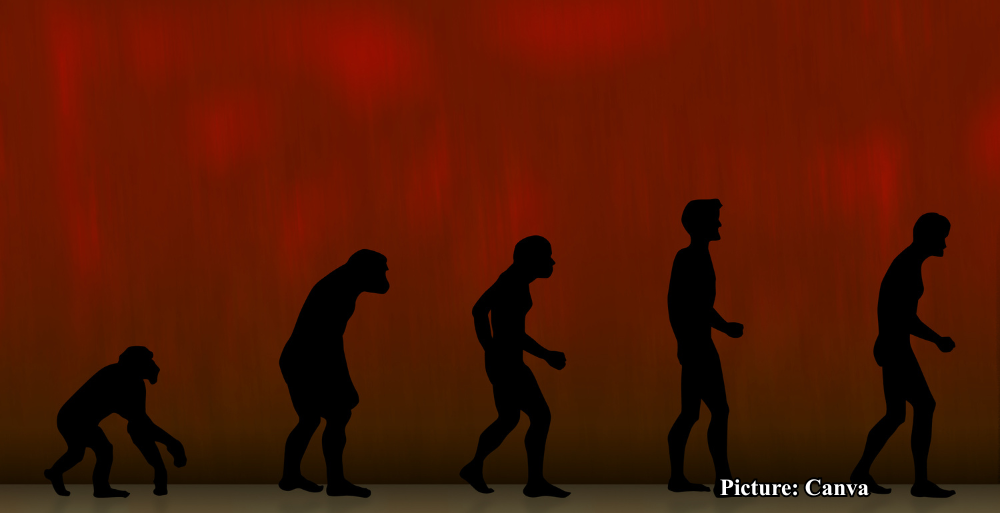
The human body, often perceived as a masterpiece of design, reveals itself as a product of evolutionary compromise, where anatomical features are shaped by millions of years of adaptation rather than flawless engineering.
The human body is frequently lauded as a marvel of engineering, characterized by its elegance and efficiency. However, a closer examination suggests that it is more accurately described as a complex patchwork of evolutionary compromises. This perspective emphasizes that evolution does not create structures from scratch; instead, it modifies existing anatomical features to meet new challenges. As a result, many aspects of human anatomy represent solutions that are functional but far from perfect. Numerous common medical issues can be traced back to these inherited constraints.
The Spine: A Compromise in Upright Posture
The human spine serves as a prime example of this evolutionary narrative. It has changed little from the spines of our quadrupedal ancestors, which primarily used their vertebral columns to facilitate movement through trees while protecting the spinal cord. As humans transitioned to an upright, bipedal gait, the spine was repurposed to support body weight and maintain balance. This dual requirement has resulted in significant strain on the spine.
The natural curves of the human spine assist in weight distribution but also predispose individuals to conditions such as lower back pain, herniated discs, and degenerative changes. These health issues are prevalent not due to inherent flaws in spinal design, but because the structure is performing functions for which it was not originally intended.
The Neck: An Illogical Path
Another illustration of evolutionary compromise is the recurrent laryngeal nerve. This nerve, a branch of the vagus nerve, regulates various autonomic functions, including heart rate and digestion, in addition to controlling the larynx for speech and swallowing. Logically, one might expect this nerve to take a direct route from the brain to the larynx. However, it descends into the chest, loops around a major artery, and then ascends back to the voice box. This detour reflects the historical anatomy of our fish-like ancestors, where the nerve followed a straightforward path around the gill arches. As the neck evolved and lengthened, the nerve was stretched rather than rerouted, leading to vulnerabilities during surgical procedures.
The Eyes: Backward Wiring
Even human vision encapsulates this theme of evolutionary compromise. The retina, which is the light-sensitive layer at the back of the eye, is structured in a way that light must first pass through several layers of nerve fibers before it reaches the photoreceptors. This wiring creates a blind spot where the optic nerve exits the retina. Although the brain compensates for this gap, the arrangement exemplifies a trade-off, where the remarkable capabilities of human vision come at the cost of a flaw in the visual field.
The Teeth: Evolutionary Lag
Human dental anatomy further illustrates the prioritization of adequacy over durability. Humans typically develop only two sets of teeth: primary (baby) teeth and secondary (adult) teeth. This system leaves individuals susceptible to decay and tooth loss, as there is no mechanism for replacing lost adult teeth—unlike species such as sharks, which continuously regenerate teeth throughout their lives. The presence of wisdom teeth also highlights this evolutionary lag; as human diets became softer, jaw sizes decreased, yet the number of teeth did not adjust accordingly, often resulting in impaction and the necessity for surgical removal.
The Pelvis: A Complicated Balance
Childbirth exemplifies a significant evolutionary compromise in human anatomy. The pelvis must simultaneously facilitate efficient bipedal locomotion and accommodate childbirth for infants with relatively large brains. A narrower pelvis enhances mobility but constrains the size of the birth canal, resulting in a complex and sometimes perilous delivery process that often requires medical assistance.
Persistent Structures and Evolutionary Legacy
Evolution tends not to eliminate structures unless they present a severe disadvantage. Consequently, some anatomical features endure despite offering limited benefits. For example, the appendix, once deemed a vestigial organ, is now recognized to have minor immune functions, though it can also lead to appendicitis, a potentially life-threatening condition. Similarly, the sinuses may serve various purposes, such as lightening the skull or contributing to voice resonance, yet their drainage pathways make them vulnerable to blockages and infections, a byproduct of their evolutionary history.
Conclusion: Understanding Our Anatomy Through Evolution
The presence of tiny muscles around the ears, which allow for limited movement in humans, further points to our evolutionary past. While many mammals can effectively swivel their outer ears for enhanced directional hearing, most humans cannot do so. This anatomical reality reinforces the notion that the human body is not a perfect design but rather a living testament to the process of evolution.
In conclusion, our bodies are not flawlessly engineered but are a historical record of adaptation, compromise, and contingency. Viewing human anatomy through the lens of evolution provides a framework for understanding common medical challenges such as back pain, difficult childbirth, dental crowding, and sinus infections. These issues are not random occurrences; they are, in part, the consequences of our evolutionary history.