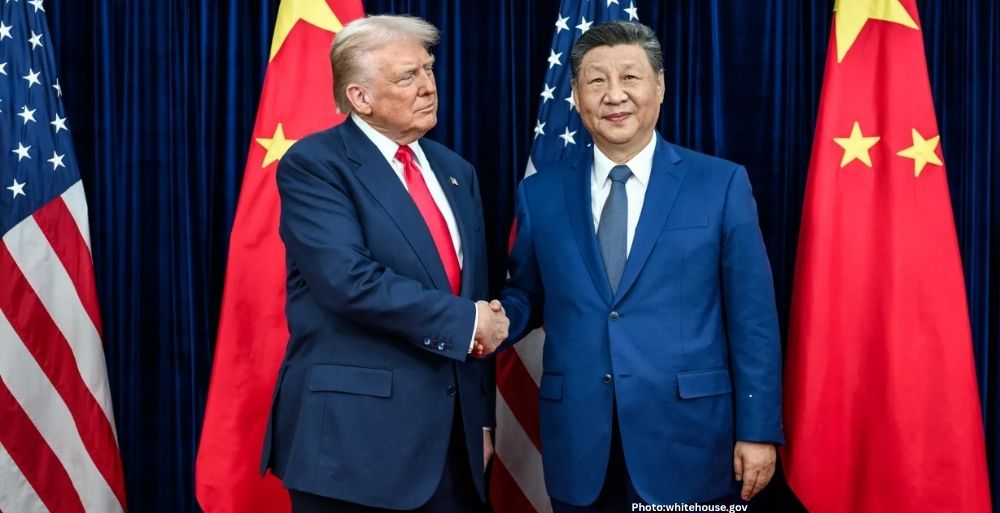
On September 24, Chinese President Xi Jinping will meet with U.S. President Donald Trump at the White House, as both leaders seek to navigate a complex landscape of economic and geopolitical challenges.
On September 24, 2026, Chinese President Xi Jinping will meet U.S. President Donald Trump at the White House, marking a significant moment in U.S.-China relations just four months after Trump’s state visit to Beijing in May. The May meeting resulted in several economic agreements, the establishment of a U.S.-China Board of Trade and Board of Investment, an agreement to open a government-to-government dialogue on artificial intelligence (AI), and a mutual commitment to foster a “constructive relationship of strategic stability.”
However, as the September summit approaches, numerous unresolved issues loom large. A truce on export controls reached in Busan on October 30, 2025, which temporarily holds both Washington’s Affiliates Rule and China’s rare-earth export control package in abeyance, is set to expire in one year—creating uncertainty about its future. While preparations for a bilateral AI risk-and-safety dialogue are reportedly underway, details concerning its timing, participants, and agenda remain unclear. Analysts suggest that the two nations interpret their commitment to “constructive strategic stability” differently. Additionally, the U.S. has yet to announce a proposed $14 billion arms sale to Taiwan, despite receiving congressional pre-approval in January 2026, which further complicates the bilateral relationship.
The Xi-Trump Factor
Neil Thomas, a political analyst, notes that Xi arrives in Washington aiming to maintain the current stability in U.S.-China relations. Since Xi’s counter to last year’s tariff hike with rare-earth export controls, Trump has shown a preference for sustaining good relations with Beijing, even delaying certain technology restrictions. During the May summit, Trump endorsed Xi’s characterization of their relationship as one of strategic stability.
China perceives this moment as an opportunity to bolster its industrial self-reliance and enhance its geoeconomic leverage while mitigating U.S. pressure. While the Trump administration has sanctioned a record arms package for Taiwan and enacted new restrictions on foreign technologies, some Chinese strategists view Trump as a relatively moderate figure in Washington regarding relations with Beijing. There are indications that more hawkish U.S. officials have prepared proposals to restrict China’s high-tech sectors, should Trump’s stance toward Xi falter.
For this summit, Xi’s team is expected to meticulously plan the visit to ensure equal standing with Trump and to avoid any potential embarrassments. Past diplomatic experiences, such as Xi’s 2015 visit to Belarus, highlighted the importance of precise scheduling and protocol. Conversely, Trump’s improvisational approach may clash with this high level of preparation, as observed during his previous meetings with Xi.
Economic Bargains and Challenges
As the summit approaches, analysts like Lizzi C. Lee emphasize that the economic landscape in China is not as precarious as previously anticipated. China’s exports remain resilient amidst trade tensions, bolstered by its central role in global supply chains. The ongoing AI investment boom has also contributed positively to China’s economic resilience.
Despite this strength, China faces a significant vulnerability tied to its reliance on domestic technology and manufacturing. Lee argues that while Xi aims to project stability, meaningful concessions on manufacturing ambitions are unlikely, as they are key to China’s economic performance. Genuine economic rebalancing would necessitate substantial political choices, which may not be politically feasible given the current landscape.
U.S. leverage over China remains significant, particularly regarding access to American markets and innovation. However, effectively translating this leverage into negotiations remains complex, especially concerning sectors critical to both economies. The summit’s outcomes are likely to hinge on the effectiveness of proposed mechanisms such as the Board of Trade and Board of Investment.
Monitoring Trade Developments
Business leaders are closely monitoring developments surrounding the Board of Trade and Board of Investment. There are discussions regarding a $30 billion reciprocal tariff reduction framework aimed at facilitating trade while minimizing tariffs on select goods. Reports indicate that China may offer duty-free preferences for U.S. agricultural products, while the U.S. might reciprocate by allowing some Chinese consumer goods to enter duty-free.
CEOs in technology sectors are keenly interested in the potential extension of the export-control truce initially agreed upon at APEC last year. The truce currently holds off on expansive export control measures, but ongoing tensions remain, particularly regarding access to essential materials.
Geopolitical Tensions and Taiwan
The U.S. policy towards Taiwan poses another critical test for Xi during his visit. The proposed $14 billion arms package for Taiwan, which has not yet been formally notified to Congress, represents a concrete challenge to the framework of “constructive strategic stability.” With ongoing military pressures from China, Taiwan’s need for defense is pressing, and the timing of any arms notifications will carry significant political weight.
The summit’s broader implications will depend on whether the U.S. and China can establish clearer guardrails around their conflicting Taiwan policies, enabling both nations to pursue their interests without escalating tensions into crises.
Health as a Potential Area for Cooperation
Amidst the tensions surrounding trade and technology, health care presents a potential area for collaboration. As both nations grapple with public health challenges, there is an opportunity for cooperation in areas such as cancer research. The U.S. excels in biomedical science, while China has made strides in clinical capabilities, creating a complementary relationship that could yield significant benefits for both countries.
As the summit approaches, the ability of both leaders to identify tangible areas for cooperation could signal a shift in the bilateral relationship. The upcoming meetings at APEC and G20 later this year may further test the commitment of both nations to work together for mutual benefit.