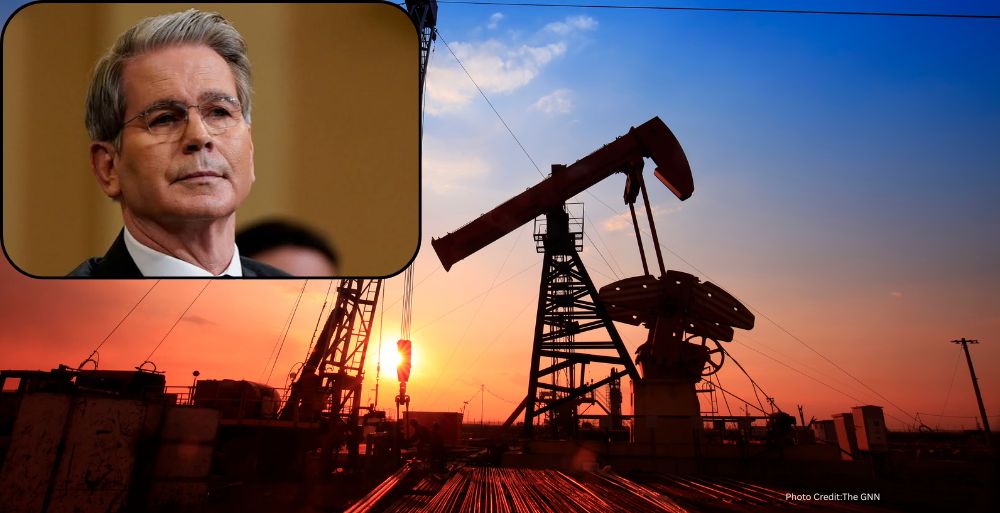
US Treasury Secretary Scott Bessent stated that the United States has sought secondary tariffs on India and China from European allies over their purchases of Russian energy, which they declined, raising questions about the burden of sanctions on the US.
In a recent interview on NBC News’ Meet the Press, US Treasury Secretary Scott Bessent revealed that the United States had approached its European allies earlier this year, asking them to impose secondary tariffs on India and China in response to these countries’ continued purchases of Russian energy. Bessent expressed frustration over the refusal of European nations to cooperate, questioning why the United States should shoulder the burden of pressuring Moscow while those countries continue to import Russian energy.
Bessent’s comments come amid ongoing geopolitical tensions surrounding Russia’s invasion of Ukraine, which began in February 2022. The war has led to a significant reassessment of energy policies across Europe and the US, as Western countries have sought to reduce their dependency on Russian energy sources.
During his remarks, Bessent stated, “So we have asked in the spring, I asked our European allies to join us in putting secondary tariffs on China, on India. They refused.” His rhetorical question, “So why should the U.S. bear the burden?” underscores a growing sentiment among US officials that the economic costs of sanctions should be more equitably distributed among allies.
European Energy Imports and Financial Impact
Bessent pointed out that despite the ongoing war and extensive sanctions against Russia, European countries have continued to purchase significant quantities of Russian energy. He cited statistics indicating that during the first half of 2023, 140 energy cargoes departed for Europe, with a total value exceeding $8 billion. This figure illustrates Europe’s ongoing reliance on Russian energy sources, which Bessent argued contributes financially to Russia’s military operations.
Furthermore, Bessent highlighted that while the US imported around $4 billion worth of Russian products, including $1.8 billion in fertilizers, European imports were significantly higher, by more than a factor of ten. This disparity raises questions about the effectiveness of existing sanctions and the commitment of European allies to fully isolate Russia economically.
Bessent’s comments have drawn attention to the complexities of international energy markets, particularly as countries navigate their energy needs amid geopolitical tensions. The US has been actively trying to reduce its own reliance on Russian energy, while also pressuring allies to do the same.
Temporary Sanctions Exemptions Under Trump Administration
The discussion of tariffs and sanctions is further complicated by recent actions taken by the Trump administration. On Friday, President Trump signed an executive order that provided temporary exemptions from new sanctions against Russia, under the Graham Act passed by Congress the previous month. This order also granted waivers from 100% tariffs to the five largest purchasers of Russian oil and gas, including India and China.
This move has faced criticism, particularly from Ukrainian President Volodymyr Zelenskyy, who argued that it effectively strengthens Russian President Vladimir Putin’s position. Bessent defended the administration’s actions, stating that no sanctions were lifted outright, but rather, a 60-day assessment period was established to evaluate the situation further.
Bessent emphasized that Trump has been a strong proponent of sanctions against Russia, claiming, “No one has been tougher on Russian sanctions than President Trump.” He pointed to the sanctions imposed on Russia’s two largest energy companies as significant steps that have impacted the country’s energy sector.
Responses from US Officials
Following Bessent’s comments, US Secretary of State Marco Rubio also addressed the issue of energy imports from Russia, particularly in relation to India. Rubio acknowledged India’s ongoing dependence on Russian energy, attributing it to the difficulties in rapidly diversifying energy sources amidst global market pressures.
He commented, “And then you’ve got countries like India, for example, that have voluntarily diversified their energy portfolio, but are still getting a substantial amount of energy from Russia because it’s hard to pivot from one day to the next.” Rubio reinforced the strategic importance of India as an ally, stating that the US recognizes the challenges faced by countries attempting to transition away from Russian energy.
The interplay between energy policy, international alliances, and economic sanctions continues to be a focal point of US foreign policy, especially as the war in Ukraine persists and its consequences ripple across global markets. As the Biden administration and its predecessors navigate these complex relationships, the balance of economic pressure and diplomatic engagement remains a critical aspect of US strategy.