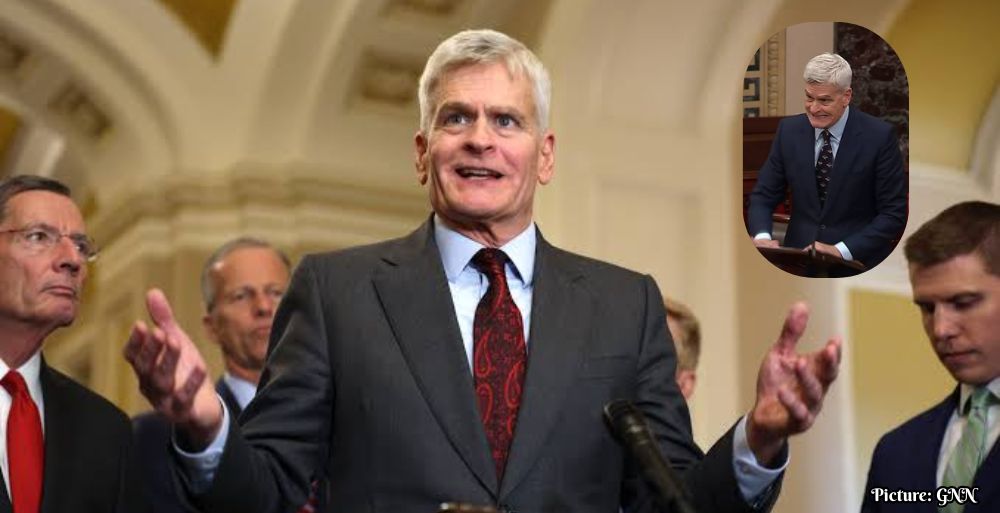
Ahead of his departure from the Senate, Senator Bill Cassidy emphasizes the urgent need for Social Security reform, proposing a plan aimed at addressing the funding shortfall facing the program.
Senator Bill Cassidy, a Republican from Louisiana, has identified Social Security reform as a key priority in his final days in office. Cassidy, a two-term senator, is set to conclude his tenure on January 3, 2027, after failing to secure his party’s nomination for reelection against Representative Julia Letlow and State Treasurer John Fleming. His loss followed an endorsement from former President Donald Trump for Letlow, who was among the seven Republican senators that voted to convict Trump during his impeachment trial for inciting the January 6, 2021, insurrection.
In an interview with CNBC on June 10, Cassidy stressed the urgency of reforming Social Security, a program that provides monthly retirement and disability benefits to over 71 million Americans. He remarked, “The longer you wait, the harder it is to fix, the more painful to fix. We need to do something now.” His urgency is underscored by a recent report from Social Security’s trustees, which indicates a looming funding shortfall for the Old-Age and Survivors Insurance (OASI) trust fund.
The trustees’ report, released on June 9, projects that the OASI trust fund may deplete its reserves by the fourth quarter of 2032, several months earlier than previously estimated. If Congress does not take action, beneficiaries could face an across-the-board reduction of their scheduled benefits, with only 78% of payments potentially being available at that time. Alternatively, combining the retirement and disability trust funds could extend the depletion date to the third quarter of 2034, allowing for 83% of scheduled benefits to be payable.
Congressional Response and Bipartisan Efforts
The imminent funding crisis has prompted bipartisan recognition among congressional leaders that action is necessary. In a joint statement issued on June 10, Senators Cassidy, Dick Durbin (D-Ill.), Tim Kaine (D-Va.), and Thom Tillis (R-N.C.) expressed a collective commitment to strengthening Social Security for current and future retirees. They urged their colleagues to collaborate on legislative solutions, stating, “We were elected to do—legislate on hard issues and protect this lifeline program for our kids and grandkids.”
Both Cassidy and Durbin, who is set to retire at the end of his term, acknowledge the time constraints they face. Cassidy stated, “I want to get it done before we leave, so there is impetus to get it done.”
Proposed Solutions to Social Security Challenges
Recognizing that any reform will require bipartisan support due to the threshold of 60 votes needed in the Senate, Cassidy’s proposal aims to circumvent the contentious debate surrounding tax increases or benefit cuts. His “big idea” involves a plan to invest $1.5 trillion in a separate investment fund over five years. Cassidy asserts that this investment, managed separately from Social Security’s trust funds, could grow to cover 60% to 65% of the program’s unfunded liabilities over a period of 65 to 70 years.
According to Cassidy, this borrowed amount would not increase the national debt, as it would be held in an escrow account. He cites the successful investment model of the federal Railroad Retirement system, implemented under President George W. Bush, which allowed pension funds to be invested in private securities, thereby improving its solvency.
Despite the innovative nature of Cassidy’s proposal, its acceptance among lawmakers remains uncertain. Cassidy has acknowledged his strained relationship with Trump, who has criticized him publicly, complicating the potential for support from the former president’s allies. Additionally, some Democrats have advocated for raising taxes on higher incomes to bolster Social Security, which contrasts with Cassidy’s approach.
Challenges and Expert Opinions
Critics of Cassidy’s investment proposal have raised concerns regarding its feasibility. An analysis by the Center for Retirement Research at Boston College indicated that the plan might not provide lasting solutions, as it would leave the government with substantial indebtedness in the 75th year. They noted that while investing in equities could be beneficial, it should be paired with immediate reforms such as tax increases or benefit cuts.
The Bipartisan Policy Center has also expressed reservations about the potential impact of increased borrowing on the bond market, particularly given the current trajectory of national debt. Moreover, the unpredictability of future stock market returns poses significant risks associated with leveraging investment strategies.
In light of these challenges, Cassidy maintains that a thorough analysis indicates that the investment strategy could yield sufficient returns to cover the costs associated with borrowing. He emphasized that all risks would be borne by the fund, assuring beneficiaries that they would receive their promised benefits regardless of market fluctuations.
Next Steps for Social Security Reform
Moving forward, Cassidy plans to hold additional hearings to refine the proposal and draft legislative text. He noted the need to address the remaining 35% financing gap in Social Security that would not be covered by the investment fund. Cassidy expressed a willingness to collaborate with future congressional members to sustain momentum on the reform efforts, stating, “If it doesn’t pass this Congress, I am speaking to colleagues who will be here next Congress and seeing who’s interested in kind of carrying the torch.”
As the projected depletion date for the Social Security trust fund approaches, Cassidy and other senators recognize the necessity of bipartisan cooperation. He urged lawmakers to prioritize the well-being of the nation over political disputes, stating, “We need to put the politics aside for the good of the country, for at least a little bit.”