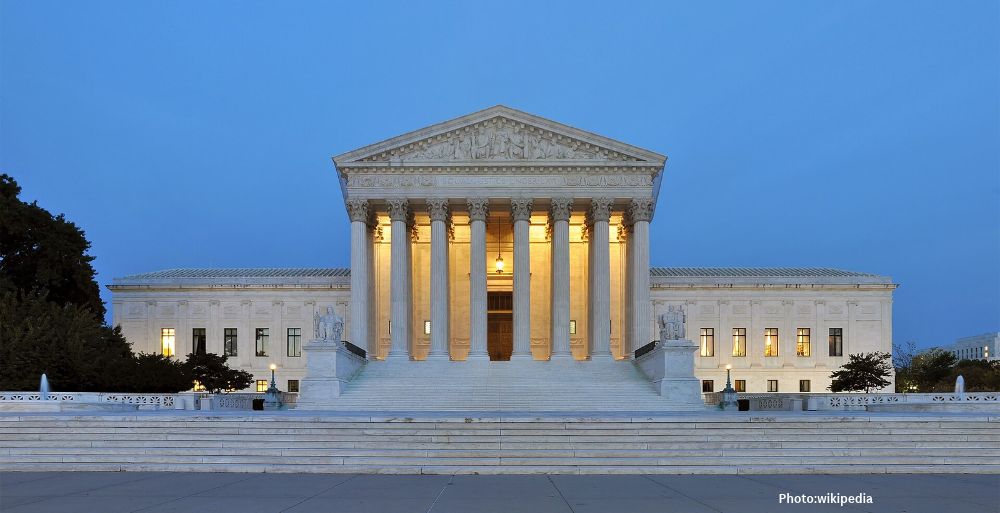
The U.S. Supreme Court’s July 1, 2024, decision in Trump v. United States may prove to be one of the most consequential constitutional rulings of the modern era. In a 6-3 decision, the Court held that former presidents enjoy absolute immunity for actions within their exclusive constitutional authority and presumptive immunity for official acts taken while in office, while unofficial conduct remains subject to prosecution.
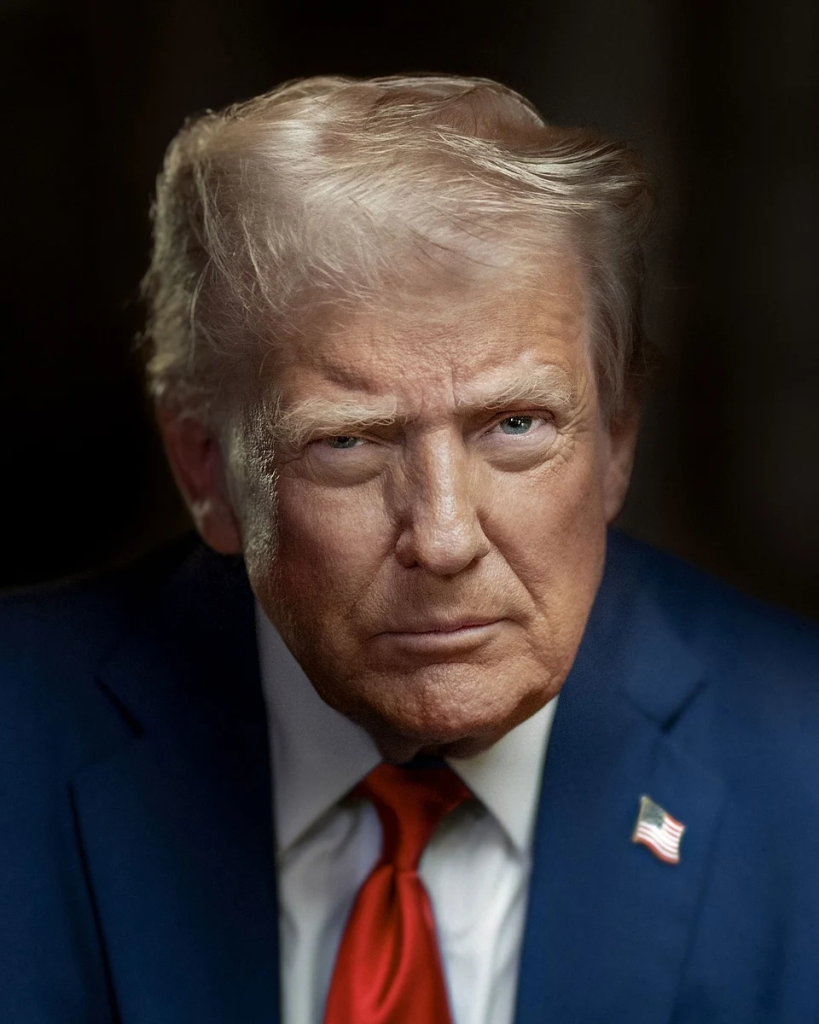
The ruling arose from the federal election-interference case against Donald Trump, who was indicted in August 2023 on charges related to efforts to overturn the results of the 2020 presidential election. Prosecutors alleged that Trump conspired to obstruct the certification of the election after losing to Joe Biden.
Although the Court did not decide Trump’s guilt or innocence, it fundamentally changed the legal framework governing presidential accountability. More importantly, it ignited a national debate over whether the decision strengthened the presidency at the expense of one of America’s most enduring constitutional principles: that no public official is above the law.
The Road to the Ruling
The immunity claim was initially rejected by both a federal district court and the U.S. Court of Appeals for the District of Columbia Circuit. Trump appealed, arguing that former presidents must be protected from criminal prosecution for official acts undertaken while serving in office. The Supreme Court agreed to hear the case and issued its ruling on July 1, 2024.
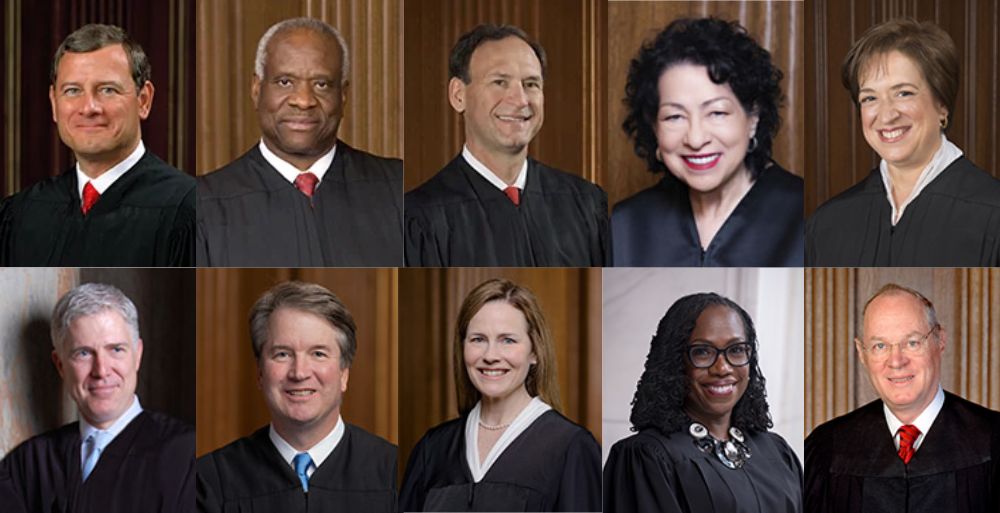
Writing for the majority, Chief Justice John Roberts attempted to strike a balance between presidential accountability and executive independence.
“The President is not above the law. But under our system of separated powers, the President may not be prosecuted for exercising his core constitutional powers, and he is entitled to at least presumptive immunity from prosecution for his official acts.”
The Court further held: “Under our constitutional structure of separated powers, the nature of Presidential power entitles a former President to absolute immunity from criminal prosecution for actions within his conclusive and preclusive constitutional authority. And he is entitled to at least presumptive immunity from prosecution for all his official acts. There is no immunity for unofficial acts.”
Supporters viewed the decision as a necessary protection against future administrations weaponizing the criminal justice system against political opponents. The majority argued that fear of prosecution could impair a president’s ability to carry out constitutional responsibilities.
The Election Case at the Center of the Debate
The controversy is particularly significant because the immunity decision emerged from allegations directly tied to the aftermath of the 2020 election.
According to the federal indictment summarized in Sotomayor’s dissent, Trump allegedly spread false claims of election fraud, pressured state officials, promoted alternative slates of electors, sought to use the Department of Justice to bolster election-fraud claims, and urged then-Vice President Mike Pence to alter the certification process. Trump has denied wrongdoing and has consistently maintained that the prosecutions against him were politically motivated.
The Supreme Court did not address the truth of those allegations. Instead, it focused on the broader constitutional question of whether and under what circumstances a former president may be criminally prosecuted for actions taken while in office.
A Historic Dissent
The sharpest criticism came from Justice Sonia Sotomayor, whose dissent immediately became one of the most widely discussed opinions in recent Supreme Court history.
“The President is now a king above the law.” She argued that the ruling “makes a mockery of the principle, foundational to our Constitution and system of Government, that no man is above the law.”
Sotomayor warned that the majority had created what she viewed as an unprecedented shield around presidential conduct, writing that the Court had endorsed an “expansive vision of Presidential immunity” that had never been recognized by the nation’s founders, prior presidents, the executive branch, or even Trump’s own lawyers.
Her dissent concluded with a stark warning: “With fear for our democracy, I dissent.”
Sotomayor illustrated what she saw as the potential implications of the ruling: “If he orders the Navy’s SEAL Team 6 to assassinate a political rival? Immune. If he organizes a military coup to hold onto power? Immune. If he takes a bribe in exchange for a pardon? Immune. Immune, immune, immune.”
Although these were hypothetical examples, they became emblematic of critics’ concerns about the breadth of the Court’s reasoning.
Abuse of Presidential Immunity by Trump
Supreme Court’s 2024 immunity ruling, combined with Trump’s long-standing belief in expansive presidential authority, has accelerated a historic shift of power toward the executive branch.
As though proving the concerns expressed by Justic Sotomayor, the Trump era generated an unprecedented convergence of presidential power, private business interests, and family influence. Some matters resulted in judicial findings, including the New York civil fraud judgment against the Trump Organization and Trump’s criminal conviction on 34 felony counts of falsifying business records.
Other controversies, including foreign-government spending at Trump properties, Saudi investments involving Jared Kushner, and Chinese trademark approvals benefiting Ivanka Trump, generated ethics investigations and allegations of conflicts of interest but have not produced criminal convictions for corruption.
Critics point to unilateral tariffs, aggressive immigration measures, pressure on universities, cuts to scientific research, removal of independent officials, and documented campaigns against perceived political opponents as evidence of an increasingly unconstrained presidency.
These and several other episodes reveal a pattern of blurred boundaries between public office and private gain, where Trump has usurped power under the Immunity Ruling, that he has unmatched power to do things, benefitting him, his family and supporters.
Trump and his loyalists argue that these actions represent lawful exercises of constitutional authority aimed at restoring executive effectiveness after decades of bureaucratic expansion. The resulting debate has become one of the defining constitutional questions of the Trump era: whether presidential power is being revitalized or whether traditional democratic checks and balances are being eroded.
Why Critics Say the Ruling Matters
The significance of the ruling extends beyond a single criminal case. Constitutional scholars note that the decision is the first in U.S. history to recognize broad criminal immunity for former presidents acting in an official capacity.
Critics argue that the decision has altered both the legal and political environment surrounding the presidency. They contend that by reducing the prospect of future criminal accountability for official acts, the Court weakened an important deterrent against executive overreach.
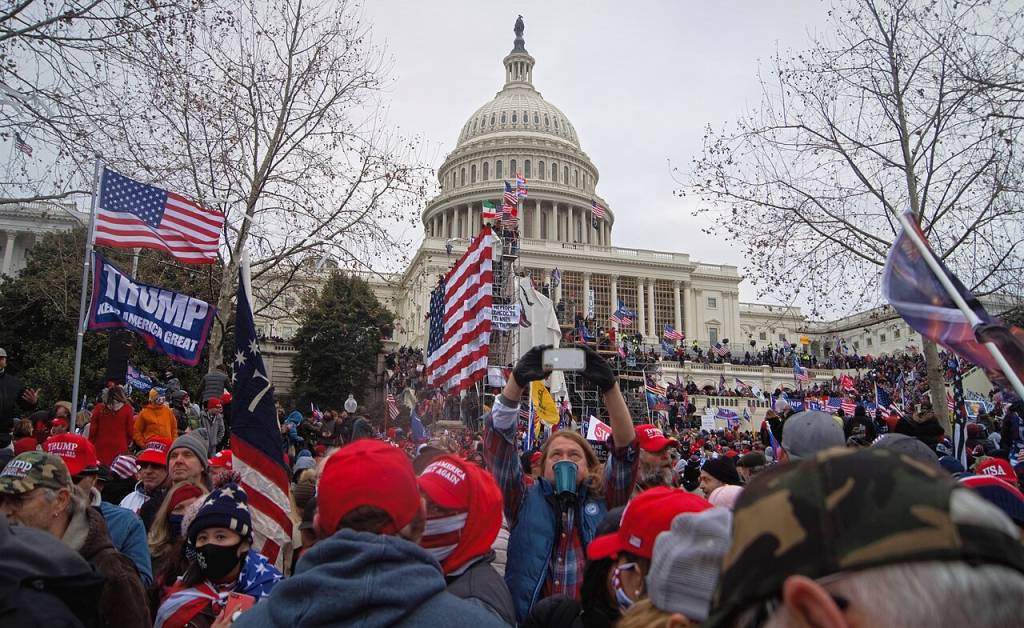
Many point to Trump’s continued embrace of a robust view of presidential authority as evidence of the ruling’s broader impact. Areas frequently cited include aggressive use of executive orders, expansive assertions of executive authority over federal agencies, extensive immigration enforcement measures, and efforts to centralize control over portions of the federal bureaucracy.
Whether these actions represent legitimate exercises of presidential authority or excessive assertions of power remains sharply disputed. No court has concluded that the immunity ruling itself authorized unlawful conduct. Nevertheless, critics argue that the decision reinforced a constitutional climate in which presidents may feel greater confidence in testing the outer boundaries of executive authority.
An Unfinished Constitutional Debate
The controversy surrounding the decision has not subsided. In November 2026, Sonia Sotomayor publicly reiterated her opposition to the ruling. “There’s some opinions that I hope in my lifetime will get overturned. The immunity case is one of them.”
Her comments underscore how deeply divided legal scholars, judges, and political leaders remain over the ruling’s long-term consequences.
At its core, Trump v. United States is about far more than one president. It reflects an enduring constitutional tension between two competing principles: protecting the independence of the presidency and preserving accountability under the law. The Supreme Court’s majority emphasized the former. Its critics fear that the latter has been diminished.
The debate ultimately centers on a difficult constitutional question. How can a democracy protect presidents from politically motivated prosecutions while simultaneously ensuring accountability for abuses of power?
Whether history ultimately views the decision as a necessary safeguard against politically motivated prosecution or as a dramatic expansion of executive power remains uncertain. What is beyond dispute is that the ruling transformed the national conversation about presidential authority and may shape the boundaries of executive power for generations to come.
Conclusion
More than two centuries after America’s founders rejected monarchy and placed their faith in constitutional government, the nation finds itself confronting an uncomfortable question: where does presidential power end? The Supreme Court’s immunity ruling did not answer that question definitively. Instead, it shifted the boundary.
Since that decision, the Trump administration’s expansive use of executive authority has intensified concerns among critics that traditional checks and balances are eroding, while supporters argue that a stronger presidency is necessary to overcome institutional paralysis. What is beyond dispute is that Trump v. United States altered the constitutional landscape. A president once assumed to be accountable after leaving office now enjoys protections never before explicitly recognized by the nation’s highest court.
The debate is no longer simply about Donald Trump. It is about the future presidency itself. The powers accepted today will belong to every president tomorrow. Whether the immunity era is remembered as a safeguard against political vengeance or as the moment executive power moved beyond its historic limits may become one of the defining judgments of American history.