Israel faces political deadlock after general elections left both Benjamin Netanyahu’s bloc and Gadi Eisenkot’s opposition short of a 61-seat majority, giving surging Arab parties pivotal leverage in deciding whether a new coalition forms or the country heads back to the polls.
JERUSALEM — Israel’s political future was plunged into uncertainty on Wednesday after election returns indicated that Prime Minister Benjamin Netanyahu has lost his governing majority, while the opposition bloc led by retired general Gadi Eisenkot remains short of the threshold needed to form a government on its own.
With roughly 86% of the regular ballots tallied, neither main Jewish political bloc appears capable of reaching the critical 61-seat threshold in the 120-member Knesset without outside support or cross-bloc defections.
The impasse places significant leverage into the hands of Arab-majority and Palestinian parties, which surged to a projected 16 to 19 seats amid voter turnout approaching 78%—the highest participation rate recorded in the country since 1999.
Key Electoral Takeaways
- Neither Bloc Reaches 61: Both Netanyahu’s right-wing coalition and Eisenkot’s “Change” opposition bloc are currently projected to fall short of a working majority.
- Soldier & Absentee Votes Pending: Approximately 14% of the electorate—consisting of deployed military personnel, diplomats, and other absentee voters—remains to be tallied over the coming days.
- Arab Parties Surge: Arab-majority factions, including the Joint List and Ra’am (United Arab List), hold the mathematical balance of power in potential coalition scenarios.
- Presidency Steps In: Once counting concludes, President Isaac Herzog will designate a party leader to attempt to assemble a governing coalition within a six-week window.
The Coalition Arithmetic and the Opposition Divide
The election outcome forces the Jewish opposition into an acute strategic decision: assemble a historic working pact with Arab Israeli factions to replace Netanyahu, or face protracted stalemate that could trigger fresh national elections.
Opposition leader Gadi Eisenkot initially complicated potential talks during an overnight address by framing his objective as securing a “Zionist majority,” which appeared to sideline the Arab factions.
That stance drew immediate pushback from within his own camp. Yair Golan, head of the centre-left Democrats party, publicly urged Eisenkot to open negotiations with the Joint List and Ra’am:
“We have no future here if we don’t stop being afraid, and if we don’t put an end to racism. We can no longer accept Netanyahu’s racist distinction between Jewish and Arab votes. Anyone who tries to erase the votes of Arab citizens is surrendering to Netanyahu and giving up on Israel.”
Joint List leader Yousef Jabareen affirmed that the faction’s record showing leaves it impossible to bypass in post-election calculations:
“The government of Netanyahu, Ben-Gvir, and Smotrich has made life bitter for every Arab citizen. We will be ready to pave the way to oust the government of Netanyahu, Ben-Gvir and Smotrich—and send them home.”
U.S. Reactions and International Context
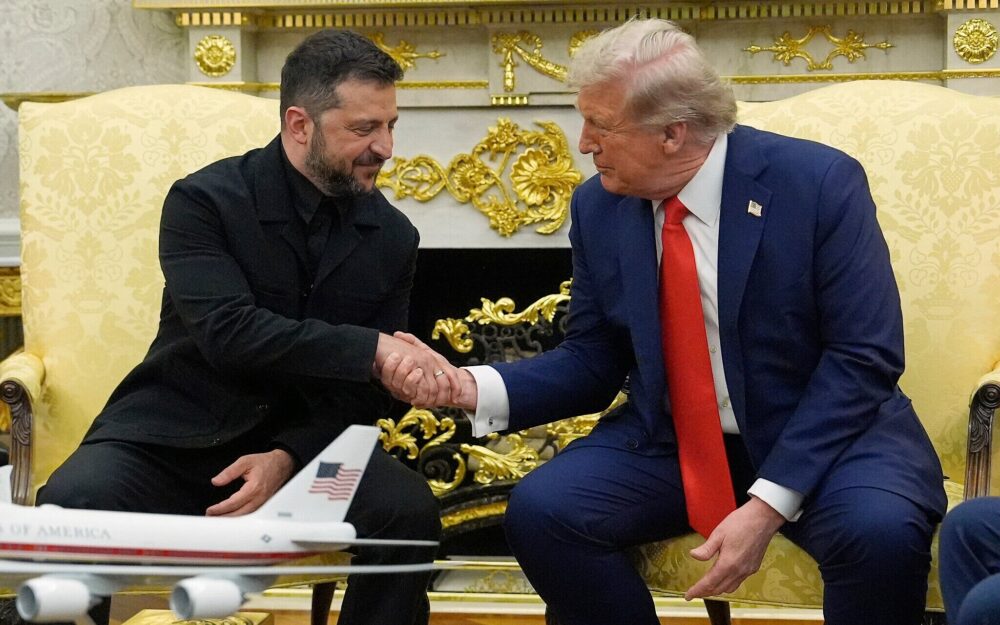
Former U.S. President Donald Trump weighed in on Wednesday, claiming credit for bolstering Netanyahu’s numbers in late polling:
“When the endorsement went out, it helped him a lot,” Trump stated, adding that the outcome appeared headed for a stalemate or an eventual Netanyahu victory.
The election took place against a backdrop of prolonged military operations across the region since the October 7, 2023 attacks by Hamas. On Monday, the UN Independent International Commission of Inquiry on the Occupied Palestinian Territory released a report alleging ongoing humanitarian and international law violations in Gaza. Israel’s UN Ambassador Daniel Meron forcefully rejected the findings, calling them an effort “to undermine Israel’s legitimacy and deny its fundamental right to exist and defend itself.”