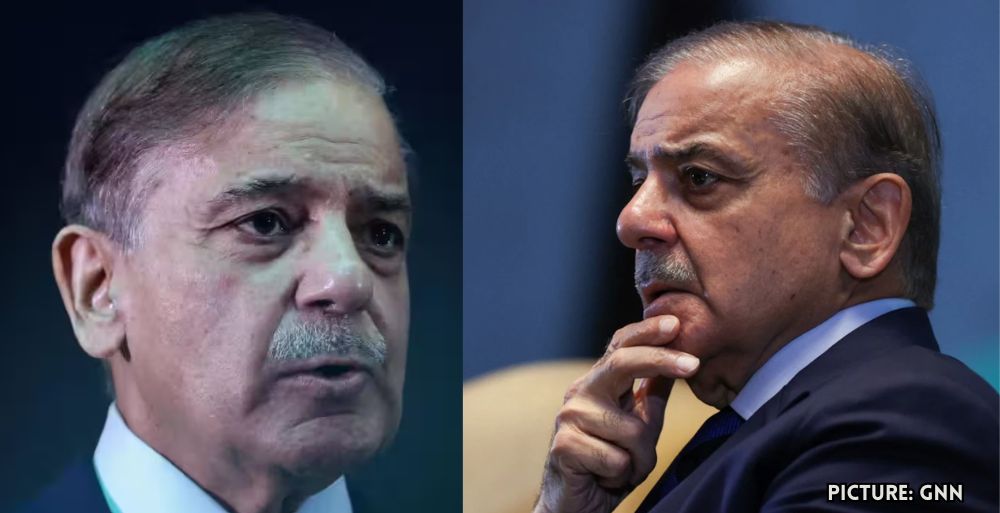
During his address to the UN General Assembly, Pakistani Prime Minister Shehbaz Sharif asserted that any diversion of the Indus River waters by India would be regarded as an act of war, emphasizing the critical importance of these waters to Pakistan and the region.
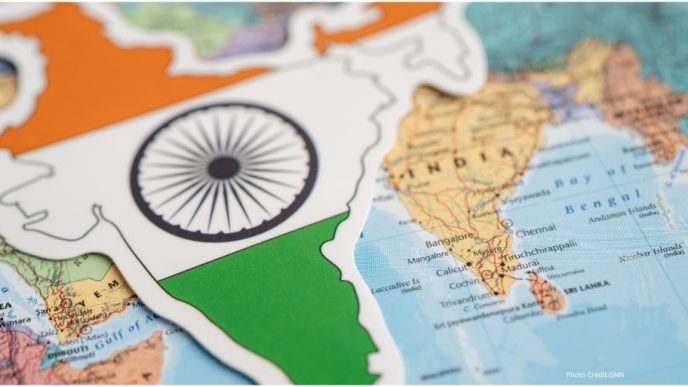
NEW YORK, September 25, 2026 — In a pointed address to the United Nations General Assembly, Pakistani Prime Minister Shehbaz Sharif issued a stark warning to India regarding the management of the Indus River waters. He stated unequivocally that any attempt by India to impede or divert Pakistan’s rightful share of these waters would be considered an act of war. This declaration underscores the longstanding tensions between the two nations over water resources, which are essential for both agricultural and domestic needs in Pakistan.
Sharif emphasized the significance of the Indus River system, which he described as the “lifeblood not only for the people of Pakistan, but for the entire region.” He criticized India for unilaterally holding the existing water-sharing treaty in abeyance, arguing that such actions have no legal basis and contravene international norms. Sharif pointed out that these claims have been rejected by United Nations experts and the Court of Arbitration, reinforcing Pakistan’s stance on this critical issue.
Water as a Human Right
In his remarks, Sharif articulated a broader principle regarding water management, asserting that “water must never be weaponized. Rivers should nourish nations, not divide them.” This statement reflects a growing concern among nations regarding the management of transboundary water resources, which have increasingly become a source of conflict in many regions around the world. The Indus River, shared by both Pakistan and India, has historically been a flashpoint in their bilateral relations, with disputes often escalating to military confrontations.
Regional Diplomacy Efforts
Expanding his address to include regional conflicts, Sharif discussed the ongoing tensions in the Gulf region, particularly between the United States and Iran. He claimed that Pakistan has played a mediating role, successfully bringing representatives from Washington and Tehran together in Islamabad. Sharif stated, “Amid the roar of missiles, drones and guns, the voice for diplomacy must echo even louder and stronger,” highlighting the urgent need for peaceful resolutions in conflict zones. He also condemned recent Houthi attacks against Saudi Arabia, including a drone attack aimed at Mecca, emphasizing Pakistan’s commitment to regional stability.
Addressing Kashmir and Gaza
In a significant portion of his address, Sharif focused on the Kashmir dispute, reiterating Pakistan’s position and invoking Article 51 of the UN Charter to justify Pakistan’s right to self-defense against what he termed “external aggression from India.” He credited former U.S. President Donald Trump for his intervention in averting a large-scale war between the nuclear-armed neighbors. Sharif asserted that a just resolution to the Kashmir conflict is imperative, noting that Kashmiris have awaited a UN-sponsored plebiscite for eight decades. He lamented the ongoing human rights violations faced by Kashmiris, citing instances of “illegal occupation, arbitrary detention, extrajudicial killings, enforced disappearances, sexual violence and collective punishment.”
Sharif also turned his attention to the situation in Gaza, recalling the tragic story of an eight-year-old girl named Wafa Akilah, who was killed on what should have been her first day of school. He posed a poignant question to the international community: “Does not a child born in Gaza deserve the same life and the same future and same dream as a child, anywhere else in the world?” His comments extended to the West Bank, where he characterized the eviction of Palestinians as a reflection of a “genocidal agenda” by Israel, highlighting the urgent need for a resolution to the Israeli-Palestinian conflict.
Security Concerns and Regional Stability
Sharif also addressed security issues within Pakistan, specifically citing concerns about terrorist groups operating from sanctuaries in Afghanistan. He called on Afghan authorities to take “verifiable, decisive action” against these groups to enhance regional stability. This call for action reflects Pakistan’s ongoing struggle with terrorism and its implications for national and regional security.
A Call for Peace
In conclusion, Sharif reiterated the theme of the 81st General Assembly session, which centers on restoring trust among nations. He stated that trust could only be rebuilt when “guns are silenced and replaced by handshakes, embraces and smiles.” Emphasizing Pakistan’s commitment to dialogue, cooperation, and peace, he stated, “We have chosen dialogue over confrontation. We have chosen cooperation over coercion. We have chosen peace over war.” This commitment to diplomatic engagement is crucial as Pakistan navigates complex relationships with its neighbors and seeks to address internal challenges.
As world leaders continue to grapple with pressing global issues, Sharif’s remarks at the UN General Assembly serve as a reminder of the critical importance of water resources and the need for collaborative solutions to regional disputes.