The controversy surrounding BJP MP and actor Kangana Ranaut’s recent remarks on the nursing profession has once again exposed a troubling reality; society is far more willing to debate nurses’ uniforms than to address the real challenges nurses face every day.
While promoting her film Bharat Bhhagya Viddhaata, Ranaut described nursing as the “most sexualised profession,” argued that nurses are among the hardest-working yet least respected healthcare professionals, and suggested that their uniforms should be modernized and freed from colonial-era influences. Predictably, the comments ignited a fierce public debate.
At the heart of the controversy lies a paradox. Ranaut attempted to highlight genuine concerns—the lack of respect, poor compensation, exhausting workloads, and the objectification of nurses in popular culture. Yet the language she chose and the emphasis she placed on uniforms diverted attention away from the very issues she claimed to champion.
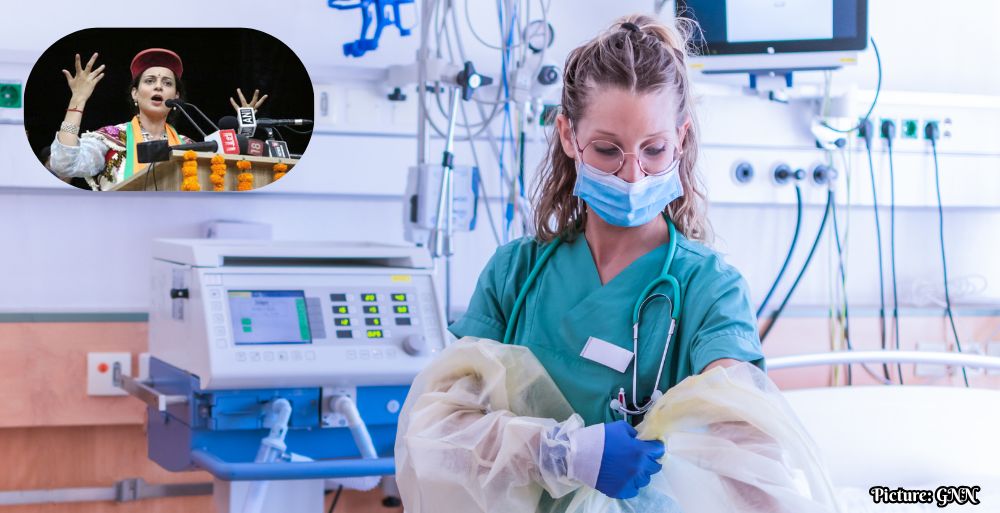
No serious observer can deny that nurses remain the backbone of healthcare systems across India and around the world. During pandemics, disasters, and daily medical emergencies, they are often the first to respond and the last to leave. They care for patients during their most vulnerable moments, frequently working long shifts under intense physical and emotional pressure. Yet despite their indispensable role, many nurses continue to face inadequate pay, staff shortages, unsafe working conditions, and limited professional recognition.
These are not perceptions; they are systemic realities.
However, nursing associations and healthcare professionals are equally justified in objecting to the description of nursing as the “most sexualised profession.” For decades, nurses have struggled against stereotypes perpetuated by films, television, advertising, and popular culture. Reducing their profession to a discussion centered on sexualization—even when intended as criticism of that objectification—risks reinforcing the very stereotypes they seek to eliminate.
Words matter, especially when spoken by elected representatives.
Equally misplaced is the debate over “Indianising” nursing uniforms. The suggestion may have generated headlines, but it fails to address contemporary healthcare realities. In most modern hospitals across India, the traditional caps, belts, and pins associated with colonial-era nursing have already been replaced by practical medical scrubs designed for efficiency, hygiene, and patient care. The question facing India’s healthcare system is not whether nurses should wear more culturally representative attire. The question is whether hospitals have enough nurses, whether they are paid fairly, and whether they can work safely and with dignity.
The public reaction reflects this divide. Supporters of Ranaut argue that she succeeded in drawing attention to the profession’s lack of social respect and to the objectification nurses often face. Critics counter that focusing on uniforms and provocative labels distracts from urgent issues such as healthcare funding, staffing shortages, workplace violence, and professional welfare.
The critics have the stronger argument.
Nurses do not need symbolic recognition alone. They need policy reforms. They need better salaries. They need reasonable working hours. They need stronger workplace protections. They need opportunities for career advancement. Above all, they need society to recognize that healthcare does not function because of buildings, machines, or political speeches—it functions because dedicated professionals, particularly nurses, stand beside patients every hour of every day.
India should certainly have conversations about dignity, representation, and the legacy of colonial institutions. But when it comes to nursing, those discussions must not overshadow the urgent reforms the profession desperately needs.
The real issue is not what nurses wear.
The real issue is whether the nation values them enough to provide the respect, resources, and recognition they have long earned.
Indo American Press Club strongly condemns similar abusive statements against Nurses, who are the backbone of healthcare system in India, and around the world.